
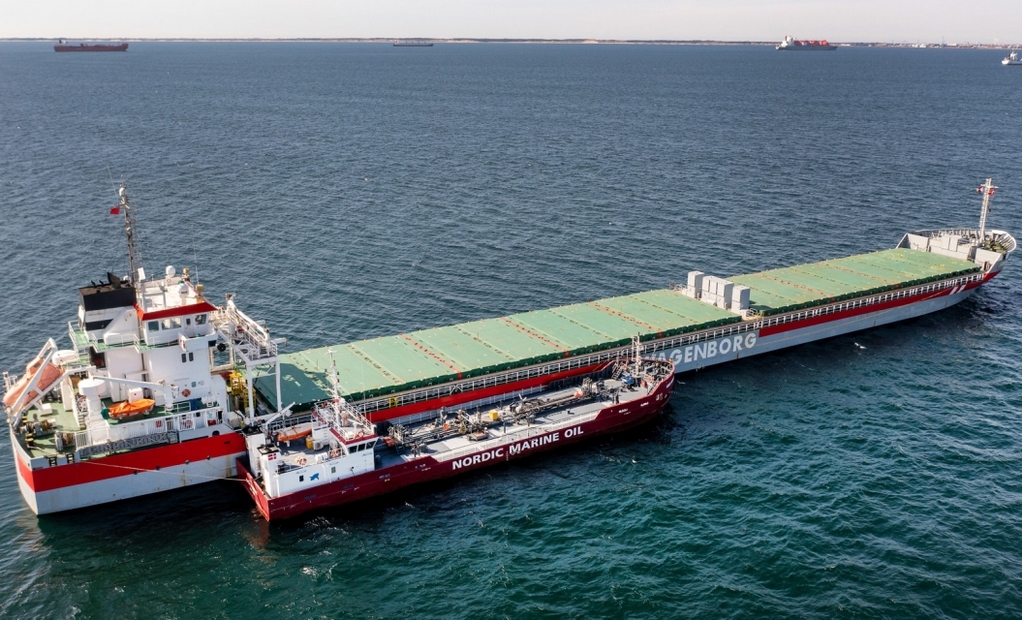
Royal Wagenborg said one of its F-class vessels recently completed the firm’s first transatlantic voyage sailing on bio-bunkers.
The company said the shipment, requested by one of its customers, illustrated the ease to switch to the drop-in biofuel bunkers, resulting in a 68% reduction of greenhouse gas emissions on the voyage.
The firm said its entire fleet of MPP vessels is able to bunker the ISO 8217 compliant co-processed marine fuel, since no investment in onboard equipment is required to use this sustainable drop-in marine fuel.
The fuel is produced using ISCC PLUS certified raw materials, such as vegetable oils, used cooking oil, or animal fat, which may reduce GHG emissions up to 80% over the lifecycle, when compared to fossil fuels.
Recent Posts
Biofuels
WinGD Ethanol-Fuelled Engine Completes First In-Service Voyage on Maersk Vessel
Power & Propulsion
Norsepower Rotor Sails Installed on Airbus Cargo Ship Spirit of Toulouse
EV
Estonia Electric Ferry to Combine Steerprop Propulsion with Battery Power