
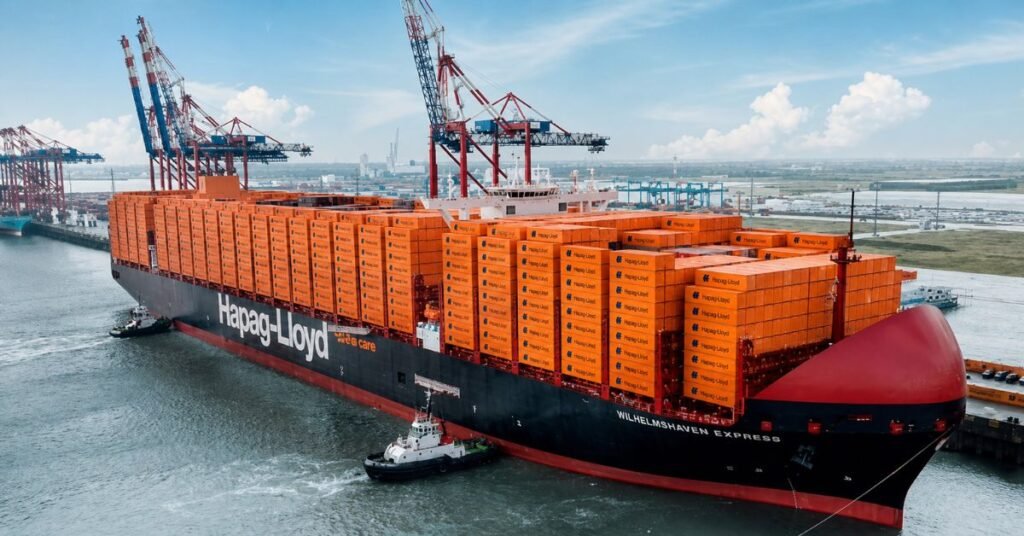
Freight forwarder cargo-partner has reduced ocean freight emissions by 811 tonnes of CO2e in the first half of 2026 through participation in Hapag-Lloyd’s Ship Green sustainable marine fuel programme, using an allocation model built on waste and residue derived biofuel. The result highlights growing uptake of book and claim style decarbonisation mechanisms in container shipping, where alternative fuel supply remains limited to a small number of ports.
How did cargo-partner achieve the emissions reduction?
The reduction is tied to 259.46 tonnes of waste and residue based biofuel allocated within Hapag-Lloyd’s fleet on cargo-partner’s behalf, split between 290.58 tonnes of CO2e avoided in the first quarter and 520.42 tonnes in the second. The fuel originates from certified sustainable supply chains compliant with the EU Renewable Energy Directive II, and the emissions figures are calculated on a well to wake basis, capturing upstream production emissions alongside combustion at sea.

What is the Ship Green allocation model and how does it work?
Ship Green uses an allocation approach rather than requiring alternative fuel to be burned on the specific vessel carrying a customer’s container. Hapag-Lloyd introduces qualifying biofuel into its wider fleet and assigns the resulting emissions reduction to eligible freight volumes, letting cargo owners purchase a documented reduction without building a dedicated low carbon fuel supply chain for every trade lane they use.
Why does measurement and assurance matter for this kind of claim?
Because alternative marine fuel is concentrated in relatively few bunkering markets, the credibility of an allocated emissions claim depends on rigorous accounting rather than on the volume alone. cargo-partner’s figures follow Hapag-Lloyd’s Ship Green Process Report 2025 and have undergone limited independent assurance under ISAE 3000, giving freight buyers a documented chain of custody they can use in their own scope 3 transport emissions reporting.
What does this mean for freight procurement and decarbonisation strategy?
The mechanism allows shippers to retain existing carrier services and routings while purchasing qualifying biofuel entry into the carrier’s fleet elsewhere, making it easier to fold into tenders and annual freight allocations than arranging a bespoke physical fuel supply for each route. cargo-partner says its SPOT platform layers shipment level greenhouse gas data on top of this, giving customers visibility into lower emission transport options alongside their standard bookings.
What are the limits of allocation based marine fuel programmes?
Allocation and book and claim systems distribute the benefit of scarce biofuel more efficiently across customers, but they do not create additional fuel supply or remove the cost premium over conventional bunker fuel. Waste and residue feedstocks avoid the land use concerns tied to crop based alternatives, yet availability remains tight, with demand also coming from aviation and road transport. Scaling this approach further will depend on more qualifying fuel entering the market alongside strict rules on feedstock and lifecycle emissions.
Recent Posts
Marine
Singapore Unveils Ammonia Bunkering Standard, First Ethanol Bunkering and LNG Storage Plans
Ammonia
Singapore Launches TR 148 Ammonia Bunkering Standard and Model Contract to Prepare for Ammonia-Fuelled Ships
Policy
China Targets Doubling New Energy Inland Vessels by 2028 Under 2026-2030 Action Plan