
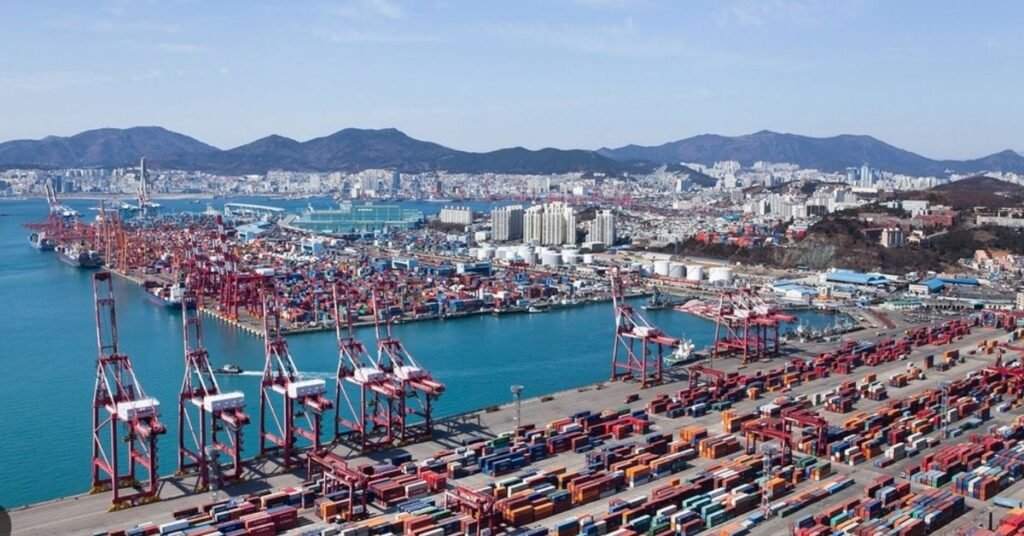
The South Korean government is developing rules to prepare its ports for green shipping corridors while planning to expand its alternative-fuel fleet.
The Ministry of Oceans and Fisheries has proposed legislation setting out detailed rules for the country’s Special Act on Support for the Establishment of Green Shipping Routes, ahead of the Act’s entry into force on April 1, 2027.
The proposed rules spell out which vessels and fuels can qualify for green shipping corridors involving South Korean ports and set requirements for ports supplying alternative marine fuels. Eligible vessels would include those powered by methanol, hydrogen, ammonia, biofuels and renewable synthetic fuels, as well as battery-electric and fuel cell-powered vessels. The legislation would also establish requirements for “environmentally friendly” ports, including systems to supply cleaner marine fuels, although the ministry has not specified which ports could qualify.
The proposals will undergo public consultation until October, followed by regulatory and legislative reviews through December. They are expected to reach vice-ministerial and cabinet meetings by February 2027.
The rules are being developed in parallel with South Korea’s second Basic Plan for the Development and Deployment of Eco-Friendly Vessels, covering 2026-2035. Fuel supply infrastructure forms one of five main areas under the plan, with South Korea intending to expand infrastructure for low-emission fuels while developing separate supply infrastructure for zero-emission fuels.
The plan also aims to build demand for those fuels by accelerating the uptake of cleaner vessels in domestic and international shipping and across the public fleet, supporting the conversion of 889 privately and publicly operated vessels by 2035 to run on alternatives to conventional marine fuels. Its targets include cutting GHG emissions from Korean shipping companies’ oceangoing fleets by 61% from 2008 levels by 2035 and reducing shipping-sector emissions by 20% from 2018 levels.
The government also wants Korean shipbuilders to capture 50% of the global zero-carbon vessel market by 2035. To support this, the plan includes developing technologies for zero-carbon fuel-powered vessels and equipment capable of handling blended fuels, alongside calls for onshore and offshore testing facilities to help commercialise new technologies. The government also plans to strengthen links between South Korea’s shipping and shipbuilding industries and support smaller shipyards and marine equipment manufacturers with alternative fuel-capable vessel design and equipment testing.
Recent Posts
Bunkering
Singapore awards new LNG bunkering licences to strengthen Singapore’s multi-fuel bunkering hub
Dual-Fuel
Furetank and partners place order for four dual-fuel tankers
Ammonia
Exmar unveils two more ammonia-capable vessels