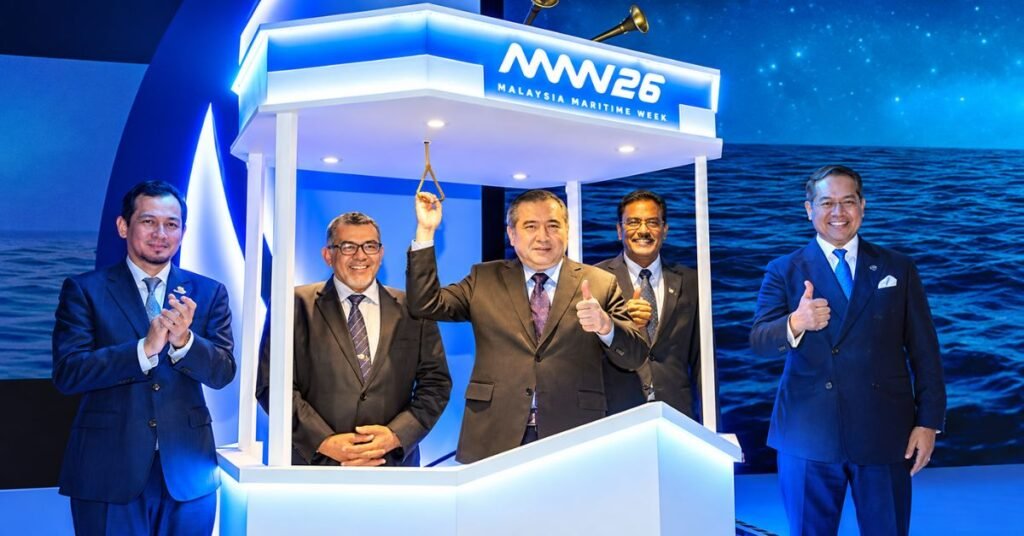
Malaysia will centralise the approval process for bunkering licences and related permits under the Ministry of Transport (MOT) from February 1, 2027, as the government seeks to streamline regulatory procedures and strengthen the country’s position as a regional marine fuel hub.
Transport Minister Anthony Loke Siew Fook announced the move while officiating Malaysia Maritime Week 2026 at the Kuala Lumpur Convention Centre on September 29.
Under the new arrangement, MOT will act as the single lead agency through which bunkering-related applications are processed. Loke said the reform is intended to reduce administrative delays while bringing greater consistency to approvals involving safety, fuel quality and environmental requirements.
According to Malaysian reports, bunkering permit applications currently can take six to seven months to complete. The government expects the streamlined process to reduce the approval period to several weeks. Loke clarified that the reform will integrate the application process rather than remove the regulatory authority of other agencies.
The measure follows Cabinet approval and is part of Malaysia’s wider strategy to develop its bunkering sector and pursue its target of becoming an Asia-Pacific bunkering hub by 2030.
Malaysia Advances Green Bunkering Framework
Alongside regulatory reform, Malaysia is developing its green bunkering ecosystem to prepare for the growing use of lower-carbon marine fuels.
The government is working with Australia on policy and legal frameworks for green bunkering, with LNG, biofuels and methanol among the fuels being considered. Malaysia has also developed a Green Bunkering Regulatory Roadmap with support from Australia’s Partnerships for Infrastructure Programme.
The roadmap targets low-carbon fuels accounting for 40% of maritime fuel use by 2050, as the shipping industry moves towards cleaner energy sources.
The policy development comes as regional bunkering markets expand their capabilities for alternative marine fuels. Singapore, for example, began awarding licences for methanol marine fuel supply from January 2026. The Maritime and Port Authority of Singapore selected three companies under its methanol bunkering licensing framework, with licences covering the period from 2026 to 2030.
Singapore has also continued expanding its multi-fuel bunkering infrastructure, including the award of eight additional LNG bunkering licences in July 2026.
Malaysia Shipping Development Fund
Loke also said the Malaysia Shipping Development Fund (MSDF) would be used to strengthen domestic shipping capacity and support the expansion of the Malaysian-flagged fleet.
The measures form part of Malaysia’s broader maritime development strategy, combining regulatory streamlining with investment in shipping capacity and preparation for the transition towards alternative marine fuels.
Recent Posts
Policy
China Launches International Green Shipping Corridor Alliance With 45 Founding Members
Tugboats
Udupi Cochin Shipyard Delivers Third 70-Tonne Bollard Pull Tug to Ocean Sparkle
Marine
ABS Study Examines Economics of Nuclear-Powered LNG Carriers