
Summary
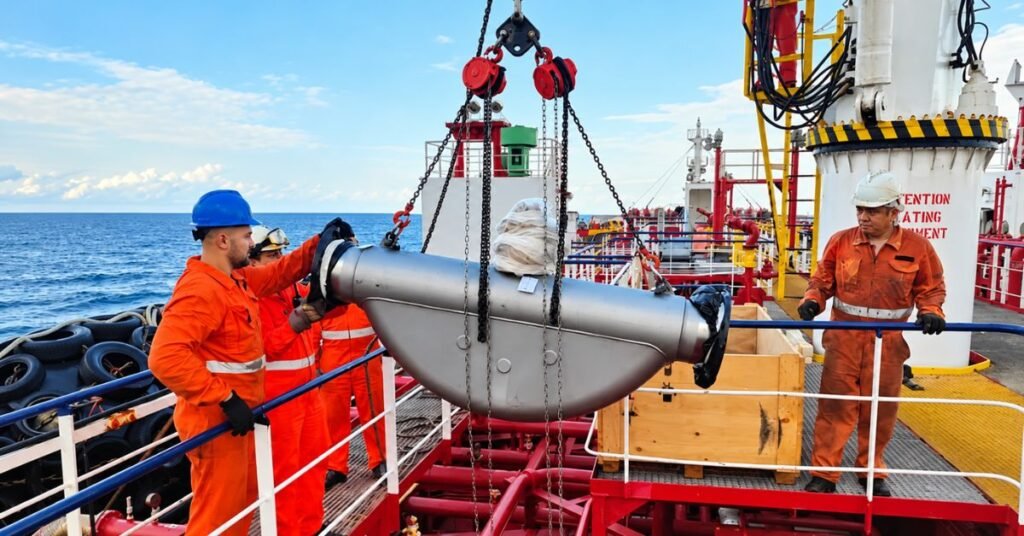
TFG Marine has equipped more than 90% of its global bunkering fleet with mass flow meters following an installation aboard Storholmen. The latest addition is its third certified deployment on the US Gulf Coast in less than two months, advancing efforts to improve fuel-delivery measurement, transparency and operational consistency.
Storholmen installation advances global rollout
TFG Marine mass flow meters now cover more than 90% of the company’s global bunkering fleet, following the installation and certification of an additional system aboard Storholmen.
The marine fuel supply and procurement company announced the milestone on 7 October 2026. The new system is certified to ISO 22192, the international standard governing marine fuel bunkering using Coriolis mass flow meters.
The installation forms part of TFG Marine’s wider investment in measurement technology and digitalisation. Its stated objectives include more accurate delivered quantities, greater transparency and consistent procedures across bunkering locations.
TFG Marine also urged port authorities and regulators to support wider adoption of certified systems, arguing that common measurement practices would help strengthen customer confidence in marine fuel transactions.
US Gulf deployments build regional momentum
The Storholmen installation follows recent deployments on Buffalo B414 and Buffalo B304. Those two supply barges received ISO 22192 certification for their newly installed meters in August 2026.
Together, the three installations represent a concentrated expansion of certified measurement capability on the US Gulf Coast. They extend TFG Marine’s regional programme beyond an earlier installation on Buffalo 404, a barge chartered from Buffalo Marine Service.
The company has linked these investments to improving data integrity and creating a more reliable delivery process. The latest milestone concerns equipment coverage across its fleet; it does not establish the proportion of total fuel sales measured through the systems or quantify reductions in disputes.
Earlier target has been exceeded
In July 2025, TFG Marine reported that more than 60% of its barge fleet already used mass flow meters. At that stage, it outlined an ambition to equip approximately 90% of its global bunkering fleet by 2026.
The Buffalo 404 installation was presented as the first ISO-certified mass-flow-meter-equipped bunkering barge operating in the US Gulf. It provided an early reference point for the subsequent regional rollout.
The latest coverage figure exceeds the previously stated target. However, TFG Marine has not provided a completion date for the remaining fleet in the announcement, so the milestone should be distinguished from universal deployment.
Certification covers the delivery process
Mass flow meters measure the quantity of fuel transferred during bunkering. Their commercial importance lies in providing a shared measurement basis when fuel changes custody between supplier and shipowner.
ISO 22192:2021 addresses more than the meter itself. Its scope includes measurement requirements, system integrity, equipment selection and installation, verification, delivery procedures and dispute handling.
The standard also covers approval of systems installed on bunker tankers and their subsequent use. This makes certification and operating discipline important alongside hardware installation.
Local requirements remain applicable. A certified meter therefore operates within a broader framework of procedures, documentation and regulatory oversight, rather than replacing every other control associated with a bunker delivery.
Singapore established an early regulatory benchmark
Singapore made approved mass flow metering mandatory for marine fuel oil deliveries from 1 January 2017. Delivered quantities recorded in bunker delivery notes must be based on the supplying tanker’s meter, witnessed by the cargo officer, receiving ship’s chief engineer and a bunker surveyor where engaged.
The requirement was subsequently extended to distillate deliveries from 1 July 2019. These measures established metered quantity assurance as a routine element of operations at a major international bunkering hub.
European requirements reinforce wider adoption
Rotterdam and Antwerp-Bruges introduced mandatory mass flow meter requirements from 1 January 2026 for covered deliveries of fuel oil, marine diesel and biofuels. The measures followed research identifying recurring discrepancies in delivered bunker quantities.
Their framework combines certified equipment with operating procedures, inspection and enforcement. Non-compliance can result in fines or withdrawal of a bunker licence.
TFG Marine’s expanding installations fit this wider movement towards independently verifiable fuel transfers. For customers, the practical value depends on properly maintained systems, trained crews and accessible delivery records. The company’s latest milestone demonstrates broader equipment adoption, while consistent use and verification remain essential to translating that coverage into dependable quantity assurance.
FAQs
What milestone has TFG Marine reached?
More than 90% of its global bunkering fleet is now equipped with mass flow meters.
Which vessel received the latest installation?
Storholmen, following installations on Buffalo B414 and Buffalo B304.
What does ISO 22192 cover?
It covers marine fuel bunkering using Coriolis mass flow meters, including system approval, verification, delivery procedures and dispute handling.
Are mass flow meters mandatory everywhere?
No. Requirements vary by jurisdiction. Singapore, Rotterdam and Antwerp-Bruges mandate their use for specified bunker deliveries.
Recent Posts
Hydrogen
Hydrogen-electric bulk carriers drive PowerCell’s repeat order
EV
Tanjung Pelepas Puts Full Fleet of 52 Electric Prime Movers into Service
Battery Tech
Global Fleet of Battery-Powered Vessels Crosses 2,000 as Installations Scale Up