
Summary
PowerCell has secured a SEK27 million order to supply fuel cell systems and engineering services for two additional hydrogen-electric bulk carriers for GMI Group. The agreement expands the programme to four vessels, with the latest pair to be built by Chowgule Shipyard and fuel cell deliveries scheduled for 2027–28.
Follow-up contract expands vessel programme
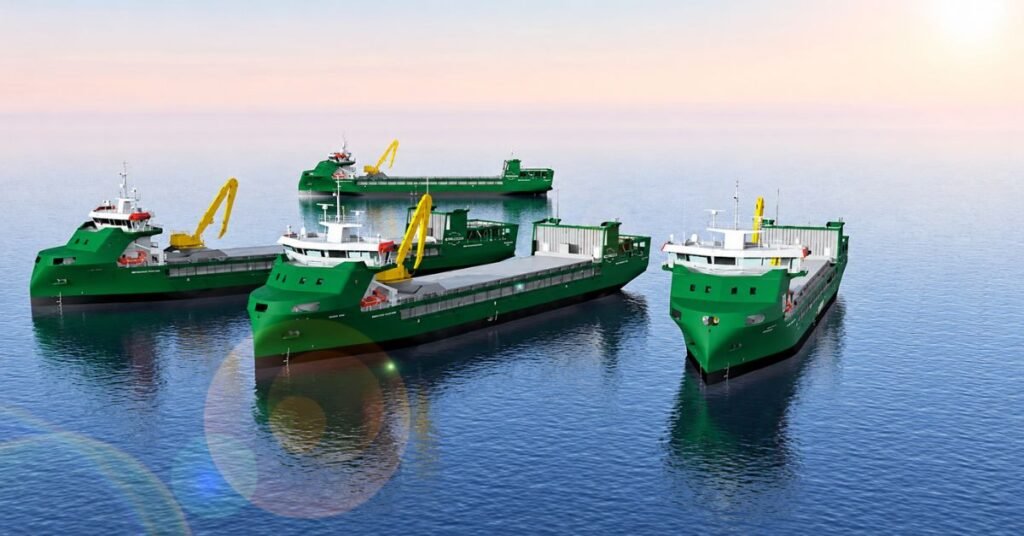
Two additional hydrogen-electric bulk carriers will join GMI Group’s vessel development programme following a SEK27 million follow-up order awarded to Sweden’s PowerCell Group. Announced on 8 October 2026, the contract covers 10 Marine System 225 fuel cell units and associated engineering services.
Each new vessel will have a deadweight capacity of 3,000 tonnes and carry five fuel cell units. Together, the systems will provide more than two megawatts of electrical power. Chowgule Shipyard will construct the vessels, adding an Indian shipbuilding contribution to the programme.
Across all four ships, PowerCell’s contracted supply now comprises 24 units with a combined installed fuel cell capacity of 5.4 MW. The vessels will use compressed renewable hydrogen to generate electricity onboard.
Earlier order established the technology platform
The latest agreement follows PowerCell’s first contract for the programme, announced on 30 September 2025. Valued at slightly more than SEK40 million, that order covered 14 Marine System 225 units and engineering services, with deliveries scheduled for 2026–27.
The first two bulk carriers are larger than the newly announced pair. Each measures 85 metres in length, has a deadweight capacity of 4,000 tonnes and is designed to carry seven fuel cell units. Their launch is planned for 2027.
GMI selected compressed hydrogen after assessing technology maturity, fuel availability and cost-effectiveness. The project received support from Norway’s Enova and NOx funds and forms part of the Green Shipping Programme, which brings together public and private participants to advance maritime decarbonisation.
Integration work accompanies equipment supply
PowerCell’s role covers fuel cell equipment and engineering support within its contracted scope. German specialist eCap Marine is responsible for vessel-level integration and certification of the hydrogen and propulsion solution.
The integration programme was already progressing before the latest equipment order. On 1 September 2026, eCap Marine announced a contract to equip two additional GMI bulk carriers with its integrated hydrogen energy power systems, known as eCap H2EPS.
Its broader newbuilding approach involves coordination with owners, designers, shipyards and component suppliers. Technical interfaces, power management, hydrogen safety and approval requirements form part of the engineering work needed to turn individual components into an operational vessel system.
Modular fuel cells support megawatt installations
Marine System 225 delivers a stated net electrical output of 225 kW per unit. Multiple systems can be connected in parallel through power converters to supply a common electrical network, enabling installations to reach megawatt scale.
The platform has received marine type approval from Lloyd’s Register and RINA. PowerCell describes a modular arrangement intended to facilitate installation and servicing, including accessible subassemblies.
For the additional GMI vessels, five units per ship correspond to 1.125 MW of nominal net output, calculated from the stated unit rating. This illustrates how the same core equipment can be configured for vessels with different power requirements.
Fuel cells generate electricity from hydrogen rather than burning conventional marine fuel. However, the overall climate benefit also depends on how hydrogen is produced and supplied; onboard performance and full supply-chain emissions are separate considerations.
Separate cargo-ship order broadens maritime activity
The GMI expansion follows another marine contract announced in June 2026. PowerCell secured an approximately SEK50 million order for two liquid-hydrogen-powered cargo ships being developed by Norwegian LH2 Shipping.
That separate project covers 4 MW of installed fuel cell power, with deliveries scheduled for completion by 2028. The vessels are intended for North Sea shortsea operations, and the parties indicated their intention to establish a long-term service agreement.
Unlike GMI’s compressed-hydrogen concept, the LH2 Shipping project uses liquid hydrogen. Both nevertheless apply the Marine System 225 platform, demonstrating its deployment across different vessel energy arrangements.
The combined order history points to repeat procurement of a common marine power platform rather than an isolated equipment sale. For the GMI programme, the next steps remain equipment delivery, ship construction, integration and certification before the additional vessels can enter commercial service.
FAQs
What is the value of PowerCell’s latest order?
The follow-up contract is worth SEK27 million and covers fuel cell systems and engineering services.
Who will build the additional vessels?
Chowgule Shipyard will build the two 3,000-tonne-deadweight bulk carriers.
How many vessels are now covered by the programme?
Four: two 4,000-tonne vessels from the original order and two additional 3,000-tonne vessels.
When will the latest fuel cell systems be delivered?
Deliveries are scheduled for 2027–28. This is the equipment delivery window, not a confirmed vessel commissioning date.
Recent Posts
Hydrogen
Hydrogen-electric bulk carriers drive PowerCell’s repeat order
EV
Tanjung Pelepas Puts Full Fleet of 52 Electric Prime Movers into Service
Battery Tech
Global Fleet of Battery-Powered Vessels Crosses 2,000 as Installations Scale Up