
Summary
CMB.TECH Chief Technology Officer Roy Campe says the company’s own ammonia-capable fleet will provide initial demand for its planned Walvis Bay ammonia bunkering terminal in Namibia, but third-party volumes from other shipowners, producers and traders will be essential to make it viable. CMB.TECH plans 21 ammonia-capable vessels by 2029, with a longer-term goal of over 40.
Article
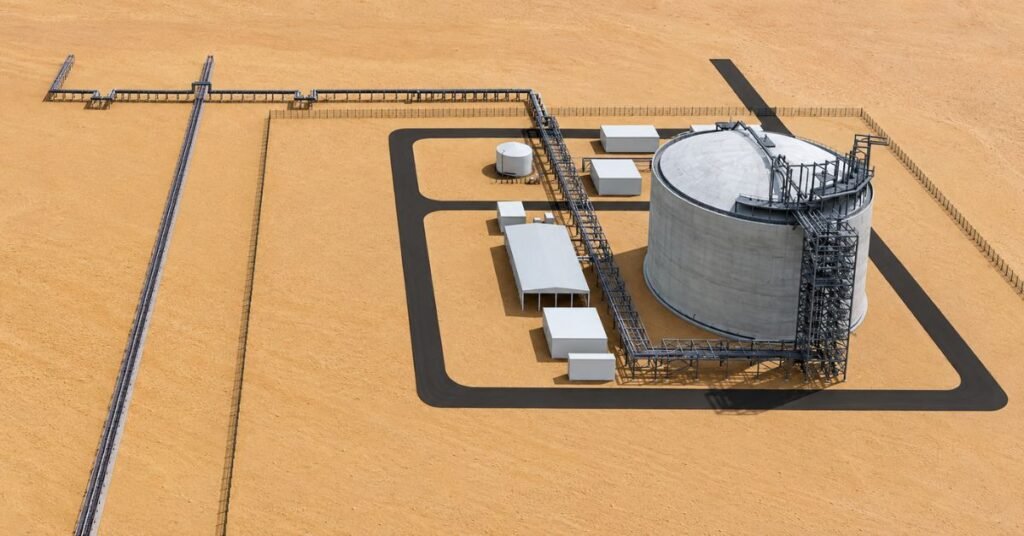
Antwerp: Belgian shipowner CMB.TECH says ammonia bunkering infrastructure will need customers beyond early adopters to succeed, as it prepares to build a dedicated ammonia bunker terminal at Walvis Bay, Namibia.
Speaking to bunker market intelligence platform ENGINE in an interview published on October 15, 2026, Chief Technology Officer Roy Campe said CMB.TECH’s own vessels would create initial demand, but volumes from producers, traders and other shipping companies would be needed to scale the terminal and maximise utilisation.
“Our aim is to kick-start an open market, not build a closed ecosystem,” Campe said.
How large is CMB.TECH’s ammonia fleet?
CMB.TECH plans to expand its ammonia-capable fleet to 21 vessels by 2029: 18 bulk carriers, one container ship and two chemical tankers. Its longer-term ambition is more than 40 ammonia-capable vessels, though it has not set a timeline for all of them.
The first, the Newcastlemax bulk carrier Mineral Europa, has left the shipyard for Australia under charter to mining company Fortescue. Several more vessels are due for delivery over the next nine months.
What is planned at Walvis Bay?
Construction of the Walvis Bay terminal is scheduled to begin in 2027, with completion expected in late 2028 or early 2029. Ammonia will initially be imported from markets including Asia and North America, stored at the terminal and supplied to ships operating in the Atlantic.
Campe said Namibia was chosen for its world-class solar resources, which offer some of the world’s cheapest renewable energy, combined with a deep-sea port with room for expansion. Together, these provide a base for large-scale green ammonia production, storage and bunkering.
How do the risks differ for ships and terminals?
Campe said investing in both ships and bunkering infrastructure helps address shipping’s chicken-and-egg problem, letting supply and demand scale together.
He explained that the risks differ. Ammonia-capable vessels are long-term assets, and dual-fuel engines let them run on conventional fuels while the ammonia market develops, so the main risk is the pace at which ammonia becomes competitive.
Bunkering terminals, by contrast, carry location-specific risk. Their profitability depends on throughput at a particular port, leaving them more exposed to local demand, regulation and timing. If demand develops slowly, utilisation targets may take longer to reach.
Will CMB.TECH invest in other ports?
Campe said CMB.TECH would consider other locations. The company holds a stake in Jiangsu Andefu Energy Technology, one of China’s largest ammonia supply chain companies, and has an offtake agreement with CEEC Hydrogen Energy in Jilin.
Under that deal, CMB.TECH will buy 20,000-25,000 tonnes of green ammonia in the first year, rising to 40,000-50,000 tonnes a year in years two to four, delivered by ship-to-ship transfer. The partnership also supports an ammonia terminal in Panjin, China, due to open in 2027, and the converted gas carrier Shenghang Yongle, which recently entered service as an ammonia bunker vessel.
Does ammonia bunkering need a global network?
Campe said ammonia bunkering can start around a small number of strategic hubs on established trade routes, with safe, reliable supply as the priority before 2030. A wider global network can follow as the fleet grows.
He called for a clear, predictable global regulatory framework to close the cost gap with fossil fuels, including lifecycle-based greenhouse gas standards, a meaningful emissions price and consistent fuel certification, ideally led by the IMO.
Why does it matter?
Campe’s comments highlight the key commercial hurdle for ammonia bunkering: terminals need steady throughput, but few ammonia-fuelled ships exist yet. Hub-based supply, backed by owners who also invest in fuel infrastructure, could bridge that gap. Singapore’s new ammonia bunkering standard, TR 148, and India’s green ammonia ambitions at hubs such as Kandla and VOC Thoothukudi show how ports are positioning to become early supply points on major routes.
FAQs
What is CMB.TECH building at Walvis Bay?
An ammonia bunkering terminal in Namibia, with construction starting in 2027 and completion expected in late 2028 or early 2029.
How many ammonia-capable ships will CMB.TECH operate?
21 vessels by 2029, with a longer-term goal of more than 40.
Why does the terminal need third-party demand?
CMB.TECH’s fleet provides initial volumes, but wider demand from other shipowners, producers and traders is needed for full utilisation.
Where will the terminal’s ammonia come from initially?
It will be imported from markets including Asia and North America.
What regulation does CMB.TECH want?
A predictable global framework with lifecycle GHG standards, an emissions price and consistent fuel certification, ideally led by the IMO.
Recent Posts
HYBRID
GRSE Signs ₹1,032-Crore ONGC Contract for Four Hybrid Offshore Supply Vessels
EV
Energy In Motion Opens ₹500-Crore Electric Truck Plant in Pune
Fuels
Aegis Logistics Commissions 35,000-Tonne LPG Bottling Plant at JNPA