
Summary
Valencia’s port authority has launched a tender for a second electrical substation to strengthen electricity supply and support shore power for ships. The €18.7 million project has an estimated construction period of 20 months and forms part of wider investment in terminal electrification, grid resilience and lower-emission port operations.
Substation will support growing electricity demand
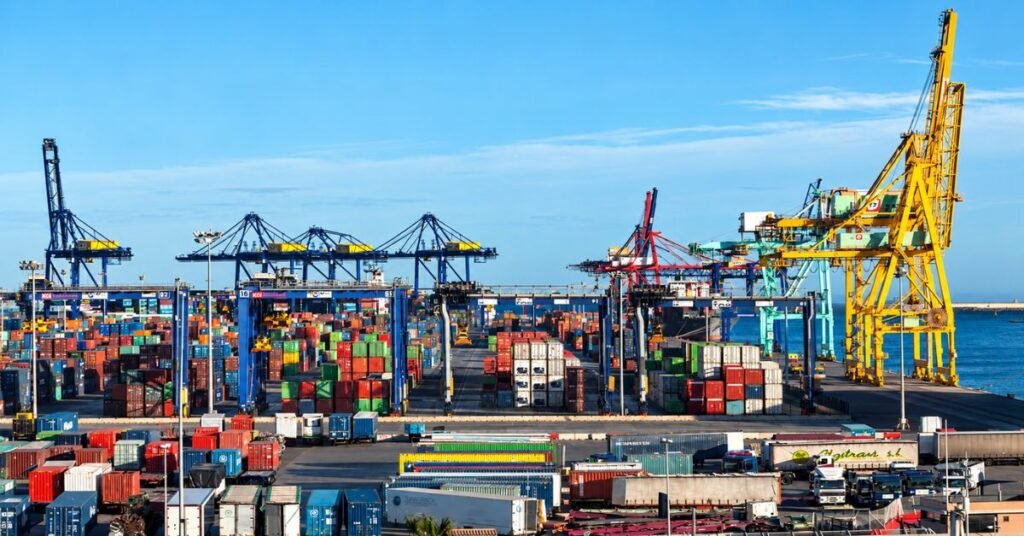
Valencia shore power plans have advanced with the tendering of ST2, a new electrical substation intended to expand the port’s energy supply and support vessels connecting to electricity while berthed.
The Port Authority of Valencia announced the procurement on 27 October 2026, following authorisation from Spain’s Council of Ministers.
The project carries an estimated investment of €18.7 million, supported through the European Commission’s Connecting Europe Facility. Construction is expected to take 20 months.
ST2 will serve cargo terminals, logistics infrastructure and onshore power supply systems, commonly known as OPS. The port authority says the additional substation will enable it to double electricity supply capacity as demand increases.
The tender concerns infrastructure that will enable electrification. Completion of the substation must be coordinated with distribution networks and berth connections before additional ships can use shore power.
Independent connections strengthen resilience
Alongside additional capacity, the project is intended to improve continuity of supply.
ST2 and the existing ST1 will operate independently through separate incoming connections. The arrangement will allow the port’s internal network to draw on a second supply route during maintenance, network incidents or periods of exceptional demand.
The port identifies crane operations and refrigerated-container power as critical services that require dependable electricity.
Its latest announcement describes shared available capacity ranging between 40 MW and 90 MW, depending on the incoming power lines used.
For terminal operators, resilience is commercially important as electrification increases reliance on the grid. A power interruption can affect cargo handling and temperature-controlled shipments as well as ships connected at berth.
Shore power reduces auxiliary-engine use
OPS allows compatible ships to obtain electricity from the shore-side network and switch off auxiliary engines that would otherwise generate onboard power.
This can reduce local exhaust emissions and noise during port stays. The environmental outcome also depends on the electricity supplied and the vessel’s operating requirements.
Valencia’s earlier shore-power programme included a €12.5 million project tendered in 2023 for electrical connections at the Transversal de Costa–MSC quay. At that stage, the port had already identified a second substation as supporting infrastructure.
The latest procurement therefore forms part of a sequence of investments rather than a standalone berth-electrification project.
For shipping companies, the practical benefit will depend on suitable connections being available at the terminals they use, alongside compatible onboard equipment and workable connection procedures.
Earlier distribution investment provides context
In May 2026, the authority announced another tender, worth more than €4.4 million, for an electrical distribution centre and associated civil works.
That project was designed to distribute power from ST1 and connect with existing and future electrical lines.
The authority’s published programme envisaged electrifying eight of ten OPS-capable berths by the end of 2028. The target sits within its wider plan to achieve net-zero emissions across Valencia, Sagunto and Gandia by 2035.
These investments address successive requirements: receiving electricity, distributing it within the port and delivering it safely to vessels and terminal equipment.
Their coordination will determine whether additional grid capacity translates into dependable services for port users.
European requirements add urgency
FuelEU Maritime introduces shore-power or qualifying zero-emission requirements for container and passenger ships above 5,000 gross tonnes at berth in ports covered by the Alternative Fuels Infrastructure Regulation from 1 January 2030, subject to the regulation’s exceptions.
From 2035, the requirement extends to other EU ports equipped with OPS facilities. The rules therefore distinguish between the initial group of covered ports and the subsequent wider application.
For Valencia, the immediate task is progressing procurement and construction while aligning the substation with berth-level infrastructure.
The investment illustrates how port decarbonisation increasingly depends on electricity-network development. Supplying ships and handling equipment reliably requires capacity, redundancy and coordinated commissioning, alongside the installation of individual shore-power connections.
FAQs
What has Valencia tendered?
A second electrical substation, ST2, supporting port electrification and shore power.
What is the estimated investment?
€18.7 million, with support through the Connecting Europe Facility.
How long is construction expected to take?
Approximately 20 months.
What does shore power allow ships to do?
Connect to shore-side electricity and switch off auxiliary engines while berthed.
Does the tender mean new shore-power connections are operational?
No. It advances supporting electrical infrastructure; berth connections and associated systems require separate completion and commissioning.
Recent Posts
Dual-Fuel
Wallenius Wilhelmsen Fleet Renewal Adds Four LNG Dual-Fuel Carriers
Bunkering
Europe and Africa Bunker Availability Tightens at Key Refuelling Ports
Power & Propulsion
Valencia Shore Power Plans Advance with €18.7 Million Substation Tender