
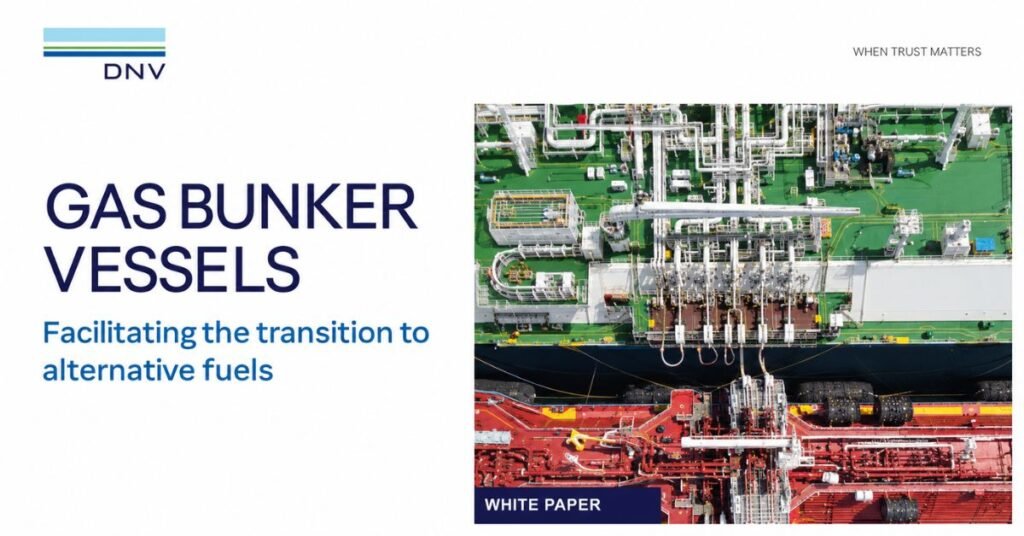
The global liquefied natural gas (LNG) bunker vessel fleet may need to more than double by 2030 to meet rising demand from gas-fuelled ships, according to DNV. The classification society estimates that between 165 and 208 bunker vessels could be required worldwide by the end of the decade.
In its white paper, Gas bunker vessels: facilitating the transition to alternative fuels, highlighted in a statement dated 7 September 2026, DNV warns that fuel delivery infrastructure could constrain further LNG adoption unless investment keeps pace with vessel demand.
Why does LNG bunkering capacity need to expand?
DNV says the growth of LNG-powered shipping is increasing pressure on bunker vessels, port infrastructure and fuel-transfer systems. Delivering sufficient fuel requires investment throughout the supply chain, supported by trained personnel and reliable operating procedures.
Cristina Saenz de Santa Maria, Chief Executive Officer of DNV Maritime, said the transition depends on infrastructure and operational capabilities as well as shipowners’ fuel choices.
Martin Cartwright, DNV Maritime’s Global Business Director for Gas Carriers and Floating Storage and Regasification Units, called for coordinated investment supported by safety standards and operational readiness.
Can LNG carrier conversions help meet demand?
The white paper identifies the conversion of suitable small-scale LNG carriers into bunker vessels as one option for expanding capacity.
Bunker vessels operate differently from ships transporting gas between terminals. They must supply receiving vessels with varying arrangements and perform transfers in busy port environments. DNV’s assessment therefore covers vessel design, ship-to-ship operations, regulatory requirements and crew competence alongside market growth.
The organisation describes gas bunker vessels as infrastructure connecting fuel availability with practical ship operations. Its analysis also considers how experience gained from LNG could support the development of other gaseous marine fuels.
What operational requirements accompany fleet growth?
In a separate technical assessment, DNV identifies pressure control, vapour handling and transfer monitoring as important aspects of LNG bunkering.
Loading operations require control of flow rates and temperatures to avoid abrupt changes that could place stress on equipment. Vapour-return arrangements help balance pressure between the receiving and supplying systems.
DNV also highlights equipment redundancy, including backup propulsion and cargo-handling capabilities, as a means of maintaining safe operations when individual components fail. Expanding the workforce of trained vessel crews and bunkering specialists is another requirement as activity increases.
The assessment points to shipyard availability as a further consideration. Some yards previously building smaller gas carriers have shifted towards larger vessels, changing the pool of builders available for bunker vessel projects.
How are bunker vessel designs adapting?
A recent design approval illustrates efforts to address the requirements of particular customer segments. On 16 September 2026, DNV announced that it and the Liberian International Ship and Corporate Registry had awarded Approval in Principle to HD Hyundai Heavy Industries for a cruise-focused LNG bunker vessel concept.
The design removes bridge wings to avoid interference with protruding cruise ship lifeboats during bunkering. Cameras and a surround-view monitoring system compensate for reduced direct side visibility.
The concept is intended to enable ship-to-ship LNG transfers without a floating pontoon. Approval in Principle confirms the feasibility of a design within a defined assessment framework; it does not represent delivery of an operational vessel.
Could today’s infrastructure support future fuels?
DNV identifies liquefied biomethane and synthetic LNG as potential future uses for existing LNG bunker vessels, since these fuels are compatible with current LNG infrastructure and engines.
Realising that opportunity will require effective production and distribution supply chains. The organisation also identifies shore power, batteries and electrification as options for reducing bunker vessels’ own emissions, particularly where they follow short, predictable operating routes near ports.
Recent Posts
LNG
EU shipping emissions rules open new market for bio-LNG, says IEA
LNG
AxDo secures 11-year LNG supply deal for planned Bahamas bunkering hub
LNG
LNG bunkering fleet faces major expansion as DNV projects need for up to 208 vessels