
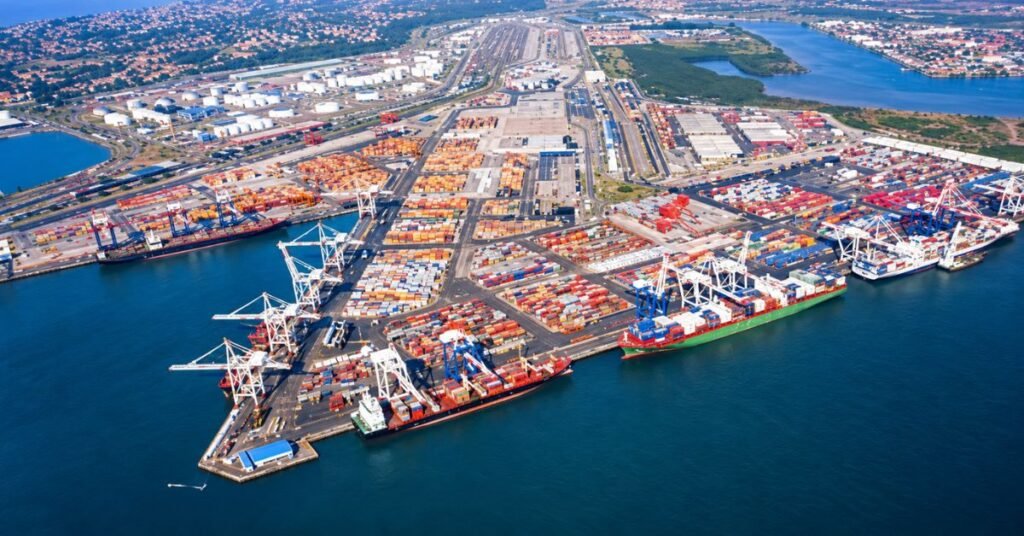
An Engen-led consortium has reaffirmed plans for a 40 billion rand (US$2.3 billion) liquefied natural gas (LNG) import terminal, pipeline infrastructure and a 1.9-gigawatt gas-fired power plant in Durban, South Africa. In a statement published by Vitol on 23 November 2026, the consortium said it was targeting a construction start in late 2028 and power generation in the second half of 2031. The project would also supply industrial gas users in KwaZulu-Natal.
What would the Durban LNG-to-power project include?
The proposed import terminal would be located at the Port of Durban. Associated pipelines would connect the terminal to the power plant, which would be built at Engen’s former refinery site in Wentworth. The site is already being converted into a fuel import and storage facility. The consortium estimates that the combined-cycle gas turbine plant could generate enough electricity to meet demand equivalent to that of about 3.9 million households.
Under the proposed division of responsibilities, energy infrastructure company VTTI would develop and operate the terminal and pipelines, Vitol would supply the LNG, and Saudi-listed Acwa would develop the power plant. The consortium is targeting about 30 per cent ownership by South African Broad-Based Black Economic Empowerment partners.
What would the LNG terminal mean for Durban’s port and industry?
The terminal would have a peak regasification capacity of about five billion cubic metres a year. Regasification converts imported LNG back into gas for delivery by pipeline. The consortium says the terminal would provide an alternative source of supply as imports of pipeline gas from Mozambique are expected to decline with falling production from existing fields. Industrial customers in KwaZulu-Natal would be able to draw on the imported gas alongside the proposed power plant.
The consortium’s preliminary estimates put throughput-related revenue for the Port of Durban at more than 245 million rand a year. It also identified LNG bunkering, the supply of fuel to visiting ships, as a possible additional use for the terminal infrastructure. The statement gave no timetable for introducing a bunkering service.
What approvals are needed before construction?
The development depends on a successful bid in South Africa’s second gas-to-power procurement round, regulatory and environmental approvals, and a final investment decision. The late-2028 construction start and second-half 2031 operating date for the power plant remain targets.
An economic impact assessment based on consortium data estimates that construction could support about 4,500 person-years of employment across South Africa, with up to 1,000 workers on site at peak. Once operational, the project could support about 740 jobs, including roughly 220 direct roles. The assessment estimates a contribution to South Africa’s gross domestic product of about 26 billion rand during construction and 1.8 billion rand a year during operations, expressed in 2024 prices.
FAQs
Has construction started on the Durban LNG project?
The consortium is targeting late 2028 for construction, subject to procurement, approvals and a final investment decision.
Will the terminal supply gas to industrial customers?
Yes, under the proposal. The terminal would supply industrial users in KwaZulu-Natal as well as the 1.9-gigawatt power plant.
Could ships bunker LNG at the Port of Durban?
The consortium says the terminal could provide the infrastructure needed for LNG bunkering. Bunkering remains a potential use of the proposed terminal.
Recent Posts
Methanol
OOCL Grace takes on 983 tonnes of green methanol at Shenzhen’s Yantian port
LNG
Engen-led consortium targets 2031 start for US$2.3 billion Durban LNG-to-power project
Policy
India and the Netherlands put shipbuilding and green hydrogen on bilateral agenda