
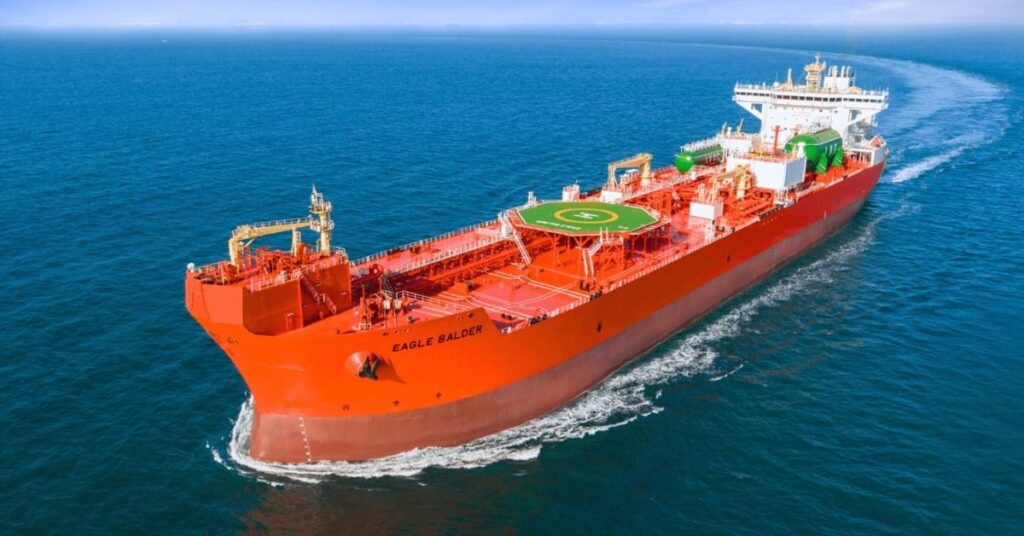
AET has signed shipbuilding contracts with Samsung Heavy Industries (SHI) for the construction of two LNG dual-fuel Suezmax tankers, expanding the company’s portfolio of lower-emission vessels.
With the latest order, AET will have dual-fuel capability across all tanker segments in which it operates—including Aframax, shuttle tanker, Suezmax, and VLCC classes. The company said the move aligns with its broader strategy to support the maritime sector’s shift toward lower-carbon operations.
Technical Features of the Newbuilds
Each Suezmax tanker will be equipped with a range of technologies designed to improve efficiency and reduce emissions:
- Everllence 6G70ME-C10.5-GI dual-fuel main engine, engineered for improved fuel efficiency and reduced methane slip.
- SVESSEL Intelligent Smart Ship Solution for real-time data monitoring and performance optimisation.
- SAVER Stator-D (Duct), SARB (Rudder Bulb) and SAVER-Fins, enhancing hydrodynamic performance and lowering fuel consumption.
- Variable Frequency Drive (VFD) systems and a hybrid vertical bow design to further improve propulsion efficiency.
AET noted that LNG is one of several alternative fuel pathways it is pursuing, alongside ammonia and other emerging low-carbon fuels. According to industry estimates, LNG-powered dual-fuel vessels can reduce greenhouse gas emissions by 14% to 23% on a well-to-wake basis compared with conventional marine fuels, while also cutting particulate matter and SOₓ and NOₓ emissions.
The company added that Bio-LNG and e-LNG could offer additional long-term decarbonisation benefits using existing LNG infrastructure.
AET’s Decarbonisation Roadmap
“This marks another important step in building a more sustainable fleet and supporting our customers’ decarbonisation ambitions. With these newbuilds, our dual-fuel fleet will grow to 18 vessels, a clear demonstration of the progress we’re making in delivering more energy with less emissions,” said Nick Potter, President & CEO of AET.
Potter added that AET aims to achieve a 40% reduction in greenhouse gas emissions intensity by 2030, supported by continued investment in lower-carbon technologies.
Recent Posts
Ammonia
Reliance Industries Limited (RIL) has signed a binding long-term supply and purchase agreement (SPA) with Samsung C&T Corporation for the export of green ammonia over a 15-year period.
Bunkering
Ofiniti Raises $6.8 Million to Scale Digital Bunkering Platform for Global Shipping
Hydrogen
Hefring Marine and Ecomar Propulsion partner to deploy monitoring system on hydrogen-electric vessel