
Cheniere Marketing International, a wholly owned subsidiary of Cheniere Energy, has concluded long-term charter agreements for new liquefied natural gas (LNG) carriers with Japan’s Nippon Yusen Kaisha (NYK Line) and Norway-based Ocean Yield.
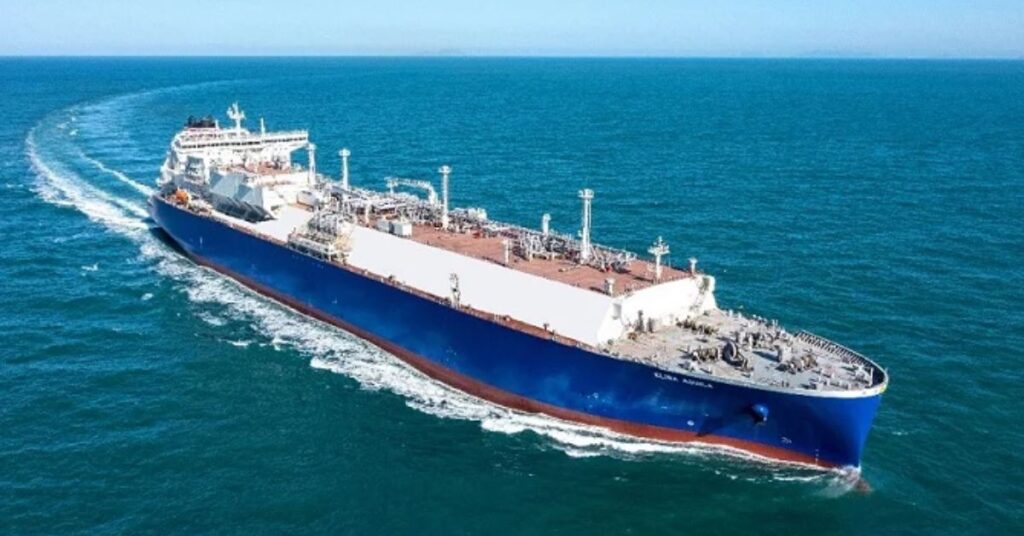
Under the agreements, NYK Line, in partnership with Ocean Yield, will provide new LNG carriers to Cheniere under long-term time charter contracts. The vessels will be constructed at HD Hyundai Heavy Industries in South Korea, with deliveries scheduled from 2028.
The LNG carriers will be fitted with membrane-type cargo tanks supplied by Gaztransport & Technigaz (GTT), using the Mark III Flex+ containment system. The design incorporates advanced insulation materials intended to reduce boil-off rates during operation.
Each vessel will have a cargo capacity of around 200,000 cubic metres. According to the project partners, the tank and insulation configuration is aimed at improving transport efficiency and reducing operating losses during LNG carriage.
The ships will be powered by low-pressure, dual-fuel main engines from WinGD, incorporating the X-DF2.1 intelligent control by exhaust recycling (iCER) system and variable compression ratio (VCR) technology. The engines are designed to operate on both fuel oil and boil-off gas generated from LNG cargo during navigation. A re-liquefaction system will also be installed to manage surplus boil-off gas.
The iCER system is designed to lower methane slip and reduce fuel consumption compared with earlier-generation dual-fuel engines, while the VCR function allows real-time adjustment of compression ratios to improve efficiency in both gas and diesel operating modes.
The LNG carriers will measure approximately 294.8 metres in length overall and about 48.9 metres in breadth. These vessels will be the first LNG carriers that NYK has chartered to Cheniere under long-term time charter arrangements. NYK has stated that the project aligns with its broader strategy to expand its LNG-fueled fleet toward 2030 while deploying newer technologies to support greenhouse gas reduction objectives, as part of its longer-term target to maximise emissions reductions by 2050.
Recent Posts
Ammonia
Reliance Industries Limited (RIL) has signed a binding long-term supply and purchase agreement (SPA) with Samsung C&T Corporation for the export of green ammonia over a 15-year period.
Bunkering
Ofiniti Raises $6.8 Million to Scale Digital Bunkering Platform for Global Shipping
Hydrogen
Hefring Marine and Ecomar Propulsion partner to deploy monitoring system on hydrogen-electric vessel