

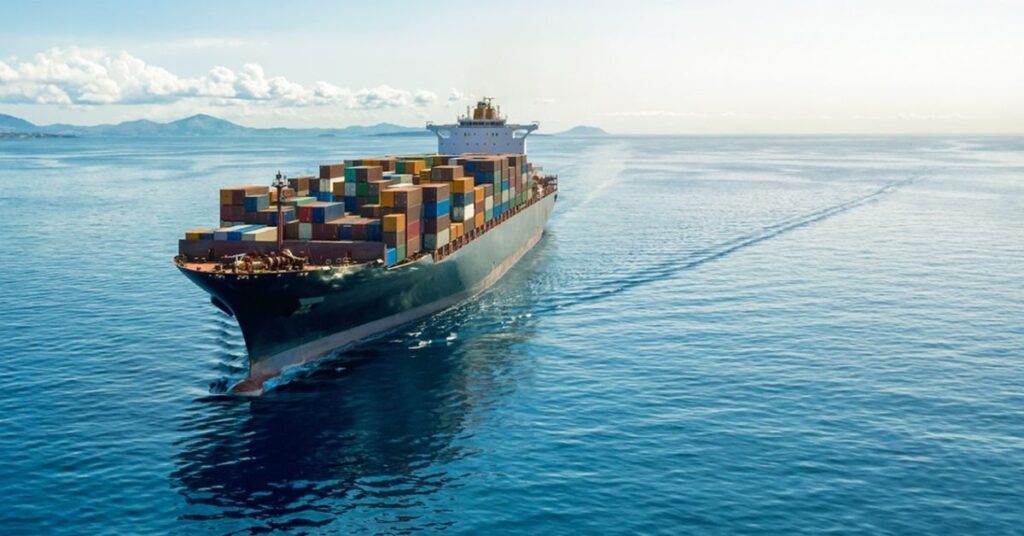
The International Maritime Organization’s (IMO) Net-Zero Framework, agreed in April 2025, is set for a vote on adoption in October. The framework includes a new fuel standard for ships and a global pricing mechanism for emissions, intended to accelerate the industry’s transition toward zero emissions.
The proposal has generated strong reactions across the shipping sector. Members of the Getting to Zero Coalition, an alliance of more than 180 companies, issued a joint statement urging governments to support the framework.
“A failure to do so risks significant negative consequences for the shipping industry,” the statement said, adding that IMO-led regulation remains “the best way to ensure that this happens fairly, efficiently, and globally.”
The coalition emphasized the importance of political commitment, noting: “It is crucial that constructive negotiations continue and that negotiators agree on guidelines for implementation that can deliver on IMO’s strategy. The foundation for success is there if the political will to adopt the framework in October and refine it over time remains firm.”
Diverging views on regulation
While some industry players view the framework as essential, the United States has strongly opposed it, describing it as “a global carbon tax on Americans levied by an unaccountable UN organization” and warning of retaliatory measures against supporting countries.
Christopher J. Wiernicki, Chairman and CEO of the American Bureau of Shipping (ABS), echoed concerns about feasibility. Speaking at the launch of the ‘2025 ABS Sustainability Outlook, Beyond the Horizon: Vision Meets Reality,’ he warned of gaps between ambition and industry readiness.
“LNG and biofuels are mission-critical to any success and should not be overlooked, over-penalized or discarded in the Net Zero regulation. Quite frankly, achieving net zero for shipping by 2050 looks like a wildcard,” Wiernicki said.
“The industry needs a framework but we need one that marries ambition with reality,” he added. “The mechanics need to be thought through. Right now, we are not where we need to be. Emissions remain 121 percent above the 2008 baseline, compliance costs are compounding, and the signals shaping investment – regulation, fuel pricing, penalties, availability, scalability – are moving at different speeds. The IMO needs to take a timeout. We need to get this right.”
Compliance cost pressures
The ABS report noted that while shipping has achieved improvements in carbon intensity, overall emissions continue to rise. It projected a steep rise in compliance costs, with the daily operating cost of a typical vessel trading within the EU expected to increase from around 15,000 dollars in 2028 to approximately 45,000 dollars by 2035.
The report also highlighted that LNG could play a transitional role, despite being heavily penalized in early 2030s projections. ABS argued that LNG underpins future blue fuels, provides compliance options for hard-to-abate segments, and buys time for the scaling of zero-carbon fuels, provided methane slip is addressed.
Recent Posts
Ammonia
Reliance Industries Limited (RIL) has signed a binding long-term supply and purchase agreement (SPA) with Samsung C&T Corporation for the export of green ammonia over a 15-year period.
Bunkering
Ofiniti Raises $6.8 Million to Scale Digital Bunkering Platform for Global Shipping
Hydrogen
Hefring Marine and Ecomar Propulsion partner to deploy monitoring system on hydrogen-electric vessel