

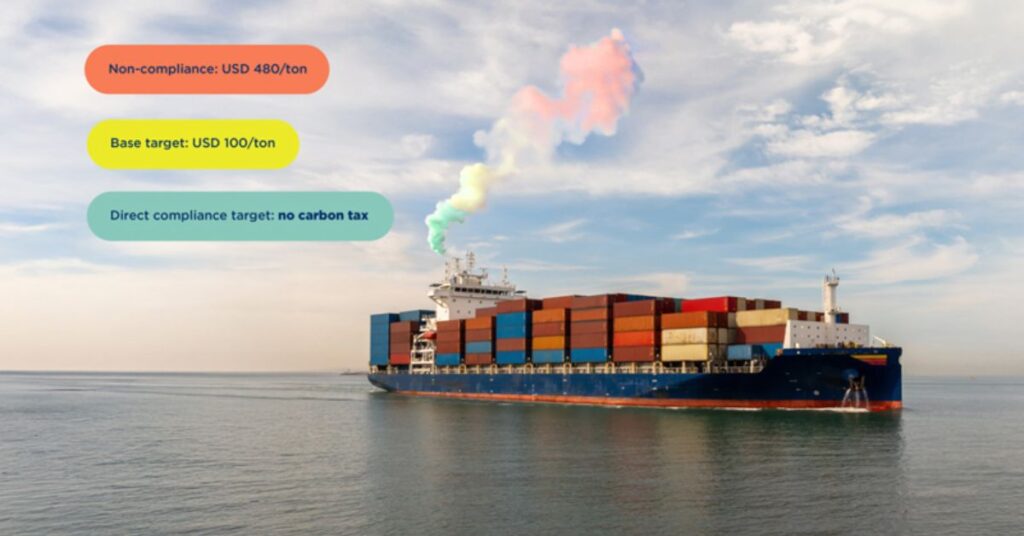
As the IMO’s Net-Zero Framework introduces new GHG intensity rules from 2028, shipowners face mounting compliance costs. DESMI’s OptiSave™ system offers a proven path to reduce energy use, emissions, and regulatory penalties.
DESMI Steps Up as IMO Tightens Emission Rules
With the International Maritime Organization (IMO) approving its Net-Zero Framework at the 83rd Marine Environment Protection Committee (MEPC 83) session in April 2025, global shipowners are now preparing for a new era of emissions regulation.
From 1 January 2028, all vessels above 5,000 gross tonnage (GT) — except those operating solely domestically or categorized as offshore units like FPSOs, FSUs, and drilling rigs — will be required to report their Greenhouse Gas Fuel Intensity (GFI) annually.
The rule forms a central pillar of the IMO’s plan to drive down lifecycle (well-to-wake) emissions from global shipping, and non-compliance will carry heavy financial penalties.
In this new regulatory landscape, DESMI’s OptiSave™ energy optimization system is emerging as a practical, proven solution to help shipowners reduce emissions, cut fuel costs, and achieve compliance.
Understanding the IMO Net-Zero Framework
The 2028 framework introduces a dual-target system to assess vessel performance against a 2008 emissions baseline. Shipowners must submit verified GFI reports each year, and outcomes will determine both compliance status and financial obligations.
- Direct Compliance Target (Tier 0):
Requires a 17% emissions reduction compared to 2008 levels by 2028.
✅ Reward: No cost, plus allocation of Surplus Units (SUs) that can offset Tier 2 deficits from other vessels or be saved for future compliance. - Base Target (Tier 1):
Requires a 4% reduction over 2008 levels.
⚠️ Penalty: Ships meeting this but not the direct target must buy Remedial Units (RUs) from the IMO at USD 100 per ton of CO₂ equivalent emitted. These cannot be offset with surplus credits. - Below Base Target (Tier 2):
Non-compliant vessels must purchase both Tier 1 and Tier 2 RUs, costing USD 480 per ton of CO₂ equivalent. Tier 2 costs can be partially offset by transferring surplus units from other vessels.
The Financial Stakes Are High
The emission reduction thresholds will tighten every year, meaning ships must continuously improve efficiency just to maintain compliance.
Even relatively efficient vessels face potential costs. ClassNK estimates that a ship burning about 4,000 tons of LNG annually will still owe approximately USD 112,560 per year — even if it meets the base target.
This makes energy optimization one of the most immediate and cost-effective strategies available to shipowners.
DESMI OptiSave™: Proven Energy Optimization for Compliance
For ship operators seeking to stay ahead of these rising standards, DESMI’s OptiSave™ solution offers a direct path to compliance through reduced onboard energy consumption.
The system uses smart sensors and variable frequency drives (VFDs) to automatically adjust the speed and output of pumps, fans, and compressors based on real-time operational demand — rather than fixed design parameters built for worst-case conditions.
In practice, this can deliver remarkable savings. DESMI’s calculations show that on a Panamax bulk carrier with three seawater pumps, optimizing pump speeds can cut fuel consumption by up to 79%, reducing both operational costs and CO₂ emissions.
OptiSave™ requires no major retrofitting or structural modifications, making it an attractive option for both newbuilds and existing vessels. The technology has already been deployed in over 700 systems across 450 ships globally, demonstrating its reliability and real-world impact.
Broader Compliance Benefits
Beyond meeting IMO’s GFI benchmarks, the OptiSave™ system offers multiple regulatory and commercial advantages:
- Improves Carbon Intensity Indicator (CII) ratings, helping avoid the need for SEEMP Corrective Action Plans.
- Supports compliance with regional frameworks such as the EU Emissions Trading System (ETS).
- Lowers fuel consumption, directly improving profitability and vessel marketability.
By improving operational efficiency, OptiSave™ helps shipowners manage the escalating demands of GHG reduction regulations while maintaining a competitive edge.
A Forward Path for the Industry
The MEPC 83 proposals will be tabled for formal adoption as amendments to MARPOL Annex VI at the October 2025 MEPC session. While finer details — including verification procedures and RU pricing mechanisms — are still under refinement, the regulatory direction is clear:
Ships that fail to decarbonize will face growing costs and limited market opportunities.
In this environment, DESMI’s energy-optimization technology offers more than just compliance — it provides a long-term efficiency upgrade that supports both environmental goals and financial sustainability.
Conclusion
The IMO’s Net-Zero Framework represents a fundamental shift in maritime emissions policy. With carbon penalties reaching up to USD 480 per ton of CO₂e, energy inefficiency will become increasingly expensive.
DESMI OptiSave™ gives shipowners a proven, ready-to-deploy tool to meet and exceed compliance targets — reducing emissions, improving vessel performance, and ensuring profitability in a decarbonizing maritime world.
Recent Posts
Ammonia
Reliance Industries Limited (RIL) has signed a binding long-term supply and purchase agreement (SPA) with Samsung C&T Corporation for the export of green ammonia over a 15-year period.
Bunkering
Ofiniti Raises $6.8 Million to Scale Digital Bunkering Platform for Global Shipping
Hydrogen
Hefring Marine and Ecomar Propulsion partner to deploy monitoring system on hydrogen-electric vessel