

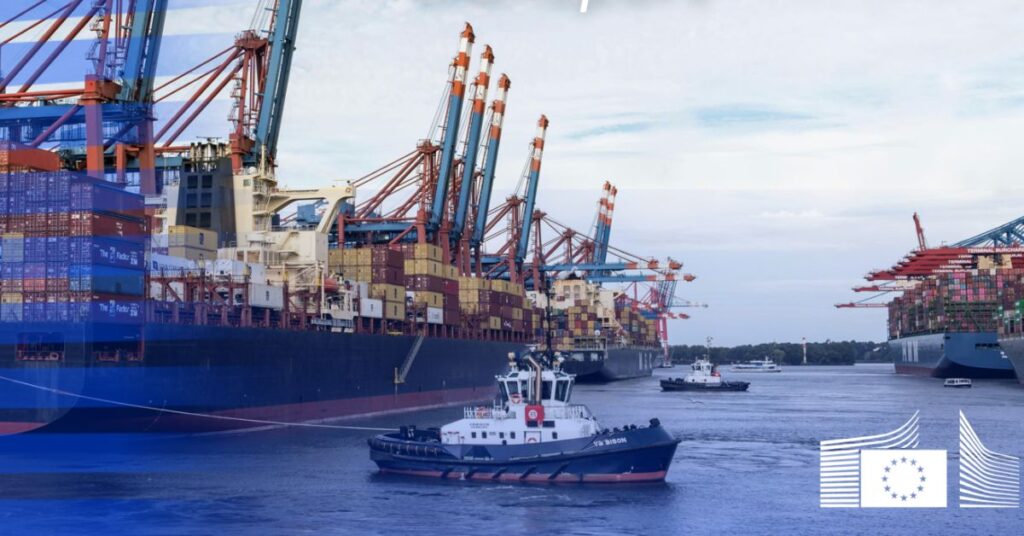
The European Union is investing more than €600 million in 70 projects aimed at accelerating the deployment of alternative fuel infrastructure across the trans-European transport network (TEN-T). The funding will support the electrification and decarbonisation of road, maritime, inland waterway and air transport in 24 EU member states.
Under the initiative, new infrastructure for electric charging, hydrogen refuelling, onshore power supply, and ammonia and methanol bunkering will be rolled out across key transport corridors. The projects were selected under the second cut-off of the 2024–2025 Alternative Fuels Infrastructure Facility (AFIF) call.
Large-Scale Deployment of Electric Charging and Hydrogen Refuelling
More than 1,000 electric recharging points with a minimum capacity of 150 kW will be installed for light-duty vehicles. For heavy-duty transport, 2,000 additional recharging points will be added, each delivering 350 kW, alongside 586 high-capacity points offering 1 MW output.
Sixteen European airports will also electrify ground-handling operations as part of efforts to reduce emissions in aviation. In parallel, the EU will expand hydrogen mobility through the installation of 38 hydrogen refuelling stations for passenger vehicles, trucks and buses.
Greener Infrastructure for Ports
Twenty-four maritime ports will adopt new low-carbon technologies, including onshore power supply systems, electrified port services, and ammonia bunkering facilities to support alternative fuel uptake in the maritime sector.
EU Officials Highlight Impact of Funding
Commissioner for Sustainable Transport and Tourism, Apostolos Tzitzikostas, said:
“We are currently supporting 70 projects with €600 million in EU funding to accelerate the deployment of alternative fuels infrastructure across Europe. These investments will strengthen our competitiveness and help make the transition to zero-emission mobility easier and more accessible for all citizens.”
Paloma Aba Garrote, Director of the European Climate, Infrastructure and Environment Executive Agency (CINEA), added:
“This significant EU support for public and private organisations will accelerate the transport sector’s transition toward a sustainable future. With these new projects, more than €2.5 billion in EU grants has been allocated to alternative fuels projects through AFIF since 2021. This demonstrates EU’s ambition to make zero-emission mobility an everyday reality.”
Next Steps
The 70 selected projects were approved by EU member states on 13 November 2025. The European Commission will now adopt the award decision. CINEA has begun preparation of the grant agreements with project beneficiaries.
The European Commission confirmed that, due to exhausted funds, the third cut-off of the AFIF call will be cancelled. The Commission will assess potential reflows before issuing a new work programme and call for proposals.
Background
A total of €600 million in grants has been allocated—€505 million from the General envelope and €95 million from the Cohesion envelope. The AFIF call originally made €1 billion available, split between the General envelope (€780 million) and Cohesion envelope (€220 million).
AFIF supports the rollout of publicly accessible electric charging stations and hydrogen refuelling stations in line with the Regulation on Alternative Fuels Infrastructure (AFIR), as well as ReFuelEU Aviation and FuelEU Maritime requirements. The mechanism also prioritises investments in onshore power supply at ports to facilitate the transition to renewable and low-carbon marine fuels. For heavy-duty road transport, the funding aligns with the Automotive Action Plan, which aims to accelerate adoption of zero-emission commercial vehicles.
Recent Posts
Ammonia
Reliance Industries Limited (RIL) has signed a binding long-term supply and purchase agreement (SPA) with Samsung C&T Corporation for the export of green ammonia over a 15-year period.
Bunkering
Ofiniti Raises $6.8 Million to Scale Digital Bunkering Platform for Global Shipping
Hydrogen
Hefring Marine and Ecomar Propulsion partner to deploy monitoring system on hydrogen-electric vessel