
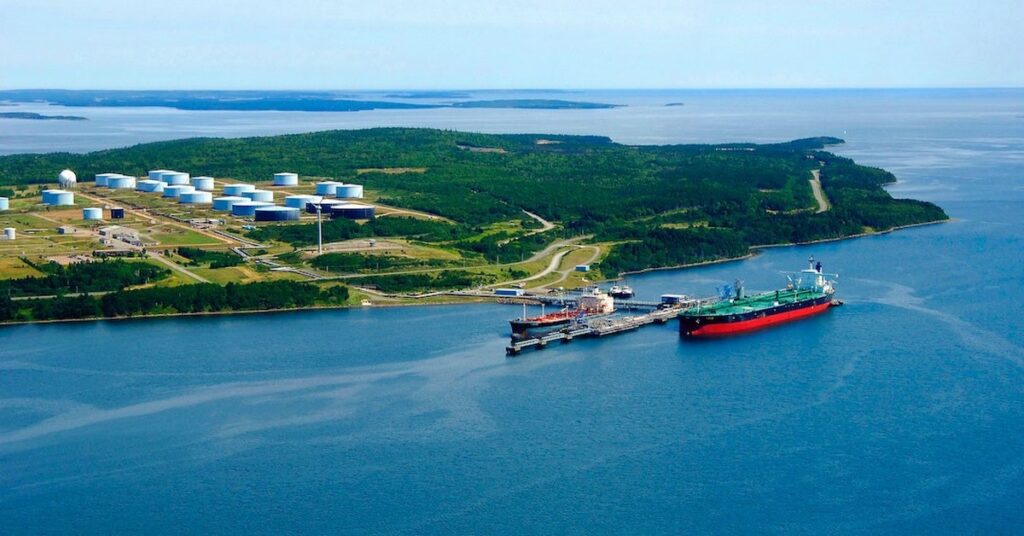
EverWind has published the results of an independent greenhouse gas assessment for its Point Tupper Green Fuels Project in Nova Scotia. The study, carried out by Dunsky Energy + Climate Advisors, estimates that the project could avoid around 500,000 tonnes of carbon dioxide emissions annually by replacing conventional fossil fuel-based ammonia with green ammonia. Over its planned 30-year lifespan, this equates to approximately 15 million tonnes of avoided emissions.
The project, scheduled to begin construction in 2026, will use new wind and solar generation capacity to produce 240,000 tonnes of green ammonia each year. Green ammonia is made by combining nitrogen with hydrogen produced from renewable-powered electrolysis, replacing the fossil fuels such as natural gas or coal typically used in ammonia production.
Dunsky’s analysis highlighted three findings: expected annual emissions reductions of about 500,000 tonnes, a cleaner production process that cuts emissions by up to 98 percent compared to conventional methods, and the addition of renewable energy to Nova Scotia’s grid to support stability and clean power integration.
Philippe Dunsky, President and CEO of Dunsky Energy + Climate Advisors, said: “Our analysis indicates that Canadian green ammonia has the potential to significantly lower global emissions when replacing existing ammonia in its current application. Further, if powered by clean generation and coupled with advanced energy storage options, it can be produced with minimal impacts to Nova Scotia’s grid.”
Trent Vichie, Founder and CEO of EverWind, stated: “Dunsky’s independent assessment confirms what we’re building at Point Tupper: a made-in-Nova Scotia project that delivers real, measurable climate impact at global scale. With our leading green ammonia project and partnering with Mi’kmaq First Nations, we can decarbonize hard-to-abate industries, support Nova Scotia’s grid, and help Canada meet its 2030 targets. This is a win for Nova Scotia, a win for Canada, and a win for our allies who are racing to cut emissions.”
The Canadian federal government has set a target of reducing emissions 40 to 45 percent below 2005 levels by 2030. Hydrogen is considered a central part of this plan, with estimates that clean hydrogen must contribute over 10 percent of the required reductions, or around 15 million tonnes annually. EverWind positions the Point Tupper project as contributing to this effort while also supporting sectors such as steel, fertilizers, mining, chemicals, and manufacturing that are identified as hard to decarbonize.
In addition to emissions benefits, the project is also aligned with wider federal priorities, including creating skilled jobs in rural areas, attracting investment, advancing clean technology, and reducing dependence on imported fossil fuels. With approvals secured, the facility is among the most advanced hydrogen and ammonia projects underway in Canada.
Recent Posts
Ammonia
Reliance Industries Limited (RIL) has signed a binding long-term supply and purchase agreement (SPA) with Samsung C&T Corporation for the export of green ammonia over a 15-year period.
Bunkering
Ofiniti Raises $6.8 Million to Scale Digital Bunkering Platform for Global Shipping
Hydrogen
Hefring Marine and Ecomar Propulsion partner to deploy monitoring system on hydrogen-electric vessel