

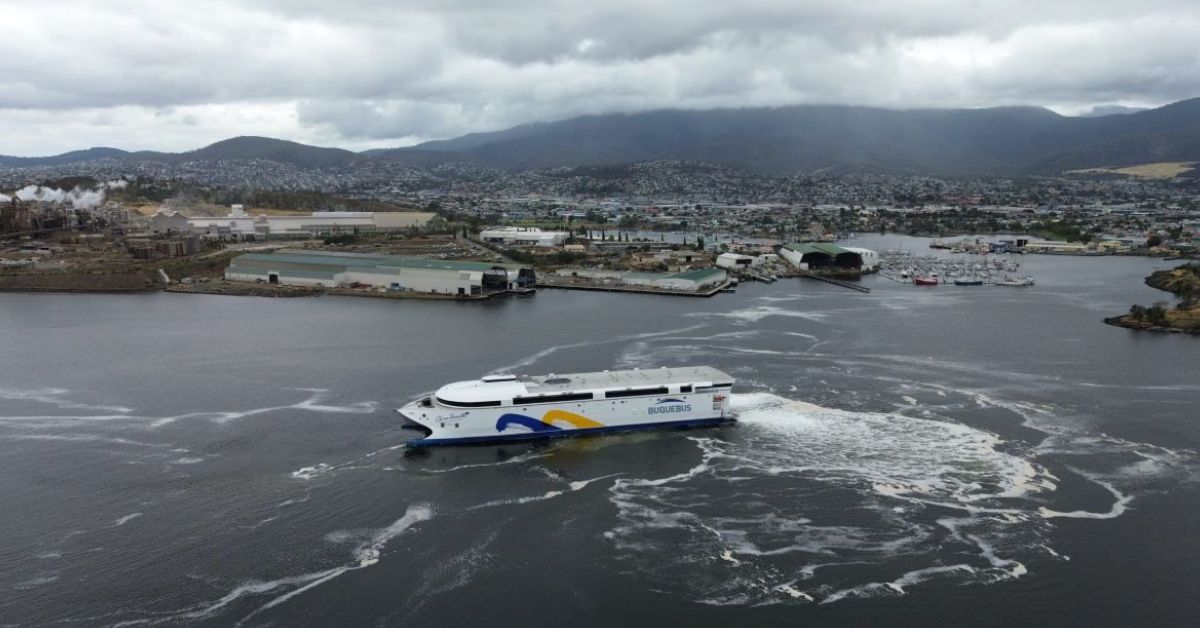
Incat Tasmania has commenced harbour trials of the world’s largest battery-electric ship, marking the first time the vessel has operated under its own electric propulsion. The trials are taking place on the River Derwent, signalling the transition of the project from construction to operational testing.
The 130-metre vessel, known as Hull 096, is the largest battery-electric ship ever built. During the harbour trials, the ship will undertake a series of controlled movements to assess propulsion performance, manoeuvrability, control systems, and overall onboard operations in real-world conditions.
According to Incat Tasmania, this is the first instance globally in which a vessel of this size and passenger-vehicle carrying capacity has been operated solely on battery power. The trials are designed to validate integrated system performance ahead of further testing phases.
Robert Clifford, Chairman of Incat Tasmania, said the start of harbour trials represents a key stage in the programme. “This is the moment where the ship truly comes alive. Moving Hull 096 under its own battery-electric power is a world first at this scale and confirms that electric propulsion is viable for large commercial vessels. Harbour trials allow us to test how all systems perform together in the water.”
He added that the trials form part of a broader testing and commissioning programme leading up to the vessel’s delivery to South America. The harbour trials are expected to be followed by additional sea trials before final handover.
Hull 096 is part of a growing number of large electric and hybrid vessels being developed as shipbuilders and operators explore alternatives to conventional marine propulsion in response to tightening emissions regulations and decarbonisation targets across the global maritime sector.
Recent Posts
Ammonia
Reliance Industries Limited (RIL) has signed a binding long-term supply and purchase agreement (SPA) with Samsung C&T Corporation for the export of green ammonia over a 15-year period.
Bunkering
Ofiniti Raises $6.8 Million to Scale Digital Bunkering Platform for Global Shipping
Hydrogen
Hefring Marine and Ecomar Propulsion partner to deploy monitoring system on hydrogen-electric vessel