
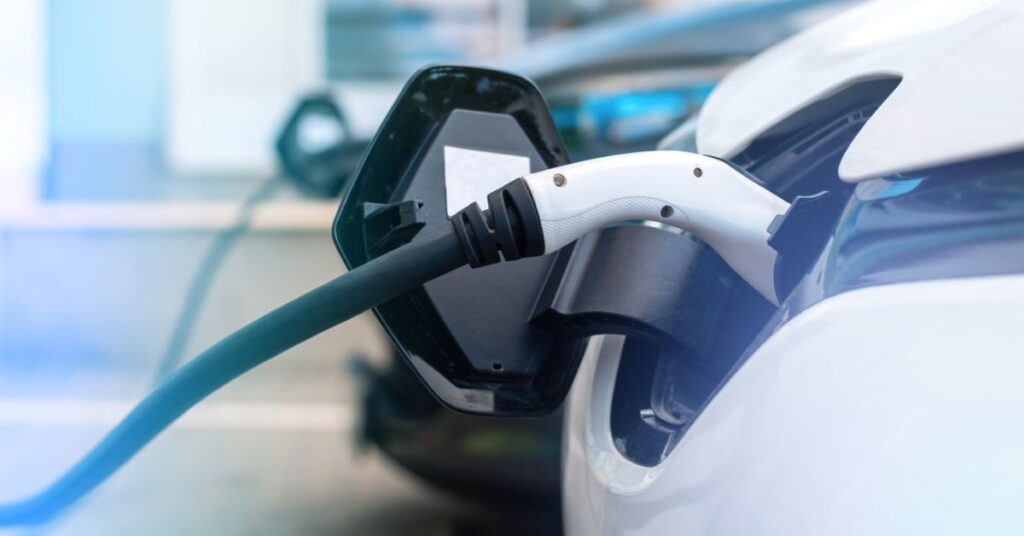
The Ministry of Heavy Industries (MHI) has released operational guidelines for the deployment of Electric Vehicle Public Charging Stations (EV PCS) under the PM E-DRIVE scheme, which has an overall outlay of ₹10,900 crore. Of this, ₹2,000 crore has been earmarked to accelerate the development of public charging infrastructure across India.
Eligible Entities and Locations
Proposals for EV PCS can be submitted by central ministries, state governments, union territories, and their public sector undertakings through designated nodal agencies. Priority will be given to million-plus population cities, smart cities, state capitals, National Clean Air Programme (NCAP) cities, and major highways identified in consultation with the Ministry of Road Transport and Highways.
Charging and Battery Standards
Charging stations must comply with the Ministry of Power’s 2024 guidelines. Standards include Light EV DC and AC/DC Combo chargers (up to 12 kW) for two- and three-wheelers, and CCS-II connectors (50 kW to 500 kW) for cars, buses, and trucks. Battery Swapping Stations (BSS) and Battery Charging Stations (BCS) are also eligible, provided they meet the updated MoP guidelines.
Subsidy Framework
The scheme provides varying levels of subsidy depending on the location:
- 100% subsidy on infrastructure and equipment for government premises with public access
- 80% on infrastructure and 70% on equipment at public sector-controlled locations such as airports, railway stations, metro stations, and fuel outlets
- 80% subsidy on infrastructure for other locations in cities and highways
- 80% subsidy on infrastructure for BSS/BCS installations
Subsidies will be calculated against benchmark costs or actual costs, whichever is lower, excluding refundable deposits.
Implementation and Monitoring
The process involves proposal submission, procurement, and phased subsidy disbursement. A first tranche of 70% will be released after infrastructure and equipment procurement, with the balance disbursed once stations are commissioned and integrated into the upcoming National Unified Hub.
Bharat Heavy Electricals Limited (BHEL) has been designated as the Project Implementation Agency, while IFCI will serve as the Project Management Agency.
Recent Posts
Ammonia
Reliance Industries Limited (RIL) has signed a binding long-term supply and purchase agreement (SPA) with Samsung C&T Corporation for the export of green ammonia over a 15-year period.
Bunkering
Ofiniti Raises $6.8 Million to Scale Digital Bunkering Platform for Global Shipping
Hydrogen
Hefring Marine and Ecomar Propulsion partner to deploy monitoring system on hydrogen-electric vessel