

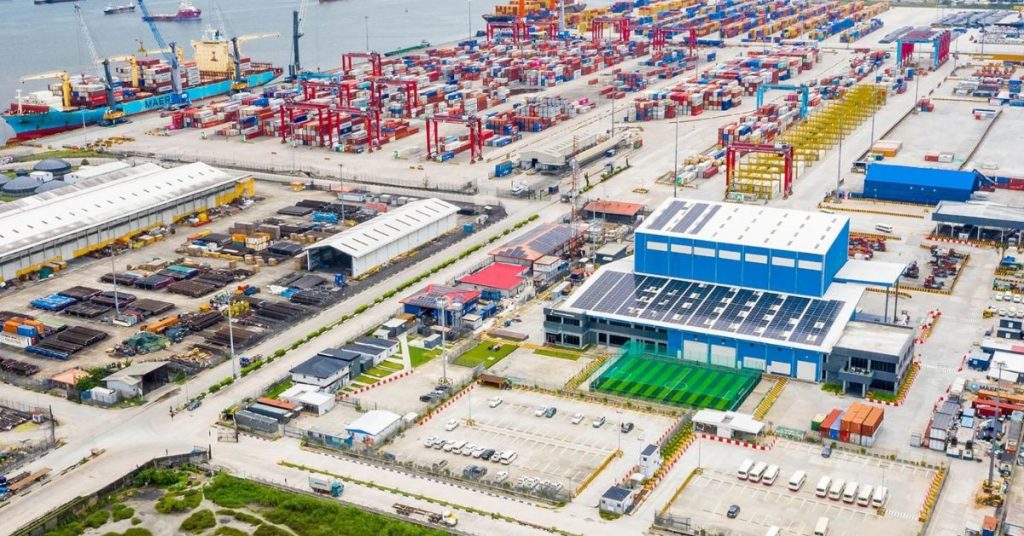
A new white paper jointly released by APM Terminals and international consultancy Systemiq outlines the economic and environmental case for electrifying Nigeria’s containerised trade sector. The findings, presented at the Decarbonising Infrastructure in Nigeria Summit, argue that Nigeria has the opportunity to adopt low-emission logistics at scale by directly transitioning to electric infrastructure rather than extending reliance on fossil-fuel-based systems.
The report estimates that a national transition to electrified port operations and freight corridors could unlock up to 830 million US dollars in investment by 2030. Additional projected outcomes include the reduction of greenhouse gas emissions by approximately 390,000 tonnes of CO2 equivalent, improved air quality, and increased demand for skilled local labour. Enhanced reliability of power supply is also identified as a secondary benefit of investing in grid-tied infrastructure.
International examples cited in the report show growing momentum in similar transitions. Over 40 ports globally, including locations in Jordan, Brazil and India, are incorporating electric container-handling equipment and energy-efficient infrastructure. Pilot electric trucking corridors have also been launched in emerging economies such as Kenya, China and India, providing operational models that could be adapted for Nigeria.
APM Terminals, which operates key facilities in Apapa (Lagos), Onne (Rivers State), and Kano, has already begun implementing solar energy solutions, such as those installed on the West Africa Container Terminal inaugurated in 2024. The company indicates there is room to expand electrification efforts in partnership with both public and private stakeholders.
Systemiq partner Eveline Speelman noted that the current timing aligns with broader investment cycles. “With nearly 60 percent of container terminal concessions up for renewal, there is an opportunity to integrate electrification goals into upcoming infrastructure agreements,” she said.
The report suggests a phased approach, starting with short-term actions to improve power supply and transition to electric port equipment, and building towards more comprehensive changes over the next five to ten years. Frederik Klinke, CEO of APM Terminals Nigeria, stated that container trade continues to be central to the country’s economy and logistics sector. He noted that electrification could bring operational improvements and environmental benefits, and added that the roadmap provides a framework for how public-private cooperation could move these plans forward.
Recent Posts
Ammonia
Reliance Industries Limited (RIL) has signed a binding long-term supply and purchase agreement (SPA) with Samsung C&T Corporation for the export of green ammonia over a 15-year period.
Bunkering
Ofiniti Raises $6.8 Million to Scale Digital Bunkering Platform for Global Shipping
Hydrogen
Hefring Marine and Ecomar Propulsion partner to deploy monitoring system on hydrogen-electric vessel