

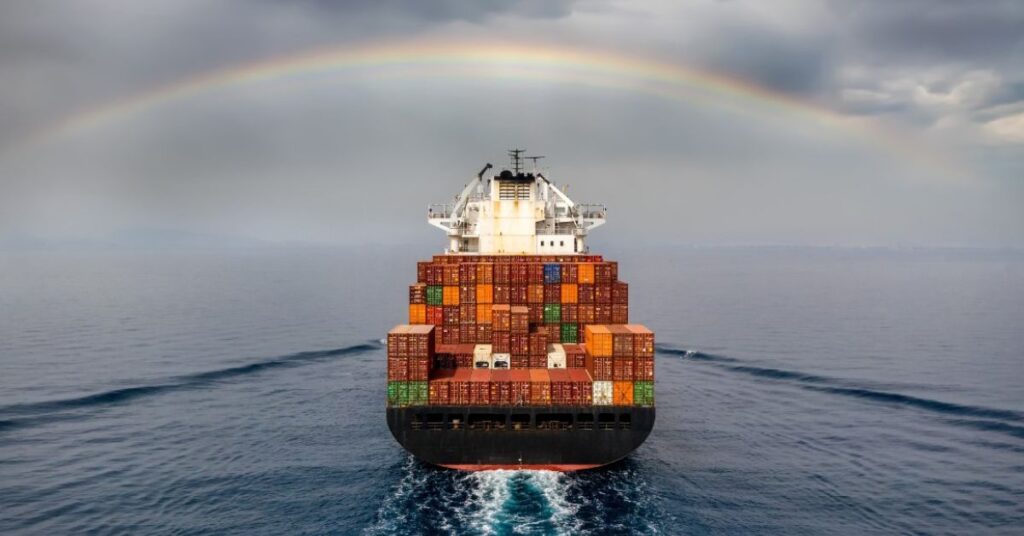
Maritime transport and trade are facing mounting pressures as geopolitical disruptions, shifting trade routes, and structural transitions reshape the sector, according to the Review of Maritime Transport 2025 released by UN Trade and Development (UNCTAD).
Shipping routes that once passed through the Red Sea in a matter of days now extend for weeks around the Cape of Good Hope, leading to increased costs, volatile freight rates, and higher emissions. Chronic port disruptions are further straining supply chain reliability, with developing countries disproportionately affected.
The report notes that technological, environmental, and geoeconomic transitions are converging at a pace that is forcing the industry to reassess how it operates. Alternative fuel vessels account for more than half of the tonnage in new ship orders, yet over 90 percent of the current fleet continues to rely on conventional fuels. Meanwhile, advances in automation and digitalization bring opportunities for efficiency but also heighten exposure to cyber risks.
“Maritime transport has weathered storms before. But never have so many transitions converged so quickly. The sector will adapt. The question is whether adaptation will be managed or chaotic, inclusive or divisive, sustainable or merely survivable,” said Rebeca Grynspan, Secretary-General of UN Trade and Development.
The Review of Maritime Transport 2025 stresses the need for informed policymaking to ensure that transitions toward decarbonization, digital systems, and new trade routes are fair and inclusive. “The transitions ahead – to zero carbon, to digital systems, to new trade routes – must be just transitions. They must empower, not exclude. Build resilience, not deepen vulnerability,” Grynspan added.
Recent Posts
Ammonia
Reliance Industries Limited (RIL) has signed a binding long-term supply and purchase agreement (SPA) with Samsung C&T Corporation for the export of green ammonia over a 15-year period.
Bunkering
Ofiniti Raises $6.8 Million to Scale Digital Bunkering Platform for Global Shipping
Hydrogen
Hefring Marine and Ecomar Propulsion partner to deploy monitoring system on hydrogen-electric vessel