
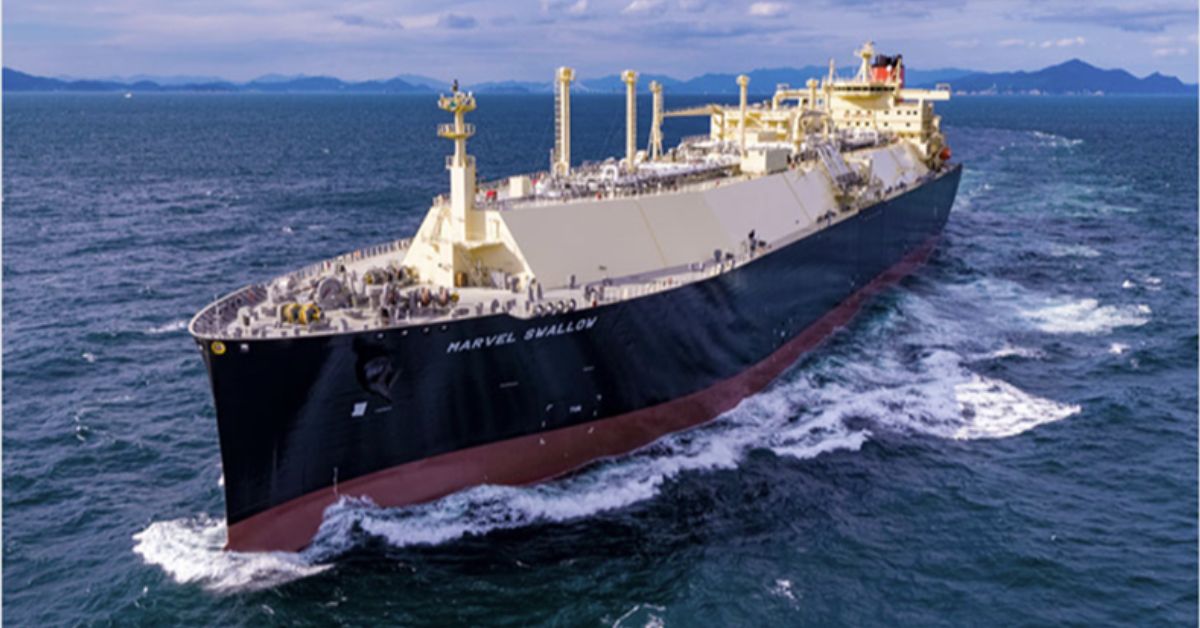
Wärtsilä has signed a 10-year Lifecycle Agreement with MOL Global Ship Management, covering operational support for 12 liquefied natural gas (LNG) carriers. MOL Global Ship Management is fully owned by Mitsui O.S.K. Lines (MOL).
According to Wärtsilä, the agreement is intended to support reliable vessel operations through reduced engine downtime, extended maintenance intervals, and greater flexibility in maintenance planning. The agreement for three vessels was booked in the third quarter of 2025, while the remaining nine vessels were booked during the first half of 2025.
Focus on operational reliability and maintenance planning
The LNG carriers were delivered during 2024 and 2025 and are operated under MOL Global Ship Management. Each vessel is equipped with two six-cylinder and two eight-cylinder Wärtsilä 34DF dual-fuel engines, along with four Wärtsilä gas valve units (GVUs). Catalytic systems are installed to reduce emissions.
Under the Lifecycle Agreement, MOL Global Ship Management will gain access to Wärtsilä’s Dynamic Maintenance Planning solution, 24/7 remote operational support, and proactive contract management services. Wärtsilä stated that these features are designed to allow flexible maintenance scheduling, reduce spare parts consumption, and ensure availability of service engineers across the fleet.
The agreement also includes Wärtsilä’s Expert Insight predictive maintenance system, which uses real-time vessel data to identify potential technical issues before they affect operations. This approach is intended to minimise unplanned downtime and avoid unexpected repairs.
Industry context and operator perspective
Owners and operators of gas carriers are facing increased operational complexity amid volatile markets, financial uncertainty, and tightening environmental requirements. In response, fleet managers are placing greater emphasis on reliability, cost predictability, and efficiency across vessel operations.
“Wärtsilä’s Lifecycle Agreement will optimise our vessel operations and maintenance, ensuring that we can maximise uptime and performance. In addition, this agreement will play a crucial role in supporting the sustainable operations of our fleet by helping us reduce emissions and operate more efficiently,” said Namit Mathur, Director, MOL Global Ship Management Pte. Ltd.
Wärtsilä on lifecycle agreements
Wärtsilä stated that lifecycle agreements are increasingly used by shipowners and managers to support long-term fleet performance and maintenance planning.
“Lifecycle agreements provide shipowners, like MOL, with operational reliability, cost predictability, and optimised maintenance. These benefits support consistently high service standards and enable fulfilment of customer commitments, while also contributing to reduced operational emissions in line with the industry’s decarbonisation goals,” said Henrik Wilhelms, Director, Agreement Sales – Wärtsilä Marine.
MOL has an established commercial relationship with Wärtsilä, with multiple vessels in its fleet already operating under Wärtsilä service agreements.
Recent Posts
Ammonia
Reliance Industries Limited (RIL) has signed a binding long-term supply and purchase agreement (SPA) with Samsung C&T Corporation for the export of green ammonia over a 15-year period.
Bunkering
Ofiniti Raises $6.8 Million to Scale Digital Bunkering Platform for Global Shipping
Hydrogen
Hefring Marine and Ecomar Propulsion partner to deploy monitoring system on hydrogen-electric vessel