
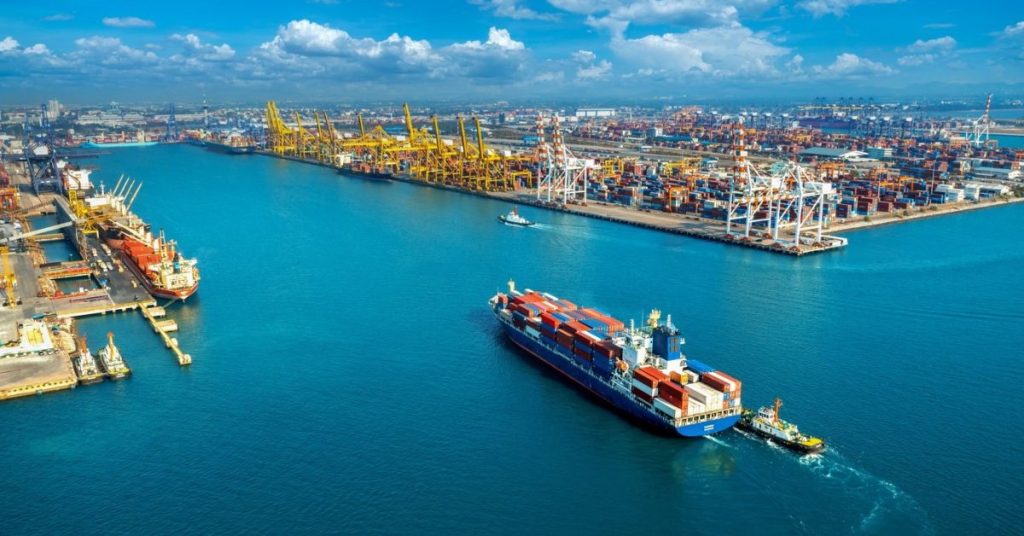
India reinforced its commitment to sustainable maritime development and green shipping during the ‘India Maritime Investment Meet’ held at India House in London. The event saw senior government officials outline a compelling investment case to global maritime stakeholders, spotlighting India’s liberalised policy framework, green infrastructure push, and technological advancements aimed at transforming the country into a global maritime hub.
Addressing the gathering, TK Ramachandran, Secretary of the Ministry of Ports, Shipping and Waterways, highlighted India’s strong macroeconomic fundamentals, noting that the country has emerged as the fourth-largest economy with a GDP surpassing 4 trillion US dollars. He emphasised the recent uptick in foreign investments, attributing this to India’s favourable investment climate, including 100 percent foreign direct investment permitted under the automatic route in shipping and shipbuilding.
Ports as Drivers of Clean Energy Transition
Ramachandran outlined India’s vision of ports not just as conduits of trade but as anchors of sustainability and clean energy transitions. “Our ports are evolving into hubs for offshore wind power, green hydrogen, and low-carbon logistics,” he said, reaffirming that sustainability is central to India’s national maritime strategy.
Key initiatives include the establishment of three Green Hydrogen Hub Ports at Deendayal, Chidambarnar, and Paradip, which are expected to serve as launchpads for India’s ambitions in clean energy production and distribution. The Green Tug Transition Programme, designed to accelerate the decarbonisation of port operations, was also highlighted as a milestone in India’s broader maritime energy transition.
Sustainable Shipbuilding and Recycling
The Secretary underscored India’s focus on building a resilient and sustainable maritime industrial base through cleaner shipbuilding practices and environmentally responsible ship recycling. These pillars, he said, are integral to achieving a globally competitive maritime sector that aligns with international emissions reduction targets.
Expanding Capacity and Attracting Investment
India is currently expanding its cargo handling capacity, aiming to increase throughput from 2,760 million tonnes per annum (MTPA) to 3,500 MTPA by 2030 and further to 10,000 MTPA by 2047. These developments are being executed through Public-Private Partnership models, offering significant opportunities for private capital and technology partnerships.
The financial incentives offered at the International Financial Services Centre (IFSC) in GIFT City were presented as a key advantage for international investors. These include a 10-year tax holiday, zero GST on ship imports, and no withholding tax on maritime transactions.
Pushing the Digital Frontier
India’s maritime strategy also places a strong emphasis on digital transformation. Ramachandran detailed projects such as the Maritime Single Window, the One Nation One Port Process (ONOP), and MAITRI—a virtual trade corridor for IMEEC countries—as steps toward improving efficiency and reducing costs through end-to-end digital integration.
Invitation to India Maritime Week 2025
The Secretary invited global stakeholders to participate in India Maritime Week 2025, scheduled for October 27 to 31 in Mumbai. The event will serve as a premier platform for showcasing innovation, exploring investment opportunities, and building strategic partnerships in the maritime space.
UK Partnership and Global Alignment
The event was inaugurated by Vikram K. Doraiswami, High Commissioner of India to the United Kingdom, who emphasised the historic maritime ties between India and the UK. He highlighted the shared focus on building sustainable and inclusive blue economy corridors to support global trade and clean energy transitions. Attendees welcomed India’s progressive regulatory reforms, such as its liberalised ship flagging regime and flexible financing models under the Maritime Development Fund, viewing them as important steps toward unlocking private sector participation and accelerating the transition to greener shipping.
Recent Posts
Bunkering
Japan Completes First Ship-to-Ship Ammonia Bunkering for Ammonia-Fuelled Vessel
Power & Propulsion
Berg Propulsion to Open Mumbai Office as India Shipbuilding Activity Expands
Ammonia
Azane and Yara Partner on Ammonia Supply for Marine Fuel Market