
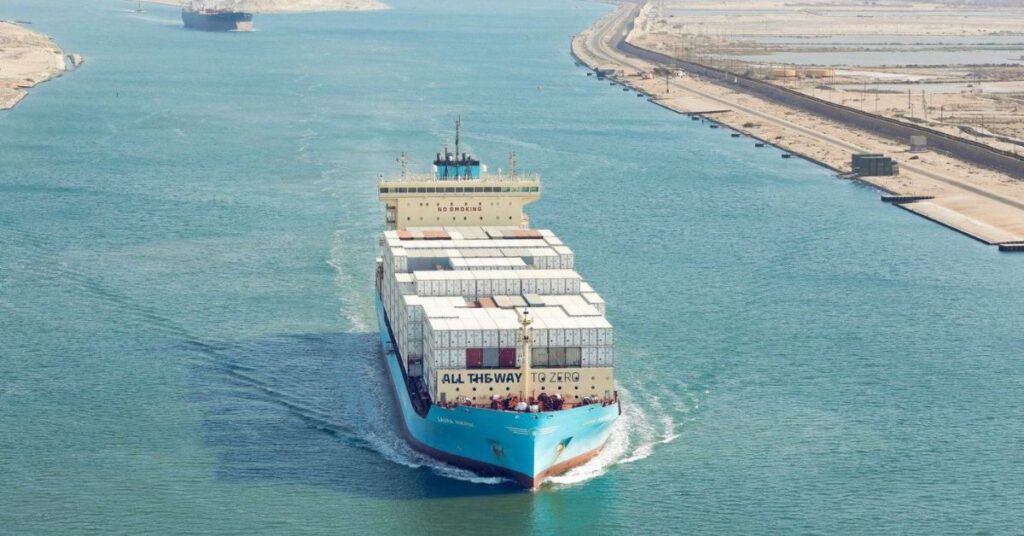
The shipping industry is responsible for an estimated 2 to 3 percent of global greenhouse gas emissions. In response, the International Maritime Organization has set an ambitious target to fully decarbonise the sector by 2050. Achieving this goal will require a large-scale transition away from fossil fuels toward zero-emission alternatives.
While the Global Maritime Forum does not endorse any single fuel, methanol and ammonia are increasingly seen as leading contenders. Both fuels have distinct advantages and challenges, as well as different pathways to scaling production.
Advantages and Risks
Ammonia offers the benefit of containing no carbon, meaning it does not emit carbon dioxide when burned. Engine tests suggest reductions of up to 95 percent in tank-to-wake emissions are possible. However, concerns remain over ammonia slip, the release of nitrogen oxides, and emissions of nitrous oxide, a greenhouse gas far more potent than CO₂. Safety risks related to ammonia’s toxicity and handling requirements are also under close scrutiny.
Methanol, while a carbon-based fuel, can achieve net-zero status if produced from renewable sources. It does not pose the same toxicity or nitrous oxide risks as ammonia, but it does emit carbon dioxide when burned. Methanol is also highly flammable, with invisible flames in daylight creating additional safety considerations. Despite this, it is easier to handle than ammonia, as it can be stored using existing infrastructure with limited modifications.
Market Readiness
Both fuels are still in the early stages of adoption, following what experts describe as an S-curve transition: a slow initial emergence, rapid diffusion, and eventual market maturity. Methanol is ahead in this process, with about 60 methanol-capable vessels already in service, more than 300 on order, and nearly 20 ports offering green methanol bunkering.
Ammonia is closer to proof of concept, with the first ammonia-powered vessels undergoing trials, engine development nearing completion, and early bunkering tests at select ports. Scaling remains a major hurdle. For methanol, the bottleneck lies in the availability of green production, while for ammonia it is the absence of commercial bunkering infrastructure.
Operational Challenges
Both fuels have lower energy density compared to conventional fuel oil, meaning vessels require larger tanks or more frequent refueling. Methanol-powered ships typically bunker twice as often as conventional vessels, while ammonia-powered ships would need even larger storage solutions or more frequent refueling.
Safety remains a focal point for both options. Industry pilots, research studies, and crew training programmes are underway to ensure safe handling. To date, no major safety barriers have been identified that would prevent either fuel from adoption at scale.
A Multi-Fuel Future
Experts stress that no single fuel will drive shipping’s full decarbonisation. Methanol and ammonia are expected to play important roles, alongside bio- and e-methane, liquid biofuels, hydrogen, and battery-electric technologies in specific vessel segments. The eventual mix will depend on vessel types, trade routes, costs, and infrastructure readiness.
What is clear, however, is that coordinated regulation, investment in supply chains, and large-scale deployment of zero- and near-zero-emission fuels will be critical if shipping is to achieve the IMO’s 2050 target.
Recent Posts
Marine
Singapore Unveils Ammonia Bunkering Standard, First Ethanol Bunkering and LNG Storage Plans
Ammonia
Singapore Launches TR 148 Ammonia Bunkering Standard and Model Contract to Prepare for Ammonia-Fuelled Ships
Policy
China Targets Doubling New Energy Inland Vessels by 2028 Under 2026-2030 Action Plan