

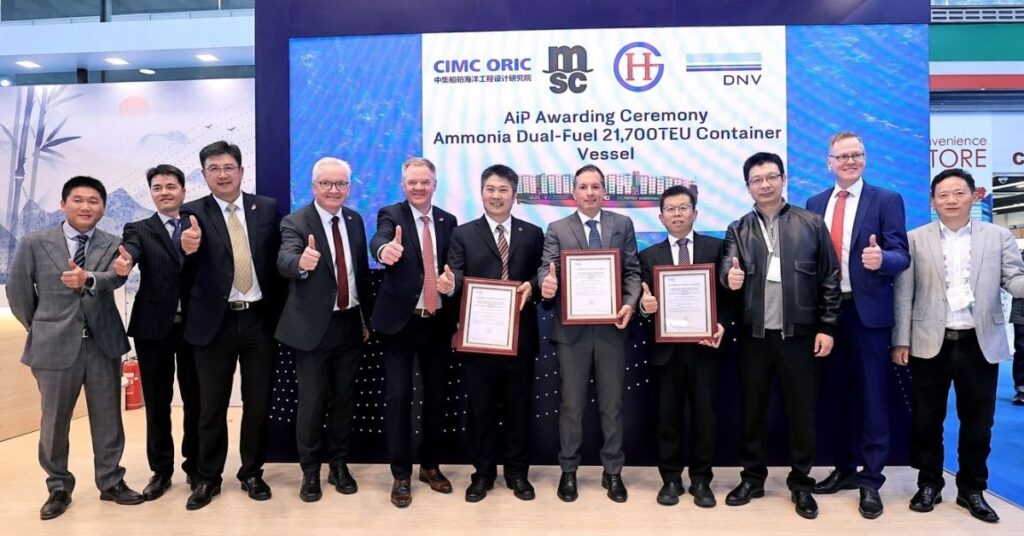
DNV has issued an Approval in Principle (AiP) to MSC, Zhoushan Changhong International, and CIMC ORIC for a 21,700 TEU ammonia-dual fuel ultra-large container ship (ULCS) design. The concept represents one of the latest developments in ammonia-ready mainline container shipping as the industry evaluates zero-carbon fuel options.
The design features a new generation of ammonia dual-fuel main engines paired with oversized C-type ammonia tanks. Hull modifications—including a vertical bow, optimized stern, adjusted hull lines, low-resistance coatings, and energy-saving hydrodynamic devices—are intended to improve overall fuel efficiency. These elements have undergone validation through CFD analysis and model testing.
Yin Xunbin, General Manager of CIMC ORIC, said:
“We are proud to see our 21,700 TEU ammonia-dual fuel design recognized with DNV’s AiP. This vessel concept offers shipowners an option for high-capacity, energy-efficient, zero-carbon container ship as part of the next-generation sustainable global liner services. This milestone validates our commitment to providing future-ready vessels that meet global trade demands while reducing emissions.”
DNV assessed the design against its rules and applicable international requirements, including standards covering ammonia handling systems, fuel containment, propulsion configuration, and associated safety and mitigation measures. With the AiP in place, the consortium can advance to detailed engineering and future commercial evaluation under DNV class.
Norbert Kray, DNV Senior Vice President and Maritime Regional Manager for Greater China, said:
“Ammonia-dual fuel options are firmly in the decarbonization race, we have gone from concept to orders, and soon will see the first deliveries. At DNV, we have continued to develop our rules and standards to enable these new technologies, alongside guidances, and practical decision support. The AiP demonstrates that the design is in line with industry’s leading safety and design standards, reinforcing confidence in ammonia as a viable fuel for large container vessels. We congratulate MSC, Zhoushan Changhong International, CIMC ORIC, and are very proud to be the class partner on this project, which supports the industry’s drive toward sustainable shipping at scale.”
The 21,700 TEU concept incorporates a twin-island layout, revised foredeck structure, and optimized hold configuration to increase cargo-handling efficiency. Additional 40-foot container bays have been integrated without compromising port compatibility or operational requirements. The consortium plans to continue work on safety assessments, ammonia mitigation systems, and full fuel-system integration as the project moves into its next phase.
Recent Posts
Marine
WinGD Orders Four Dual-Fuel Engines for Polaris Shipping’s Newcastlemax Fleet
EV
Jio-bp, DRIVN sign MoU to expand commercial EV charging infrastructure in India
Policy
DGMA discusses marine engine manufacturing partnership with WinGD in India