

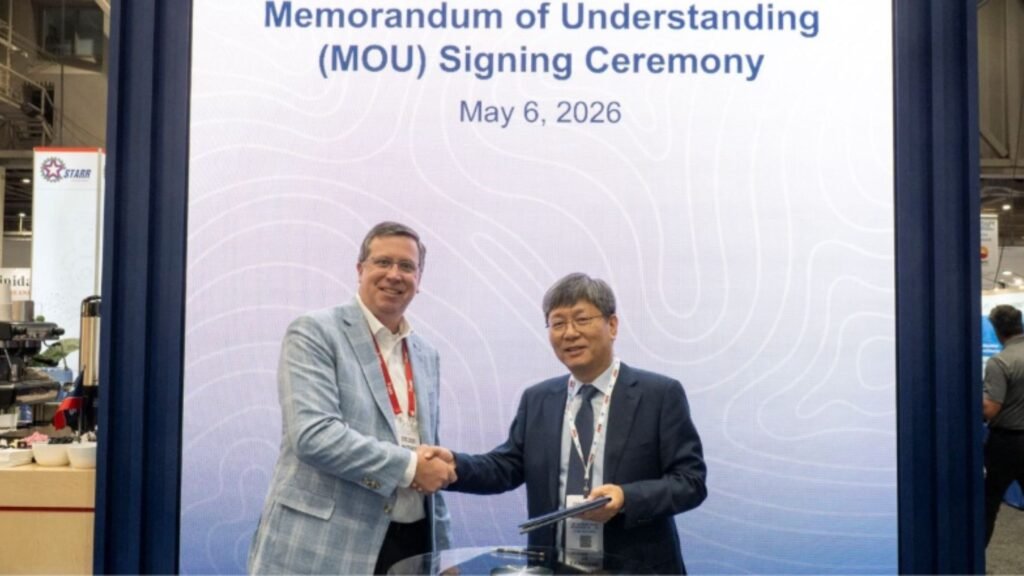
The American Bureau of Shipping (ABS) and HD Hyundai Heavy Industries (HHI) have signed a Memorandum of Understanding to work together on a range of offshore energy and digital initiatives, with a focus on decarbonisation and next-generation energy systems.
The MoU, signed on 6 May, sets out a cooperative framework covering sustainability, digital innovation, and operational resilience across the maritime and offshore sectors.
What the Two Sides Plan to Work On
The agreement outlines a relatively broad scope, with the two organisations identifying several strategic focus areas:
Offshore wind development
Offshore substations
Small modular reactors (SMRs)
Offshore spaceport infrastructure
Carbon capture and storage (CCS) value chain solutions
Digital technologies supporting sustainable operations
The inclusion of SMRs and offshore spaceport infrastructure signals an interest in emerging offshore use cases that extend beyond conventional oil, gas, and wind installations.
How Each Side Brings Something to the Table
Matthew Tremblay, ABS Senior Vice President, Global Offshore, said: “This agreement reflects our shared focus on helping the industry with practical, forward-looking solutions. By leveraging our deep marine and offshore experience and HHI’s extensive expertise in ocean energy and offshore engineering, we can help meet evolving sustainability and operational goals.”
ABS brings classification society experience across marine and offshore structures, while HHI contributes shipbuilding and offshore engineering capabilities, including its work on floating offshore structures and energy infrastructure.
The Bigger Picture on Offshore Energy
Kwangsik Won, Senior Executive Vice President of HD Hyundai Heavy Industries, said: “As decarbonization and digital transformation reshape the global energy landscape, collaboration across the offshore energy sector is becoming increasingly important. Through close partnerships with global stakeholders, we will advance low-carbon offshore energy solutions and integrate digital technologies to enhance efficiency, safety, and long-term competitiveness.”
The offshore energy sector is going through a structural shift, with traditional oil and gas operators diversifying into offshore wind, hydrogen production, and CCS. Each of these involves different structural, regulatory, and operational requirements, creating demand for classification standards and engineering frameworks that can keep pace with new asset types.
Why SMRs and Spaceports Are in the Mix
The inclusion of small modular reactors reflects rising interest in nuclear power as a baseload complement to intermittent renewables, with floating or offshore-sited SMRs floated as one deployment model. Classification societies including Lloyd’s Register have separately been working on frameworks for marine nuclear applications.
Offshore spaceport infrastructure, while a niche segment, has gained traction as commercial space launch operators look at sea-based platforms for equatorial launches and reusable rocket recovery — a market segment requiring marine engineering expertise that overlaps with offshore oil and gas heritage.
What Happens Next
The MoU itself does not commit either party to specific projects or investment levels, instead establishing the framework for future joint work. How quickly the partnership translates into concrete deliverables will depend on which of the identified focus areas attract commercial demand and customer-led project opportunities.
Recent Posts
EV
Maharashtra Signs ₹150 Crore MoU to Build Electric Boat Manufacturing Facility for Mumbai Water Metro
Hydrogen
Samskip’s SeaShuttle Joins EU HyShip Project to Advance Hydrogen-Powered Short-Sea Shipping
Methanol
Maritime Technologies Forum Releases Safety Management Guidelines for Methanol-Fuelled Ships