

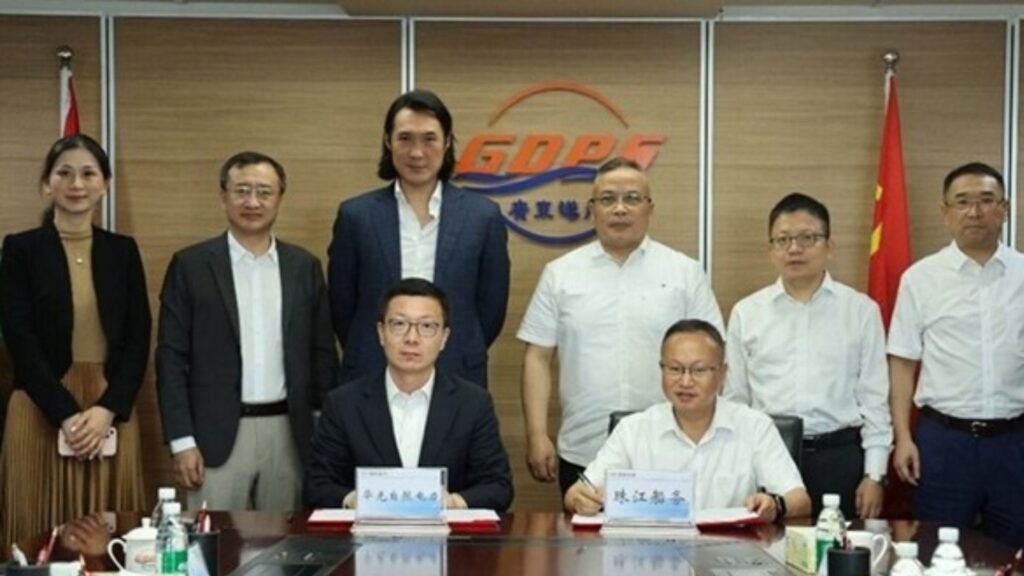
Wah Kwong NatPower Holdings has signed a Memorandum of Understanding with Chu Kong Shipping Enterprises (Group) Co. (CKS) to jointly develop electric waterborne transport infrastructure in Hong Kong, marking a fresh push to decarbonise maritime operations across the Guangdong–Hong Kong–Macao Greater Bay Area.
CKS is a wholly owned Hong Kong subsidiary of Guangdong Provincial Port & Shipping Group Company Limited. The agreement establishes a cooperative framework intended to combine the technical and operational capabilities of both parties around the electrification of Hong Kong’s water transport sector.
What Will the Partnership Cover?
The two companies have agreed to focus joint work on three core areas tied to the shipping industry’s low-carbon transition:
Construction and technological development of electric vessels
Build-out of charging and battery-swap networks at terminals across Guangdong and Hong Kong
Broader promotion of waterborne transport electrification within Hong Kong
The MoU also covers the exchange of industry information and joint review of emerging policy and technical developments relevant to maritime electrification.
Who Are the Two Parties?
Wah Kwong NatPower Holdings is a joint venture that combines the maritime operations background of Wah Kwong Maritime Transport Holdings Limited with the marine clean energy work of NatPower Marine. The company is focused on shore power, clean energy systems, and supporting infrastructure for the shipping sector’s energy transition.
CKS operates within the port logistics and waterborne transport segments of the Guangdong Provincial Port and Shipping Group, with established operations in the Greater Bay Area.
Why Is the Greater Bay Area a Focus for Maritime Electrification?
The Guangdong–Hong Kong–Macao Greater Bay Area has emerged as one of the more active regions globally for electric vessel deployment, supported by parallel investment in shoreside charging networks and battery-swap infrastructure.
Standardisation of charging and battery-swapping systems is a central piece of the regional approach, since cross-border vessel operations between mainland Chinese ports and Hong Kong terminals require compatible energy replenishment systems. Without common standards, electric vessels risk being confined to single-port operations, limiting their commercial viability.
What Happens Next?
Following the MoU, the two parties will set up a joint working group to define the structure of the collaboration, identify priority projects, and move toward concrete infrastructure deployments. The agreement itself does not commit either party to specific investment figures or project timelines, framing the document instead as the basis for further exchanges and business exploration.
The two sides intend to develop electrification pathways tailored to Hong Kong’s operating environment, which includes a mix of cross-boundary ferry services, harbour craft, and inter-terminal vessels.
Why Does This Matter for the Shipping Industry?
The shipping sector is under mounting regulatory and commercial pressure to cut emissions, with the International Maritime Organization tightening targets for greenhouse gas reduction across the global fleet. Short-sea and harbour operations—where vessels run fixed routes with predictable energy needs—are widely viewed as the most viable early use case for full battery-electric propulsion, ahead of deep-sea shipping where alternative fuels remain the likelier pathway.
Hong Kong’s compact ferry network and dense terminal infrastructure make it a workable testbed for electric vessel operations, provided charging and battery-swap systems can be deployed at scale.
Recent Posts
Marine
WinGD Orders Four Dual-Fuel Engines for Polaris Shipping’s Newcastlemax Fleet
EV
Jio-bp, DRIVN sign MoU to expand commercial EV charging infrastructure in India
Policy
DGMA discusses marine engine manufacturing partnership with WinGD in India