

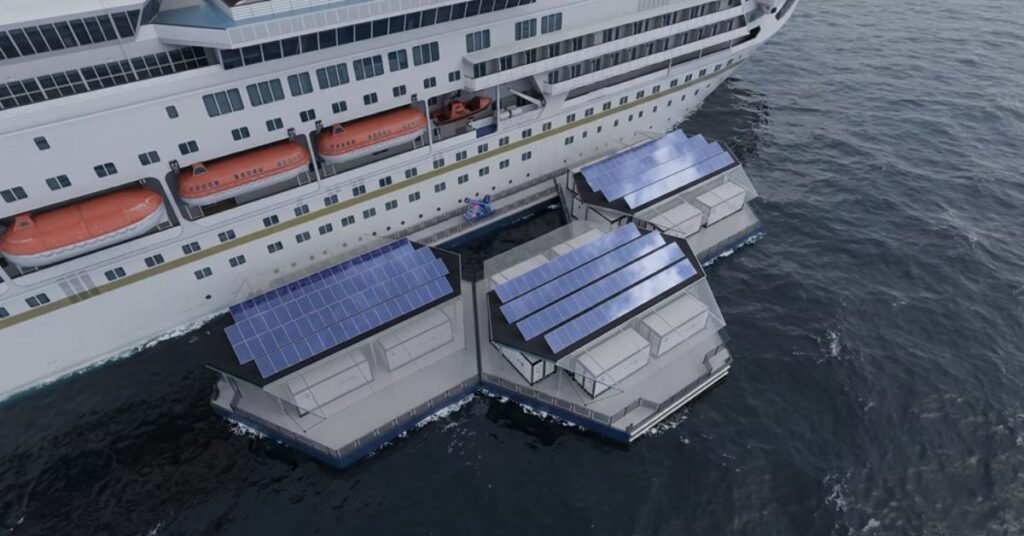
ELIRE Maritime and consortium partners have successfully validated one of the world’s first fully grid-independent hydrogen power hubs capable of delivering clean electricity directly to vessels at berth, without requiring traditional shore-side grid upgrades.
The project was delivered through the UKRI-funded Clean Maritime Demonstrator Competition Round 6 (CMDC6), supported by Innovate UK and the UK Shipping Office for Reducing Emissions (UK SHORE), part of the UK Department for Transport.
The consortium includes Ricardo plc, Schneider Electric, Rux Energy, Triton Anchor, Offshore Renewable Energy Catapult, and University of Strathclyde.
The programme demonstrated that large vessels can realistically be powered at berth today using existing hydrogen, battery, fuel cell, and electrical technologies integrated into a modular system designed for rapid deployment across global ports.
Powering Ships Without the Grid
Ports globally face growing pressure to decarbonise while struggling with grid limitations, land constraints, and multi-year infrastructure delays.
Traditional shore power systems often require:
- Major grid reinforcement
- Substation upgrades
- Extensive civil works
- Lengthy permitting timelines
- Significant land availability
The Hydrogen Power Hub changes this model entirely by moving energy infrastructure onto water rather than relying on fixed, land-based systems.
“Ports are under increasing pressure to decarbonise while facing major infrastructure constraints,” said Luke Jenkinson, Founder and CEO of ELIRE Maritime.
“The Hydrogen Power Hub proves that ports do not need to wait years for grid upgrades to begin reducing emissions. We have validated a practical, scalable, and deployable system capable of delivering clean power directly where it is needed most.”
A Fully Grid-Independent Hydrogen Energy System
The validated system consists of three modular hexagonal floating platforms with a combined footprint of approximately 1,200 sqm.
At full configuration, the platform can deliver:
- 5MW continuous clean power output
- ~91MWh energy delivery per week
- ~45MWh integrated battery storage
- Compatibility with both 6.6kV and 11kV shore power connections
- Up to 146kW onboard solar generation
The system is capable of powering medium-sized cruise vessels and other large maritime assets directly at berth without requiring any shore-side grid connection.
Rather than relying on oversized generators, the platform uses modular 1.3MW fuel cell systems operating continuously throughout the week to gradually charge onboard batteries before rapidly dispatching energy when vessels arrive.
Hydrogen Infrastructure Without Permanent Port Upgrades
The platform uses approximately 7,500–8,000kg of hydrogen per week, stored within modular ISO-compatible low-pressure storage containers integrated directly into the floating infrastructure.
The current layout accommodates seven onboard hydrogen tanks, with refuelling operations expected approximately twice weekly.
A key advantage is that ports do not require permanent hydrogen infrastructure during early deployment phases, allowing hydrogen adoption to scale incrementally while reducing upfront infrastructure risk.
Validated Through Real-World Engineering & Testing
The six-month CMDC6 programme included extensive hydrodynamic, structural, electrical, and operational validation.
Wave tank testing conducted by the University of Strathclyde validated:
- Platform stability
- Motion response
- Structural integrity
- Multi-platform connectivity
Triton Anchor completed mooring analysis, anchor system validation, procurement review, and installation planning, identifying no major technical barriers to deployment.
Schneider Electric validated the fully grid-independent AC/DC electrical architecture and battery energy storage systems, while Ricardo plc and Rux Energy validated the hydrogen-to-power integration systems.
The programme confirmed that the complete hydrogen generation, storage, battery integration, floating infrastructure, and electrical architecture operate cohesively as a deployable maritime energy solution.
Emissions Reduction Validated
Feasibility-stage emissions analysis led by Ricardo plc demonstrated that the system can reduce vessel emissions at berth by approximately 77% compared with conventional onboard diesel generation, even after accounting for hydrogen production, storage, transport, and operational losses.
Key validated emissions outcomes include:
- ~47 tonnes CO₂ saved per vessel, per week
- ~2,444 tonnes annual CO₂ reduction per vessel
- Significant reduction in NOx, SOx, and particulate emissions
The consortium estimates the solution could support the reduction of up to 500,000 tonnes of CO₂ globally over the next decade through scalable deployment of floating clean energy infrastructure.
Faster Deployment, Lower Infrastructure Risk
One of the project’s strongest commercial advantages is deployment speed.
Traditional shore power infrastructure can take between three and seven years or longer to deliver. In contrast, the modular floating system is designed for significantly faster deployment because the infrastructure is pre-engineered and relocatable.
The platform also eliminates stranded asset risk by enabling infrastructure to move with future market demand.
Beyond shore power, the floating infrastructure can support:
- Port electrification
- Offshore wind integration
- Logistics infrastructure
- Offshore operations
- Defence applications
- Future maritime energy networks
A Scalable Global Opportunity
The consortium estimates a global addressable market of approximately 62TWh annually for grid-independent maritime energy solutions, particularly in ports where conventional shore power remains constrained or economically impractical.
While hydrogen-powered systems are currently more expensive than diesel or grid electricity, the consortium emphasises that the value proposition lies in deployability, flexibility, and infrastructure accessibility.
Current demonstrator-scale energy costs are estimated at approximately:
- £0.25–£0.50/kWh for the Hydrogen Power Hub
- £0.15–£0.25/kWh for conventional shore power
However, future reductions in hydrogen pricing, manufacturing scale, and modular standardisation are expected to improve competitiveness significantly over time.
From Feasibility to Deployment
ELIRE Maritime is now progressing discussions for future deployments across the UK, Europe, Australia, and Asia, including early-stage engagement in London, Singapore, Hamburg, Brisbane, and Riga.
The project demonstrates that the future of maritime energy is not simply about lower-cost electricity, but about faster deployment, lower infrastructure risk, and flexible systems capable of adapting as global energy markets evolve.
Rather than inventing entirely new energy technologies, the programme successfully integrated proven hydrogen, battery, and electrical systems into a smarter maritime infrastructure model capable of solving one of the most critical bottlenecks facing global ports today.
Key Validated Outcomes
- 5MW continuous clean power output validated
- ~91MWh weekly energy delivery capability
- ~77% CO₂ emissions reduction at berth validated
- ~47 tonnes CO₂ saved per vessel, per week
- ~2,444 tonnes annual CO₂ reduction per vessel
- ~45MWh integrated battery storage system
- ~7,500–8,000kg hydrogen usage per week
- 6.6kV and 11kV vessel compatibility confirmed
- Fully grid-independent operation demonstrated
- Three modular floating platforms validated
- ~1,200 sqm modular floating footprint
- Wave tank testing completed by the University of Strathclyde
- Mooring and anchoring feasibility validated
- Multi-platform interconnectivity confirmed
- Utility-grade AC/DC electrical architecture validated
- No major deployment barriers identified
- Estimated 62TWh annual global addressable market
- Expected deployment timeline significantly faster than traditional shore power
- Potential to support up to 500,000 tonnes of global CO₂ reduction over the next decade
- Early deployment discussions progressing in London, Singapore, Hamburg, Brisbane, and Riga
Recent Posts
EV
Maharashtra Signs ₹150 Crore MoU to Build Electric Boat Manufacturing Facility for Mumbai Water Metro
Hydrogen
Samskip’s SeaShuttle Joins EU HyShip Project to Advance Hydrogen-Powered Short-Sea Shipping
Methanol
Maritime Technologies Forum Releases Safety Management Guidelines for Methanol-Fuelled Ships