

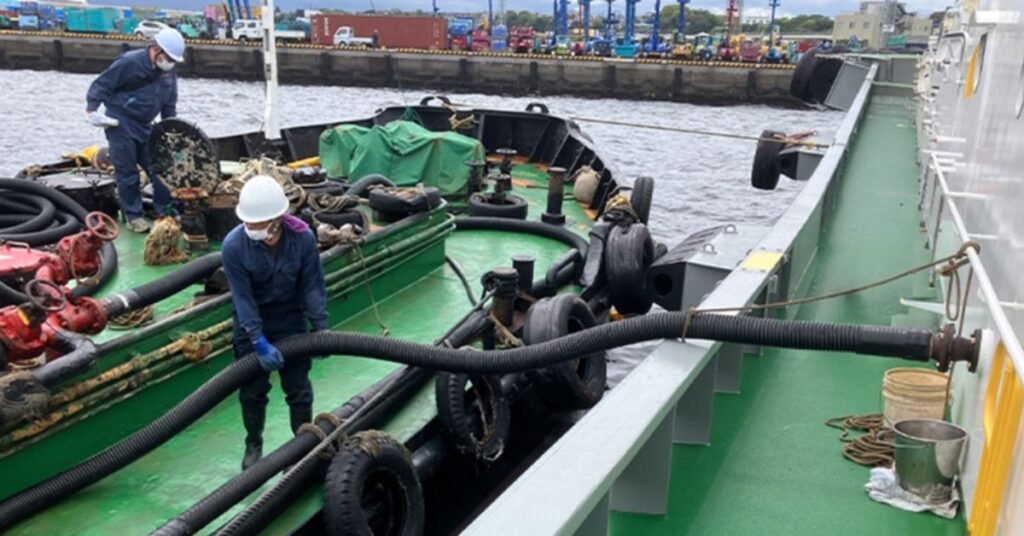
Kamei Corporation has carried out Japan’s first ship-to-ship (STS) bunkering operation using 100% hydrotreated vegetable oil (HVO) at Keihin Port, marking a step in the country’s efforts to evaluate alternative marine fuels.
The operation was conducted as part of a demonstration project involving Euglena and its biofuel brand Susteo.
Demonstration of HVO marine fuel supply
Susteo is a biodiesel fuel produced primarily from used cooking oil (UCO) and other renewable feedstocks. According to Kamei, the fuel is designed as a drop-in solution, meaning it can be used in existing marine diesel engines and fuel supply infrastructure without major modifications.
The company said the demonstration is intended to support decarbonisation efforts in the maritime transport and port sectors.
“As it is a drop-in type fuel that can be used as is with existing marine diesel engines and fuel supply infrastructure, it is expected to be a next-generation fuel that will contribute to the decarbonisation of the transportation and port sectors,” Kamei said.
Building operational experience with biofuels
HVO is classified in Japan as a Class II petroleum product, allowing it to be transported using conventional bunker supply vessels. The STS operation was carried out to evaluate handling procedures, logistics and operational performance under real-world conditions.
Kamei said it will continue collaborating with Euglena to establish a stable supply system for Susteo while gathering operational data and conducting technical verification ahead of potential wider commercial deployment.
The demonstration reflects growing interest in biofuels as a near-term emissions reduction pathway for shipping, particularly because they can be integrated into existing vessel fleets without requiring significant engine retrofits or new bunkering infrastructure.
Recent Posts
EV
Maharashtra Signs ₹150 Crore MoU to Build Electric Boat Manufacturing Facility for Mumbai Water Metro
Hydrogen
Samskip’s SeaShuttle Joins EU HyShip Project to Advance Hydrogen-Powered Short-Sea Shipping
Methanol
Maritime Technologies Forum Releases Safety Management Guidelines for Methanol-Fuelled Ships