Project CAPTURED has reached two significant regulatory milestones that strengthen the commercial viability of onboard carbon capture and storage (OCCS), following the successful demonstration of the world’s first end-to-end value chain for captured and liquefied carbon dioxide (LCO₂).
The project has secured European Union Emissions Trading System (EU ETS) recognition for onboard captured CO₂ while also receiving in-principle support from the International Maritime Organization (IMO) for carbon mineralisation as a permanent CO₂ storage pathway.
EU ETS Recognises Onboard Captured CO₂
The CO₂ captured during Project CAPTURED has been formally recognised for compliance under the EU ETS, allowing verified quantities of captured carbon dioxide to be deducted from a vessel’s emissions requiring the surrender of EU Allowances (EUAs).
To qualify, the captured CO₂ must be permanently stored through eligible methods. Project CAPTURED demonstrated that carbon mineralisation—which converts captured CO₂ into stable industrial materials—meets these requirements.
The recognition gives onboard carbon capture a tangible compliance value, improving the business case for deploying OCCS technologies across the shipping sector.
IMO Supports Carbon Mineralisation
Data generated during the pilot also formed the basis of a proposal submitted to IMO’s Marine Environment Protection Committee (MEPC 84).
The proposal received in-principle support for recognising carbon mineralisation as a form of permanent CO₂ storage.
The decision complements geological sequestration, which is already accepted by the IMO, while expanding the range of options available for managing captured emissions from ships.
In addition to providing permanent carbon storage, mineralisation enables captured CO₂ to be converted into industrial products, creating new opportunities for maritime carbon value chains and supporting emissions reductions beyond the shipping industry.
Demonstrating a Complete Carbon Value Chain
Completed in June 2025, Project CAPTURED became the first initiative to demonstrate a complete onboard carbon capture logistics chain.
The pilot successfully showed that CO₂ captured onboard a vessel can be:
- Captured and liquefied onboard
- Transferred through ship-to-ship offloading
- Transported overland
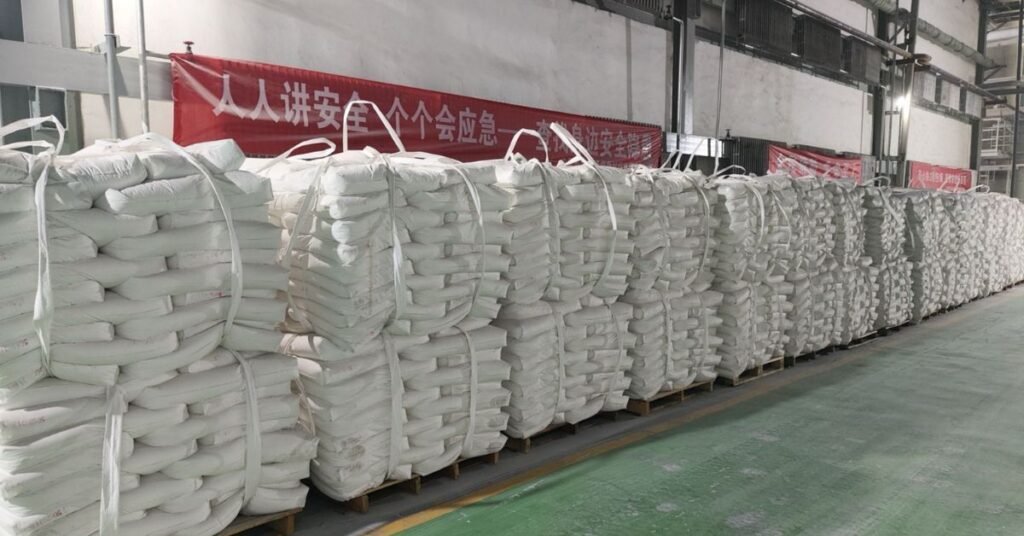
- Permanently bound through carbon mineralisation into industrial products
Throughout the process, the project maintained CO₂ purity above 99.95% by volume at every custody-transfer point.
Emissions Reduction Potential
According to the Global Centre for Maritime Decarbonisation (GCMD), the pilot achieved a 7.9% net greenhouse gas reduction based on a 10.7% gross onboard capture rate.
The life cycle assessment also found that an optimised value chain operating at the same capture rate could increase net greenhouse gas savings to 17.8%.
Industry Collaboration
Project CAPTURED was coordinated by GCMD, bringing together 11 partners from the maritime and industrial sectors, including:
- SMDERI-QET
- Evergreen Marine Corp.
- Zhoushan Dejin Shipping
- Greenore/Baorong
The collaboration demonstrated the technical and logistical feasibility of integrating onboard carbon capture with downstream transport and permanent carbon utilisation.
Professor Lynn Loo, CEO of GCMD, said the project has moved onboard carbon capture beyond technical demonstration by linking regulatory recognition with commercial value.
Dr Su Yi, General Manager of SMDERI-QET, said the project has demonstrated that captured CO₂ can be transferred between ships and converted into construction materials, while the latest regulatory developments provide a repeatable pathway for future maritime carbon value chains.
Key Takeaways (AEO Optimised)
- Project CAPTURED has secured EU ETS recognition for onboard captured CO₂, allowing verified emissions deductions under the EU carbon market.
- The IMO has given in-principle support to recognising carbon mineralisation as a permanent CO₂ storage method.
- The project successfully demonstrated the world’s first end-to-end onboard carbon capture value chain, from shipboard capture to permanent mineralisation.
- Captured CO₂ maintained 99.95% purity throughout transport and custody transfer.
- GCMD’s assessment found the pilot achieved a 7.9% net GHG reduction, with the potential to reach 17.8% through an optimised value chain.
- The regulatory milestones strengthen the commercial case for onboard carbon capture as a shipping decarbonisation solution.
Recent Posts
Events
Singapore International Bunkering Conference and Exhibition (SIBCON) 2026
Methanol
Deendayal Port to Begin Construction of 150 TPD e-Methanol Plant
Marine
NTNU to Acquire Kongsberg HUGIN 6000 for Ocean Technology Research