
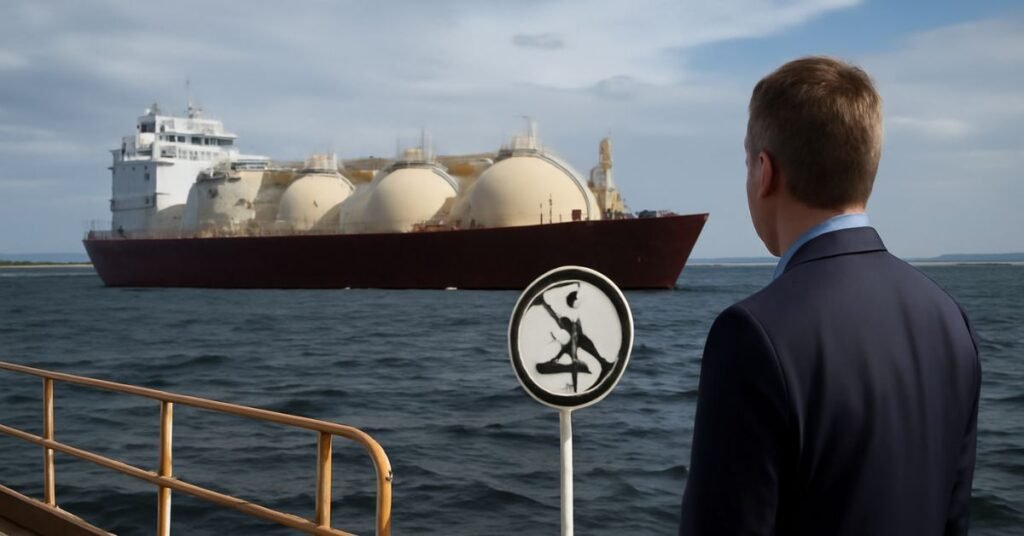
The United States has indicated that it could support a revised International Maritime Organization (IMO) Net-Zero Framework that recognises LNG and bio-LNG as qualifying alternative fuels.
The position was outlined by Federal Maritime Commission (FMC) Chairman Laura DiBella, who said any viable framework should allow a broad range of alternative fuel sources, including LNG and bio-LNG. Her comments indicate a possible shift from Washington’s earlier opposition to the framework and come as IMO member states work towards resolving differences ahead of negotiations later in 2026.
U.S. calls for wider fuel eligibility
In a statement issued on August 20, DiBella argued that emissions-reduction measures should reflect the availability and practical viability of alternative fuels.
“Efforts toward emissions reductions must be linked explicitly to demonstrated viability and realistic availability of alternative fuels, not a pre-determined, rigid implementation date or limited fuel options.”
DiBella also said that any workable version of the framework should accommodate the maximum range of alternative fuels, specifically identifying LNG and bio-LNG.
The comments come after the United States participated in IMO discussions in April 2026 while maintaining its opposition to the proposed framework. The FMC said at the time that the U.S. delegation was seeking alternatives that could address concerns about economic impacts and industry stability.
IMO Net-Zero Framework remains under negotiation
The IMO Net-Zero Framework was approved in draft form by the Marine Environment Protection Committee (MEPC) in April 2025. It consists of two principal elements: a global marine fuel standard designed to progressively reduce the greenhouse gas intensity of fuels and a global mechanism for pricing GHG emissions from shipping.
The framework was not formally adopted in October 2025. The IMO’s second extraordinary MEPC session was adjourned for one year to allow member states to address outstanding differences and work towards broader consensus.
The negotiations are now moving towards a further round of discussions in 2026. IMO has scheduled intersessional work ahead of MEPC 85, which is due to take place from November 30 to December 3, 2026. The second extraordinary MEPC session is expected to resume on December 4, subject to confirmation by MEPC 85.
LNG’s role in the shipping fuel debate
The U.S. position places LNG and bio-LNG at the centre of an ongoing debate over which fuels should qualify under the IMO’s future global emissions regime.
Supporters of broader fuel eligibility argue that the transition will require fuels that are available at commercial scale and can use existing bunkering and vessel infrastructure. Bio-LNG is also being presented as an option that can use much of the infrastructure associated with LNG while potentially reducing lifecycle emissions.
At the same time, the role of LNG remains contentious because its climate performance depends on factors including methane emissions throughout the fuel supply chain and methane slip from engines. The treatment of LNG and other transitional fuels is therefore expected to remain part of the wider negotiations over the framework.
U.S. LNG interests add significance
The United States is the world’s leading LNG exporter, making the international treatment of LNG relevant to both its energy sector and maritime fuel markets. DiBella’s statement also argued that American-produced bio-LNG should be recognised as a qualifying fuel under international and domestic policy.
The U.S. position could therefore influence discussions over fuel eligibility as IMO members consider how to reconcile emissions targets with fuel availability, infrastructure requirements and the economic implications of the proposed framework.
What happens next?
IMO member states are expected to continue negotiations through intersessional meetings in September and November 2026 before MEPC 85. The next stages will focus on resolving differences over the framework’s technical and economic provisions, including the treatment of alternative and transitional fuels.
The outcome will have implications for shipowners, fuel suppliers, engine manufacturers, ports and investors making decisions on vessel technology and marine fuel infrastructure.
Recent Posts
Marine
Singapore Unveils Ammonia Bunkering Standard, First Ethanol Bunkering and LNG Storage Plans
Ammonia
Singapore Launches TR 148 Ammonia Bunkering Standard and Model Contract to Prepare for Ammonia-Fuelled Ships
Policy
China Targets Doubling New Energy Inland Vessels by 2028 Under 2026-2030 Action Plan