
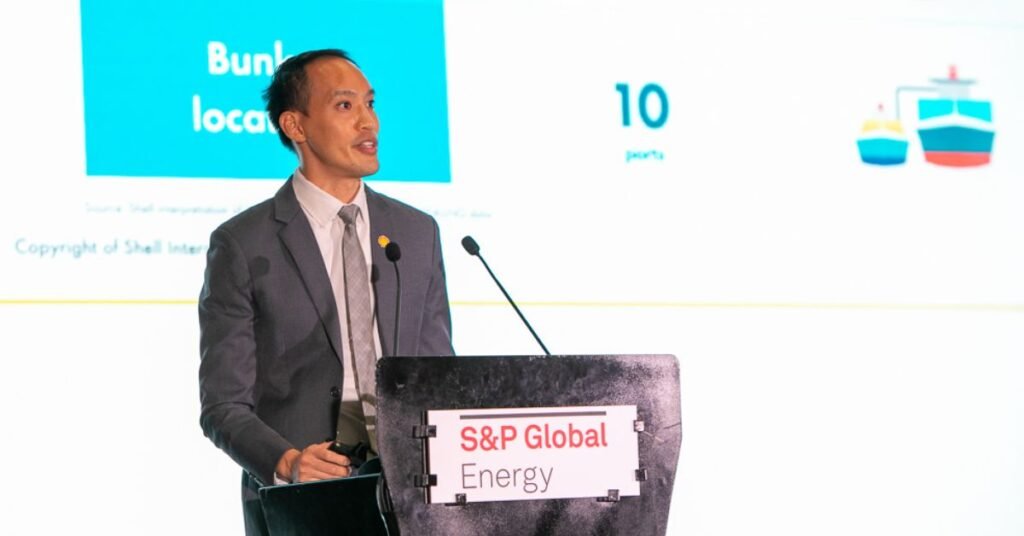
LNG can provide shipping with a scalable methane pathway to lower emissions while making use of existing fuel-handling and engine infrastructure, according to Chua Han Wee, Strategic Customer Director, Shell Marine, speaking at APPEC 2026.
In his presentation, “Looking Ahead: The Methane Pathway for Shipping’s Energy Transition”, Chua said the global LNG market has expanded by nearly 60% over the past decade, alongside growth in regasification infrastructure across multiple regions. He also noted that LNG currently accounts for the largest alternative-fuelled fleet, with the global dual-fuel LNG fleet growing by 8% during the first eight months of 2026.
Chua described LNG as a mature and resilient market despite spot-price volatility linked to geopolitical disruptions in the Middle East. He pointed to storage drawdowns, fuel switching and demand management as mechanisms that can help the market rebalance. He also highlighted record liquefaction project investment decisions in 2025 and 2026, with around 200 million tonnes of additional LNG supply expected from the early 2030s. According to Chua, this potential supply growth could exceed demand growth and improve fuel availability.
LNG, bio-LNG and synthetic LNG
Shell’s proposed methane pathway involves using the same broad storage, handling and engine infrastructure as shipping moves from conventional LNG to bio-LNG and eventually synthetic LNG.
Chua said conventional LNG can deliver immediate well-to-wake greenhouse gas reductions compared with conventional fuel oil, while also reducing air pollutants. Bio-LNG, which is already available as a marine fuel, can deliver GHG reductions ranging from 33% to 200%, depending on feedstock and processing. Synthetic LNG remains at the pre-commercial stage but is expected to offer emissions reductions of 53% to 91%.
The wide range for bio-LNG reflects differences in feedstock and production pathways, while the figures for synthetic LNG remain based on expected performance.
Focus on methane abatement
Chua also highlighted progress in reducing methane emissions across the LNG value chain. He said members of the Oil and Gas Climate Initiative have cut methane emissions intensity by more than 50% since 2016, while Shell recorded an average methane intensity of 0.05% in 2023.
He added that more than 90% of LNG-fuelled vessels currently on order are equipped with engines designed for low methane slip of less than 0.8%.
Shell is also conducting a year-long trial of a Methane Abatement Catalyst on an LNG bunkering vessel in Singapore. The technology is intended to remove unburned methane from engine exhaust.
Regulatory changes sought at IMO
Chua said regulatory developments at the International Maritime Organization (IMO) will be important to scaling the methane pathway. Among the measures he identified were updating conservative default emissions factors to reflect more representative asset-level data.
He cited the current 18.5 gCO2/MJ default value under FuelEU Maritime and referred to a Rystad Energy study proposing a lower figure of 14.0 gCO2/MJ based on data from Norway and South Korea.
He also called for formal recognition of avoided emissions from bio-LNG and synthetic LNG within lifecycle assessment frameworks, citing approaches already used in the EU and US. In addition, he highlighted acceptance of mass balancing as a chain-of-custody model across interconnected gas infrastructure, which is already recognised by the EU.
“We advocate at the IMO for LNG default factors to reflect the latest assessments, as these provide more representative emissions estimates,” Chua said, noting that the Rystad study uses asset-level data reflecting the LNG facilities supplying the marine bunker market, offering a more representative picture than regional-average approaches.
Recent Posts
Policy
V.O. Chidambaranar Port Authority hosts India Green Fuel Conclave ’26 on green fuel exports
Fuels
Brookfield to invest up to $600 million in ACME green fuels business
Technology
Yokogawa wins KHI orders for automation systems for large liquefied hydrogen carrier