
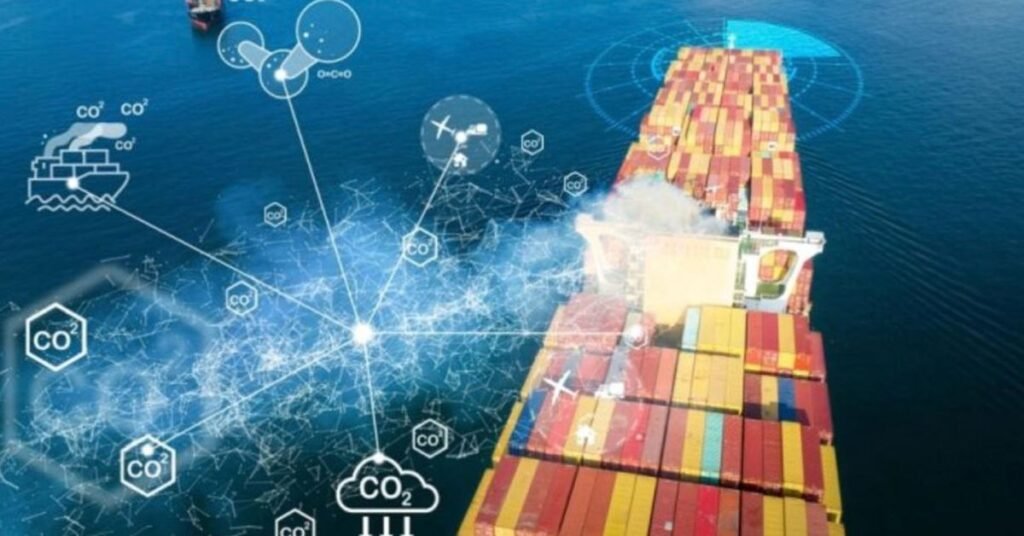
The International Council on Clean Transportation (ICCT) has proposed a 90% reduction in well-to-wake emissions as a common benchmark for fuels used on green shipping corridors.
The proposal, outlined in a technical brief published in September 2026, is designed for consideration in a potential green shipping corridor along the US West Coast. Fuels that meet the proposed threshold would be classified as “ultra-low-carbon.”
ICCT calls for common definition of corridor fuels
Green shipping corridors are intended to provide designated routes where alternative fuels, technologies and infrastructure can be tested and demonstrated.
The ICCT said the emissions-reduction potential of such corridors can vary significantly because there is no common definition for what qualifies as a compliant fuel. According to the organisation, this can create inconsistencies and compliance challenges and could potentially result in higher emissions.
The proposed 90% threshold is described by the ICCT as ambitious but technically achievable.
Well-to-wake accounting proposed
Under the proposal, fuel emissions would be assessed on a well-to-wake basis and expressed in carbon dioxide-equivalent terms. This would cover emissions across the fuel lifecycle, from production through its use onboard a vessel.
The ICCT proposes using life-cycle accounting methods based on California’s Low Carbon Fuel Standard, which requires fuel suppliers to reduce the average carbon intensity of transportation fuels sold in the state.
Well-to-wake emissions comprise upstream well-to-tank emissions and tank-to-wake emissions generated during fuel use. The approach is also used under FuelEU Maritime, while the draft IMO Net-Zero Framework uses a well-to-wake basis.
The ICCT has previously advocated for lifecycle-based assessment of marine fuels. In a 2023 report, it noted that IMO policies at the time primarily focused on CO2 emissions on a tank-to-wake basis.
Proposal includes safeguards for fuel qualification
The ICCT has proposed two safeguards to determine how fuels qualify under the emissions threshold.
First, methane avoidance credits would not be allowed. Fuel producers would therefore be unable to claim emissions reductions from methane avoided elsewhere, such as methane emissions prevented on farms through the use of manure or organic waste.
Second, restrictions would apply to electricity-based fuels using grid power. Producers would not be permitted to draw electricity from the grid in ways that increase emissions in the wider power sector.
Wind-assisted propulsion could receive emissions credit
The proposal would also recognise wind-assisted propulsion as a means of reducing the greenhouse gas intensity of shipping.
Because wind assistance can directly reduce a vessel’s fuel consumption, the ICCT argues that the resulting fuel savings should be reflected in the emissions assessment for shipping along a green corridor.
Proposal remains under consideration
The 90% threshold is a proposal for a potential US West Coast green shipping corridor rather than an adopted international standard.
The ICCT has not indicated that the proposed benchmark will automatically apply to other green shipping corridor projects. Further consideration would be required before the approach could become a wider industry standard.
Recent Posts
Biofuels
Marine Biofuels Gain Ground as Bio-Residues Create New Fuel-Quality Risks
Marine
MOL Ocean Bulk secures 25-year Vale contract for world’s first tri-fuel 210,000 dwt ore carriers
LNG
LNG leads as alternative-fuel newbuild orders hit two-year monthly high in September: DNV