
Summary
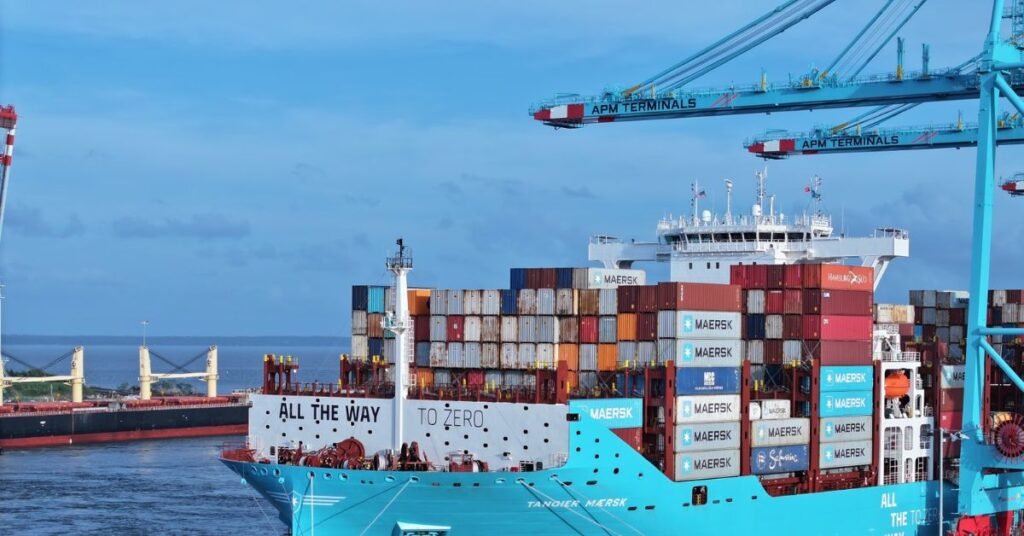
WinGD has completed the first in-service operation of its X-DF-M/E alcohol-fuel engine platform using ethanol, following the successful bunkering and voyage of Maersk’s 9,000 TEU container ship Tangier Maersk from Houston to New York. The operation at the Port of Houston in September marked the first marine bunkering of a 100% bioethanol blend in the United States and demonstrated the engine platform’s capability to operate on both methanol and ethanol.
Article
Tangier Maersk Completes Ethanol-Fuelled Voyage in the US
WinGD has recorded the first in-service use of ethanol in its X-DF-M/E alcohol-fuel engine platform after the 9,000 TEU container vessel Tangier Maersk completed a voyage from Houston to New York using ethanol fuel.
Owned by Maersk, the vessel received its fuel at the Port of Houston in late September. POET, the world’s largest bioethanol producer, supplied the fuel for the vessel’s WinGD X82DF-M engine. The operation marked the first marine bunkering of a 100% bioethanol blend in the United States and the first in-service ethanol bunkering for a WinGD engine.
WinGD Expands Dual-Alcohol Engine Capabilities
The voyage represents a milestone for WinGD’s alcohol-fuel engine technology, which initially entered commercial service with methanol capability. The first X-DF-M/E engine capable of operating on methanol entered service in 2025, while multi-alcohol fuel capability was introduced in 2026.
The technology enables both methanol and ethanol to be used in the same engine platform. The capability is available for six mid-sized sister vessels ordered by Maersk, providing operators with the option to select between the two fuels according to availability, cost and greenhouse gas emissions reduction requirements.
POET produces approximately three billion gallons of bioethanol annually across 35 production sites, highlighting the existing production capacity that could support the fuel’s potential use in maritime applications.
WinGD Vice President Research & Development Sebastian Hensel said: “The use of bioethanol as a marine fuel is a natural progression for WinGD after successful operating experience with methanol using the same engine platform. This debut, a result of the strong momentum of Maersk in validating the use of this cost-effective low-carbon fuel, enabled us to confirm important operational and safety functions. This landmark will give added confidence to ship operators considering bioethanol as an emerging route to maritime decarbonisation.”
Maersk and Industry Partners Support Bunkering Operation
The successful bunkering operation involved several partners. Maersk provided the vessel, Kirby Corporation handled fuel transportation and bunkering, and the Port of Houston coordinated port activities.
The US Coast Guard also supported the operation by verifying that the regulatory requirements for conducting the bunkering had been met.
Emma Mazhari, Maersk’s Vice President Energy Markets, said: “Bioethanol is a scalable, lower-emission fuel option that can offer greater flexibility in how the maritime industry approaches its transition to lower-carbon fuels. This operation is an important step in exploring how bioethanol can be incorporated into marine fuel supply chains.”
Methanol and Ethanol Offer Fuel-Switching Flexibility
Methanol and ethanol share chemical similarities that allow both fuels to be used in WinGD’s X-DF-M/E engines. Fuel injection can be optimised for either alcohol or configured to deliver similar performance with both.
This capability allows ship operators to switch between methanol and ethanol in the same engine, depending on fuel prices, availability and greenhouse gas emissions reduction requirements. The approach could provide additional flexibility as shipping companies evaluate alternative fuels to reduce emissions from international maritime transport.
The successful voyage demonstrates the operational use of ethanol in a marine engine platform designed for multiple alcohol fuels. Its wider adoption will depend on factors including fuel availability, supply-chain development, operating costs and the emissions performance of the fuel across its lifecycle.
FAQs
What is the significance of the Tangier Maersk ethanol voyage?
The voyage marked the first in-service operation of WinGD’s X-DF-M/E engine platform on ethanol, the first marine bunkering of a 100% bioethanol blend in the United States, and the first in-service ethanol bunkering for a WinGD engine.
Which vessel completed the ethanol-fuelled voyage?
Maersk’s 9,000 TEU container ship Tangier Maersk completed the voyage from Houston to New York using ethanol fuel.
Who supplied the ethanol for Tangier Maersk?
POET, the world’s largest bioethanol producer, supplied the fuel for the vessel’s WinGD X82DF-M engine.
Can WinGD’s X-DF-M/E engines use both methanol and ethanol?
Yes. The engines can operate on both fuels, with fuel injection optimised for the selected alcohol or configured for similar performance with either fuel.
Which companies and organisations supported the bunkering operation?
Maersk provided the vessel, Kirby Corporation handled fuel transportation and bunkering, the Port of Houston coordinated port activities, and the US Coast Guard verified compliance with applicable regulatory requirements.
How could ethanol contribute to maritime decarbonisation?
Bioethanol could provide another lower-emission fuel option for shipping, depending on its production pathway and lifecycle emissions. The ability to use ethanol and methanol in the same engine could also give operators greater flexibility in managing fuel costs, availability and emissions targets.
Recent Posts
Biofuels
WinGD Ethanol-Fuelled Engine Completes First In-Service Voyage on Maersk Vessel
Power & Propulsion
Norsepower Rotor Sails Installed on Airbus Cargo Ship Spirit of Toulouse
EV
Estonia Electric Ferry to Combine Steerprop Propulsion with Battery Power