
Summary
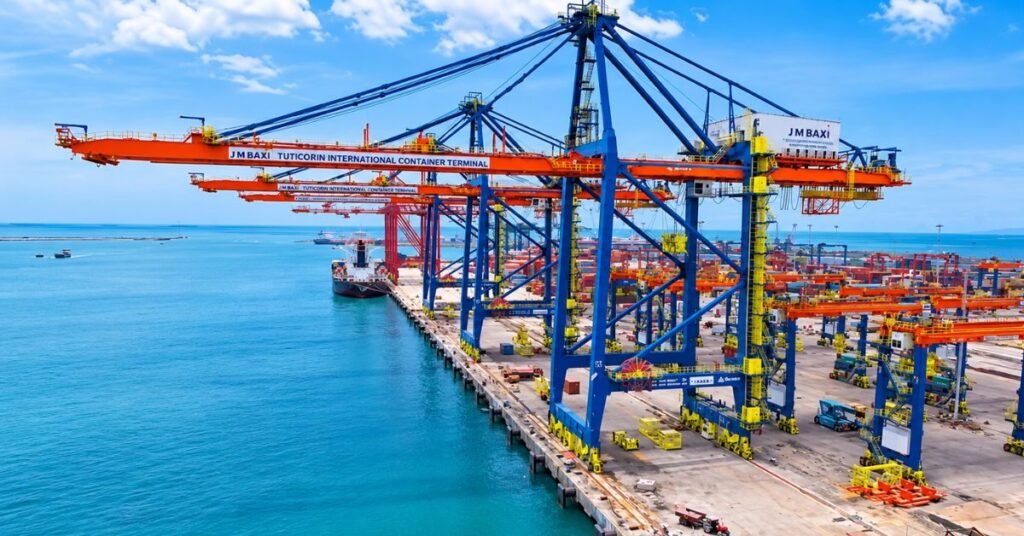
Tuticorin International Container Terminal (TICT) at V.O. Chidambaranar (VOC) Port has been declared a “green terminal” following the electrification of all its operational equipment, according to an official statement issued on 22 October 2026. Shipping Secretary Vijay Kumar also flagged off 13 electric internal transfer vehicles (E-ITVs) and reviewed port development projects, including green fuel initiatives and the proposed outer harbour expansion.
Article
TICT Electrifies 100% of Operational Equipment
Tuticorin International Container Terminal (TICT) at V.O. Chidambaranar Port in Tamil Nadu has been declared a “green terminal” after completing the electrification of 100% of its operational equipment, according to an official statement.
Union Shipping Secretary Vijay Kumar made the declaration on 22 October 2026 during a review of ongoing development projects at VOC Port, which are valued at approximately ₹18,000 crore.
During the visit, Kumar flagged off 13 electric internal transfer vehicles (E-ITVs) intended to support container movement within the terminal. The deployment forms part of the terminal’s transition towards electrically powered cargo-handling operations.
Electrifying terminal equipment can reduce reliance on diesel-powered machinery and lower direct emissions from cargo-handling activities. However, the green-terminal designation relates to the terminal’s operational equipment and does not establish that visiting vessels use alternative fuels or operate with zero emissions.
VOC Port Reports Annual Cargo Capacity of 82 Million Tonnes
VOC Port Chairman Sushanta Kumar Purohit said the port has an annual cargo-handling capacity of 82 million tonnes. He also referred to its historical trading links, which the statement traces to 123 AD.
The port is undertaking development work across several areas, including infrastructure, energy and employee facilities. Planned social infrastructure includes a golf course and a Kendriya Vidyalaya.
The projects form part of a broader programme to expand the port’s infrastructure and operational capabilities alongside initiatives focused on cleaner energy.
Green Hydrogen and Methanol Projects Feature in Review
The review covered several green infrastructure initiatives at VOC Port, including a pilot methanol bunkering and refuelling facility and a green hydrogen pilot project.
Methanol bunkering infrastructure could support vessels using methanol as a marine fuel, while hydrogen-related facilities could contribute to the development of alternative-fuel supply chains. The commercial impact of these projects will depend on implementation, fuel availability, operational requirements and demand from vessel operators.
The official statement also referred to wind energy facilities, assigning them a value of more than ₹18,400 crore. This figure requires clarification in relation to the wider port development programme and the specific wind energy projects covered.
The initiatives indicate that the port’s energy transition plans extend beyond terminal equipment electrification to include potential alternative fuels and renewable energy.
Outer Harbour Project Targets Additional Cargo Capacity
The outer harbour project was another major component of the Secretary’s review. The project is valued at more than ₹15,000 crore, according to the statement, and is expected to add four million tonnes per year of cargo-handling capacity.
The expansion is intended to strengthen Tamil Nadu’s role in maritime trade and develop VOC Port as a transhipment hub for southern India.
Additional capacity could enable the port to handle greater cargo volumes and support connections between regional trade routes and international shipping services. Realising that potential will depend on project execution, shipping-line participation, cargo demand and supporting landside connectivity.
The outer harbour expansion and the terminal’s electrification represent two distinct aspects of the port’s development: increasing cargo-handling capacity while reducing dependence on conventional fuel-powered equipment.
Electrification and Port Expansion Address Different Priorities
The green-terminal declaration highlights the role of equipment electrification in reducing direct emissions from container terminal operations. The deployment of electric internal transfer vehicles adds to the terminal’s electrically powered equipment, although the overall emissions benefit will also depend on the electricity supply and operational performance.
At the same time, the methanol and hydrogen pilot projects address the development of infrastructure for alternative marine fuels, while the outer harbour project focuses on expanding cargo capacity.
For shipping lines and cargo owners seeking to reduce supply-chain emissions, terminal equipment, port energy sources and vessel fuel choices are separate but related considerations. Electrification can reduce emissions from terminal operations, but it does not by itself establish the emissions performance of the entire port or the ships calling there.
VOC Port’s ongoing projects therefore combine operational electrification, alternative-fuel infrastructure and capacity expansion, with their long-term impact depending on implementation and commercial uptake.
FAQs
Why has Tuticorin International Container Terminal been declared a green terminal?
TICT has received the designation after electrifying 100% of its operational equipment, according to an official statement dated 22 October 2026.
How many electric transfer vehicles were flagged off at VOC Port?
Shipping Secretary Vijay Kumar flagged off 13 electric internal transfer vehicles (E-ITVs) to support container handling at the terminal.
What is VOC Port’s annual cargo-handling capacity?
VOC Port Chairman Sushanta Kumar Purohit stated that the port has an annual cargo-handling capacity of 82 million tonnes.
Which green energy projects are being developed at VOC Port?
The projects reviewed include a pilot methanol bunkering and refuelling facility, a green hydrogen pilot project and wind energy facilities.
What is the planned capacity addition from the outer harbour project?
The outer harbour project is expected to add four million tonnes of cargo-handling capacity annually, according to the official statement.
Does the green-terminal designation mean that all ships calling at VOC Port use clean fuels?
No. The designation concerns the electrification of the terminal’s operational equipment. It does not establish the fuel type or emissions performance of visiting vessels.
Recent Posts
Ports & Harbours
VOC Port’s Tuticorin International Container Terminal Declared Green Terminal After Full Equipment Electrification
Hydrogen
India Could Become Leading Green Hydrogen Producer and Exporter, Says Gadkari
Fuels
Offshore Vessel Fuel Efficiency Offers Immediate Savings, Says Opsealog