
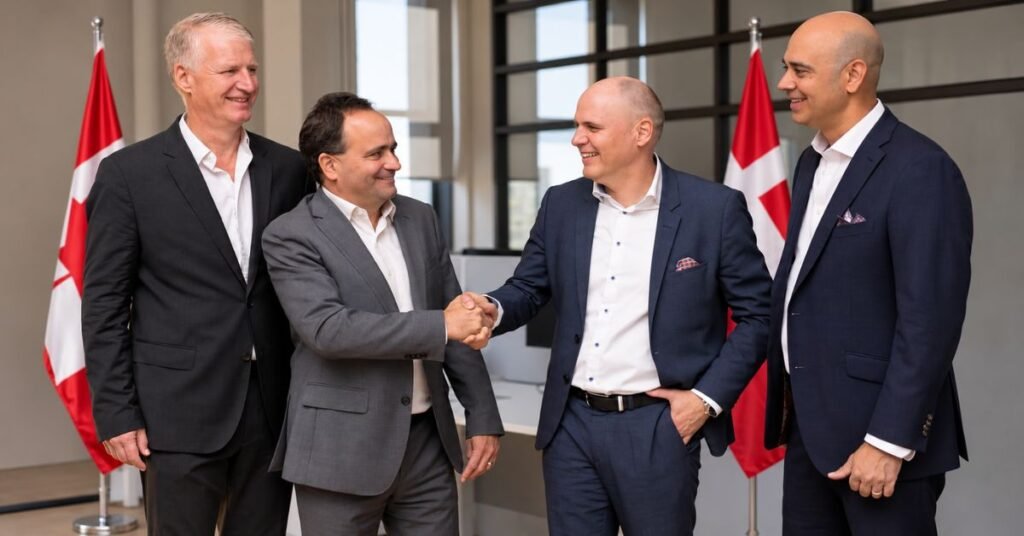
Greenfield Global and European Energy have signed a joint venture agreement to develop a 48,000-tonne-per-year e-methanol facility near Montréal, Québec, targeting maritime fuels, renewable chemicals and European markets. Announced on 29 October 2026, the project will combine renewable electricity with biogenic carbon dioxide from Greenfield’s existing ethanol operations.
Preliminary engineering studies are complete and grid connection construction is underway. The partners said they would immediately begin commercial discussions with prospective buyers, although they have not announced a project investment value, final investment decision or production start date.
What will the Québec joint venture develop?
The agreement establishes a joint company to advance the project alongside Greenfield’s operating ethanol facility. It follows a memorandum of understanding signed by the two companies in 2025.
Greenfield will contribute the industrial site, existing infrastructure and a supply of biogenic carbon dioxide generated during ethanol fermentation. European Energy will provide renewable energy development, commercial and operating expertise, including its experience in Power-to-X, the conversion of electricity into fuels and other products.
The planned output will serve several markets rather than shipping alone. Alongside marine fuel customers, the companies intend to supply renewable polymer production and buyers seeking fuels that meet European Renewable Fuels of Non-Biological Origin (RFNBO) requirements.
The partners say the e-methanol is intended to meet those requirements. The announcement does not identify an independently certified lifecycle emissions figure for the proposed facility.
Why was Québec selected?
The partners cited access to competitively priced, low-carbon hydroelectricity as a principal reason for locating the project in Québec. Electricity cost and carbon intensity were among the factors considered in selecting the site.
Greenfield’s ethanol distillery provides an existing source of biogenic carbon dioxide. According to the companies, the fermentation process produces a high-quality stream that offers a contracted feedstock supply for the proposed e-methanol operation.
The location also provides established industrial infrastructure and access to export routes serving European and domestic markets. The partners identified Québec’s policy environment for low-carbon industrial investment as another supporting factor.
Howard Field, Chief Executive Officer of Greenfield Global, said commercial viability would be central to bringing additional supply to market.
“Demand for low-carbon fuels and chemicals is growing, but supply will follow only where projects are both good for the planet and good business,” he said.
How will experience from Denmark support development?
European Energy plans to apply lessons from its operating Kassø e-methanol facility in Denmark, which has an annual production capacity of 42,000 tonnes.
The proposed Québec plant would have a larger annual capacity, at 48,000 tonnes, while drawing on the company’s experience of developing and operating commercial e-methanol production.
Knud Erik Andersen, Chief Executive Officer of European Energy, said: “Our experience from Kassø in Denmark has demonstrated what it takes to bring e-methanol production from ambition to industrial reality.”
He said the company intended to replicate successful development models in markets offering suitable conditions for long-term growth. The partnership with Greenfield could also provide a basis for further projects across North America.
What are the next commercial steps?
With preliminary engineering completed, the immediate priority is to engage prospective offtakers across the project’s target markets. No customers, contracted purchase volumes or offtake durations were named in the announcement.
Grid connection works represent progress on supporting infrastructure, but the partners have not disclosed a timetable for construction of the production facility itself.
For maritime customers, the project represents a prospective source of e-methanol in North America. Its availability for bunkering will depend on further development milestones and commercial arrangements.
The companies said additional details would be released as the project advances.
Recent Posts
Technology
ClassNK Updates Ship Cyber Security Guidelines to Align with Major Vetting Schemes
Marine
Lloyd’s Register Report Examines How Ports Worldwide Are Preparing for Maritime Fuel Transition
Methanol
OOCL Grace takes on 983 tonnes of green methanol at Yantian