
Summary
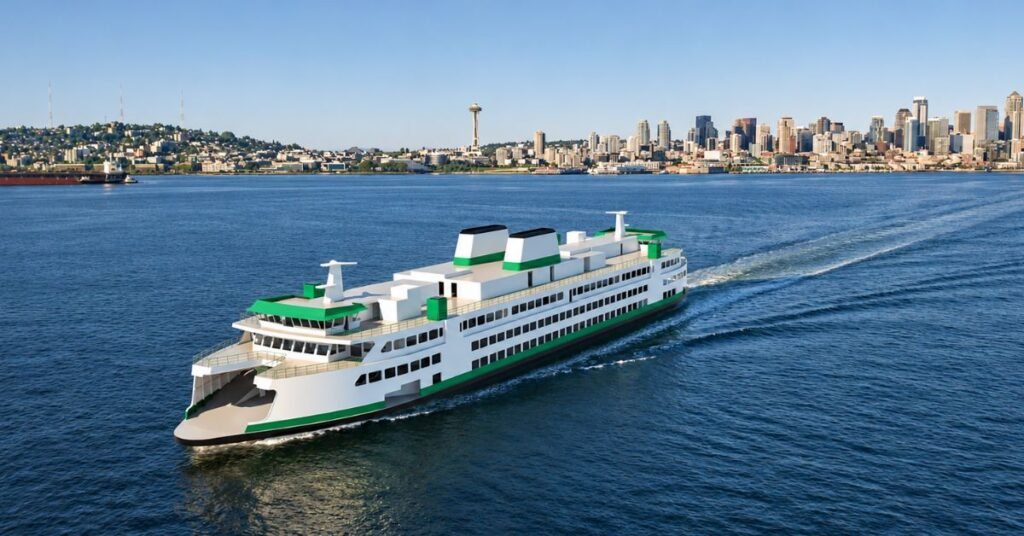
ABB has received authorisation to supply the integrated power and propulsion system for a third Washington State Ferries newbuild. The hybrid-electric vessel will incorporate a 13.2-megawatt-hour battery system, extending ABB’s role in a fleet-renewal programme that combines new ships with shoreside charging infrastructure.
Third-vessel authorisation extends ABB’s role
The ABB hybrid-electric ferry contract now covers three newbuilds following a Notice to Proceed from Washington State Ferries (WSF), announced on 29 October.
The third vessel will use ABB’s Onboard DC Grid and Power and Energy Management System. Together, these systems distribute electricity, integrate energy storage and manage available power sources according to operating conditions.
The battery installation is designed to support fully electric operation on short routes and in port. Hybrid capability retains flexibility when operating requirements call for additional power.
ABB’s supply scope also includes automation, propulsion motors and drives, transformers, electrical distribution, remote diagnostics, shafting, propellers, steering equipment, engineering and commissioning support.
Using a common propulsion architecture across successive vessels can support consistency in engineering, maintenance and crew familiarisation. The benefits will depend on how the systems perform once the ferries enter service.
First new ferry expected in 2030
The wider construction programme is being undertaken by Eastern Shipbuilding Group.
WSF selected Eastern in July 2025 and finalised the initial shipbuilding agreement the following month. Construction of the first new hybrid-electric ferry began in August 2026.
The vessels are designed to carry 160 vehicles each. WSF currently expects the first ferry’s delivery in 2030 and has included incentives intended to encourage earlier completion. That timetable relates to the lead vessel; the latest ABB announcement authorises equipment work for the third ship.
The distinction is important because an equipment authorisation represents progress within a longer construction programme. Machinery production, installation, commissioning and vessel acceptance must follow before passenger operations begin.
Charging infrastructure is developing alongside the ships
Shore charging is central to the programme’s intended reduction in diesel consumption.
WSF plans to equip up to 16 terminals with charging infrastructure and associated power systems. It is working with regional utilities to establish the electricity connections needed to support vessel charging.
The operator selected a standard charging-system supplier in November 2025, intending to use compatible equipment across terminals so vessels can move between routes when required. Procurement for the Seattle terminal electrification project is also under way.
For ferry operators, this illustrates why electrification extends beyond the vessel itself. Battery capacity must be considered alongside charging power, turnaround time and the electricity available at each berth.
A ferry capable of battery-only operation still requires a dependable charging network to make full use of that capability during scheduled services.
Earlier partnership established the integration approach
ABB’s involvement began before the current three-vessel scope was confirmed.
In 2024, WSF announced its selection as the propulsion single-source vendor for the new hybrid-electric ferry programme. The operator presented the partnership as part of rebuilding its fleet and restoring dependable service.
At that stage, WSF’s broader strategy combined new hybrid vessels, conversions of existing ferries, retirement of older diesel ships and terminal electrification. The plans drew on experience from northern Europe, where comparable ferry electrification had already been implemented.
The programme has subsequently evolved as construction and funding priorities have developed. The latest authorisation advances one defined part of that strategy: the integrated propulsion package for another new vessel.
Fleet renewal and emissions goals remain linked
WSF’s long-term plan envisages up to 16 new hybrid-electric vessels by 2040, alongside terminal upgrades and selected conversions.
Its December 2020 System Electrification Plan emphasised that vessel improvements alone would not deliver the intended emissions reductions. Terminal investment, programme management and workforce training were also necessary components.
That remains the practical context for ABB’s expanded role. The third-vessel authorisation supports a repeatable technical platform, while the wider programme must synchronise ship construction, charging facilities and operational readiness.
For communities relying on the ferry network, the eventual measure of success will combine dependable capacity with lower fuel consumption. Progress on propulsion equipment brings that outcome closer, but delivery will depend on the coordinated completion of the ships and their supporting infrastructure.
FAQs
What has ABB been authorised to supply?
An integrated power and propulsion system for WSF’s third hybrid-electric newbuild.
How large is the battery system?
The vessel will have 13.2 megawatt-hours of energy storage.
Who is building the ferries?
Eastern Shipbuilding Group.
When is the first new ferry expected?
WSF currently expects delivery of the lead vessel in 2030.
Will the ferries operate entirely on batteries?
They are designed for battery-only operation where conditions permit, while retaining hybrid operating capability.
Recent Posts
Fuels
ONE Symphony Joins 14,000-TEU Fleet as ONE Expands Alternative-Fuel-Ready Newbuildings
Dual-Fuel
COSCO Ethylene Carrier Investment Adds LNG Dual-Fuel Capacity to Fleet Plans
Ammonia
MOL Ammonia-Fuelled Bulkers Named as 2027 Delivery Programme Advances