
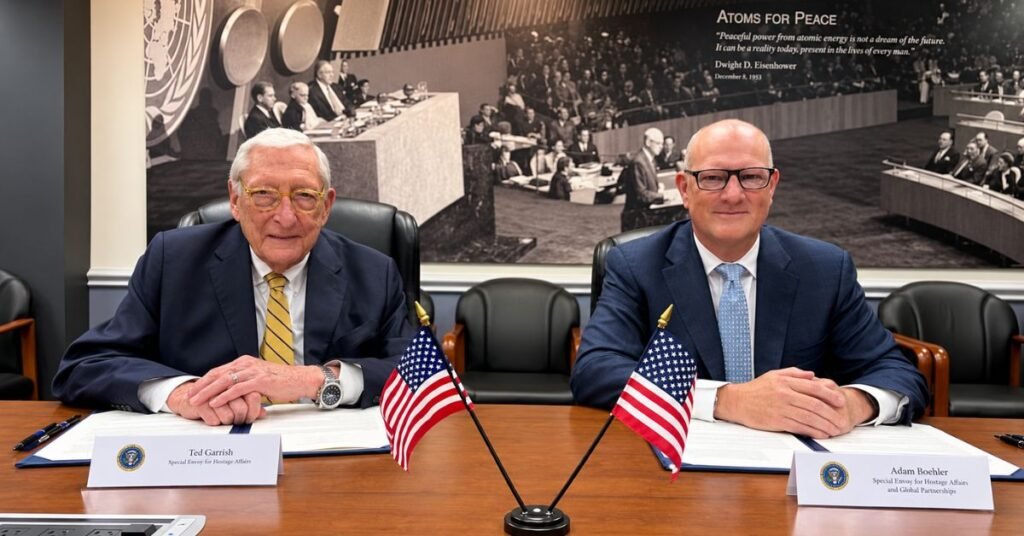
The American Bureau of Shipping (ABS) and the U.S. Department of Energy (DOE), through its Office of Nuclear Energy, have signed a memorandum of understanding (MOU) to advance the development of advanced nuclear technology for commercial maritime applications. Announced on 12 October 2026, the agreement covers floating nuclear power systems, nuclear-powered vessels and the infrastructure required to support their construction and operation.
Agreement Covers Floating Nuclear Power and Nuclear-Powered Vessels
The MOU establishes a framework for ABS and DOE to collaborate on concept development and feasibility studies for floating nuclear power solutions and nuclear transportation corridors. The partnership will also examine the requirements for developing a US shipbuilding sector capable of constructing and operating nuclear-powered maritime assets safely.
ABS will provide technical, regulatory, economic and policy support for the studies. It will also work with DOE to improve coordination among US government agencies and industry stakeholders to support the development of a domestic maritime nuclear sector.
Under the agreement, ABS and DOE will co-manage the Maritime Nuclear Applications Group (MNAG), which will support collaboration on nuclear technology for maritime use.
ABS will coordinate related activities through the US Maritime Administration’s (MARAD) US Center for Maritime Innovation (USCMI), for which the classification society serves as Secretariat.
ABS and DOE Outline Maritime Nuclear Development Priorities
John McDonald, ABS Chairman and CEO, said: “Advanced nuclear technology is moving from concept to application, and the maritime industry needs to be ready for it. This agreement with DOE reflects the depth of work already underway and provides a framework to go further. Through our collaborations with the DOE and industry leaders, ABS is pioneering the future of nuclear energy in maritime. We’re well-positioned to help turn this technology into a safe, real and practical option for commercial maritime applications.”
DOE Assistant Secretary for Nuclear Energy Ted Garrish said: “Advanced nuclear technology has the potential to transform the commercial maritime industry and open new markets for American innovation. The Department of Energy’s partnership with the American Bureau of Shipping will help explore how we can build on decades of experience to safely bring next-generation nuclear technologies to the maritime sector and position America to lead this emerging industry.”
The collaboration comes as US government and industry stakeholders explore the potential role of advanced nuclear systems in commercial shipping and floating power generation. The work will examine the technical and regulatory considerations, economic feasibility and policy requirements associated with deploying nuclear technology in maritime environments.
ABS Advances Nuclear Technology for Maritime Applications
ABS has been developing classification and technical frameworks for nuclear-powered maritime assets. The organisation has published classification rules for floating nuclear power plants and granted approvals in principle for several nuclear-related projects.
The latest agreement with DOE extends this work by establishing a framework for feasibility studies, government coordination and the development of the industrial capabilities needed to support maritime nuclear applications in the United States.
FAQs
What is the ABS–DOE memorandum of understanding about?
The MOU establishes cooperation between ABS and the US Department of Energy’s Office of Nuclear Energy to advance advanced nuclear technology for commercial maritime applications, including floating nuclear power and nuclear-powered vessels.
What areas will the partnership examine?
The partnership will support concept and feasibility studies for floating nuclear power solutions and nuclear transportation corridors, alongside work on shipbuilding capacity, technical requirements, regulatory frameworks and economic feasibility.
What is the Maritime Nuclear Applications Group?
The Maritime Nuclear Applications Group (MNAG) is a collaborative body that ABS and DOE will co-manage under the agreement to support work on nuclear technology for maritime applications.
What role will ABS play in the agreement?
ABS will provide technical, regulatory, economic and policy support for concept and feasibility studies. It will also coordinate related activities through the US Center for Maritime Innovation and work with DOE to facilitate interagency cooperation.
What is the significance of nuclear technology for commercial shipping?
Advanced nuclear technology is being explored as a potential option for vessel propulsion and floating power generation. Its commercial deployment will depend on technical feasibility, safety, regulatory approval, economic viability and the availability of suitable infrastructure.
Has ABS developed rules for floating nuclear power plants?
Yes. ABS has published classification rules for floating nuclear power plants and has granted approvals in principle for a range of nuclear-related projects.
Recent Posts
Marine
ABS and US Department of Energy Sign MOU on Maritime Nuclear Technology
Fuels
Repsol Supplies B30 Co-Processed Marine Fuel to NCLH in Barcelona
Ammonia
Viking Energy Set for Ammonia Bunkering Test After Norwegian Safety Approval