
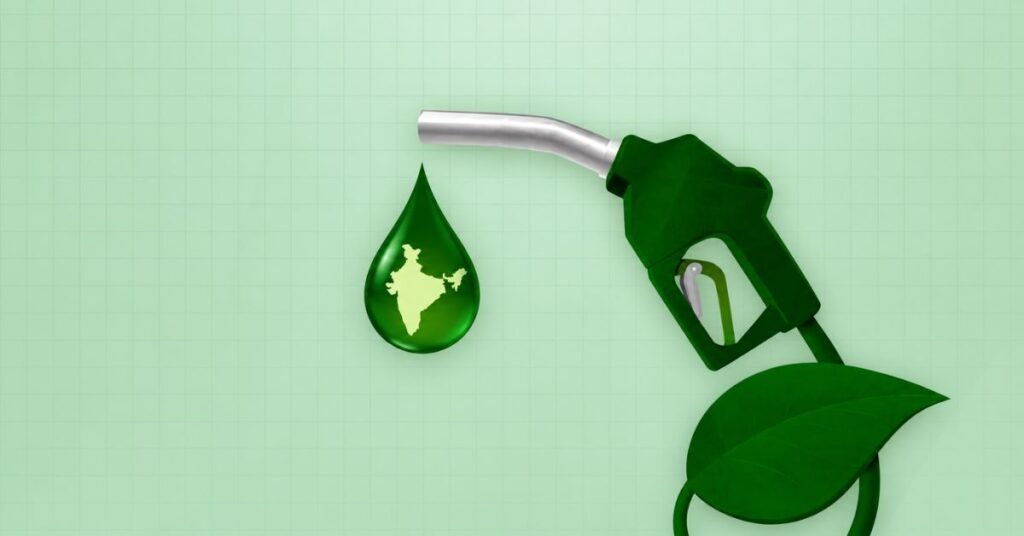
India’s transition towards alternative fuels, including ethanol, methanol and butanol, could play a larger role in strengthening energy security, Principal Scientific Adviser to the Government of India Ajay Sood has said.
Speaking about India’s evolving energy strategy, Sood said biofuels could help diversify the country’s fuel mix while supporting efforts to reduce dependence on conventional hydrocarbon sources.
“Ethanol is one hydrocarbon, but you can also get other biofuels which have higher energy density like butanol that can also be produced in a bio mode, so biofuels, in general, will be important for energy security,” Sood said.
India expands indigenous biofuel technologies
India has been developing domestic technologies for producing different types of biofuels. In 2025, the Council of Scientific and Industrial Research–Indian Institute of Petroleum (CSIR-IIP), Dehradun, developed technologies for producing biodiesel and bio-jet fuel from non-edible vegetable oils, waste oils, used cooking oil and agricultural waste.
These technologies provide additional feedstock options for biofuel production and form part of wider efforts to develop alternative fuel technologies within the country.
Sood also highlighted the importance of keeping biofuels economically viable. According to him, prices will need to remain reasonable if alternative fuels are to achieve wider adoption while meeting sustainability objectives.
GOBARdhan scheme targets biogasification
The government’s strategy also includes measures to expand the use of organic waste for energy production.
The GOBARdhan Scheme, formally known as the National Circular Bioenergy Scheme, is aimed at promoting biogasification and the conversion of organic waste into useful energy products.
The Union Cabinet approved a revamped version of the programme in August 2026, with a total allocation of Rs 23,731 crore for the period from FY 2026-27 to FY 2035-36.
India’s non-fossil power capacity crosses 270 GW
Biofuels form part of a broader shift in India’s energy mix that also includes rapid expansion of non-fossil electricity generation.
India’s non-fossil fuel power capacity reached 271.97 GW in January 2026, representing 52.3% of the country’s total installed power capacity.
The expansion of renewable and other non-fossil energy sources, alongside biofuels and waste-to-energy initiatives, is part of India’s wider strategy to improve energy security while addressing environmental and sustainability objectives.
Recent Posts
Biofuels
WinGD Ethanol-Fuelled Engine Completes First In-Service Voyage on Maersk Vessel
Power & Propulsion
Norsepower Rotor Sails Installed on Airbus Cargo Ship Spirit of Toulouse
EV
Estonia Electric Ferry to Combine Steerprop Propulsion with Battery Power