
Summary
Emvolon is advancing its first commercial-scale system for converting methane-rich waste gas into biomethanol after announcing $22 million in funding. The modular technology builds on a pilot with Montauk Renewables, while a separate Freepoint Commodities agreement provides a potential route to shipping, transport and chemical markets.
Funding supports commercial deployment
The Emvolon biomethanol project will move from pilot operations towards commercial deployment, supported by funding announced on 27 October 2026.
The Massachusetts-based MIT spinout said its Series A round attracted MassVentures, VX Ventures, Wagner Carbon and other investors. The announcement also highlighted non-dilutive federal and state grants supporting commercialisation.
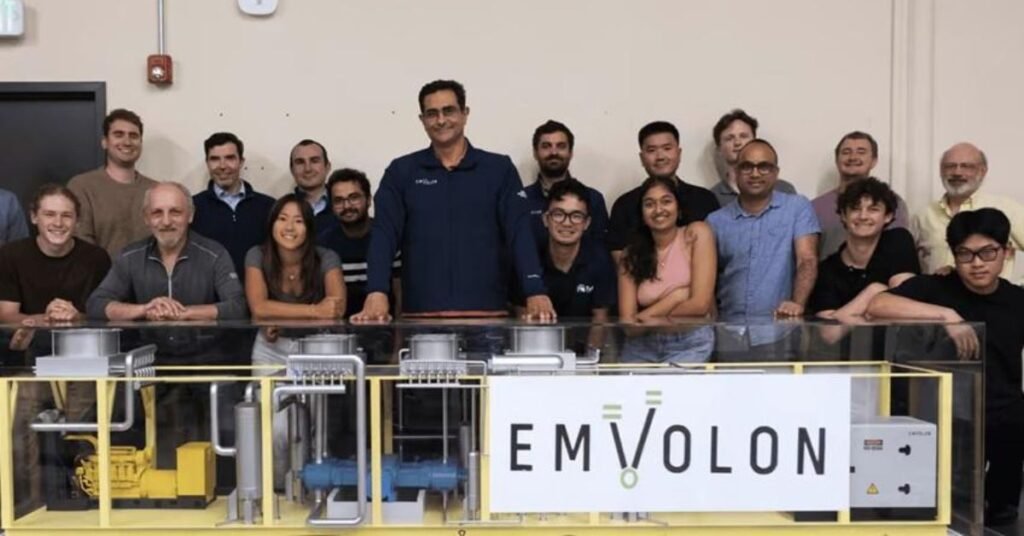
Emvolon intends to use the capital to deliver its first commercial-scale modular chemical system and expand its organisation. The company also announced that energy industry executive Eric Bensaude would join its board to support business development and growth.
The immediate objective is to demonstrate that a system proven through field trials can operate as a dependable commercial source of liquid fuel. Emvolon’s website identifies 2027 as its target for commercial methanol production.
Modular plants take production to the gas source
Emvolon’s approach uses internal combustion engines and commercially available equipment to create compact chemical plants that can be installed where methane-rich gas is generated.
Potential locations include landfills, dairy operations, wastewater treatment plants and industrial flare sites. The prefabricated systems are designed to operate without a grid connection, allowing production at locations where conventional infrastructure may be limited.
The company describes a process beginning with gas collection and pretreatment, followed by conversion through its engine-based reactor system. Residual gas supplies power, while additional units can be installed in parallel to increase capacity.
The resulting liquid methanol can be transported in tank containers to a central facility for aggregation, storage and sale.
This model seeks to address a practical constraint: gas resources may be too dispersed or insufficiently connected to justify conventional large-scale processing. Converting gas into a transportable liquid at source offers another way to bring those resources to market.
Montauk partnership provides the development base
The first commercial system follows Emvolon’s pilot work with Montauk Renewables.
The companies announced a joint venture in August 2025 to develop multiple biogas-to-methanol projects, targeting aggregate annual capacity of up to 50,000 tonnes by 2030.
That earlier programme identified the Atascocita Humble Renewable Energy facility in Humble, Texas, as its starting point. The proposed installation was expected to produce up to 6,000 tonnes annually using a flared gas stream.
The October funding announcement reaffirmed the multi-site expansion ambition. However, the first commercial installation and the wider portfolio represent different stages of development.
For prospective customers, the important progression will be from planned capacity to commissioned systems and consistent saleable output. Replication across several locations will also test how effectively the technology accommodates differences in gas supply and operating conditions.
Freepoint agreement creates a route to buyers
Emvolon’s commercial strategy includes a seven-year framework with Freepoint Commodities, announced in August 2026.
The arrangement gives Freepoint a first-purchase option over biomethanol and associated liquid fuels, with a potential value of up to $450 million as Emvolon’s production portfolio expands.
Volumes under the broader framework could scale towards 300,000 tonnes annually. The products would enter Freepoint’s physical distribution network, targeting maritime shipping, aviation, heavy transport and speciality chemicals.
The purchase option provides market access, but its headline value should not be treated as revenue already earned or an unconditional commitment to buy that amount. Actual sales depend on project delivery, available production and the agreement’s terms.
Commercial performance will determine expansion
For shipping, the development offers a potential additional source of methanol supply through distributed production.
Its significance will depend on dependable volumes, delivered prices, fuel quality and verified environmental performance. Different waste-gas sources require their own assessment; the technology’s ability to process methane does not establish identical renewable credentials for every output.
The funding brings Emvolon closer to its first commercial deployment. Reliable operation and repeatable economics will determine whether that initial system can support a larger network supplying marine and industrial customers.
FAQs
What is Emvolon developing?
A modular system that converts methane-rich waste gases into liquid methanol.
How much funding was announced?
The company announced $22 million in funding, highlighting Series A investment and government grant support.
When is commercial production targeted?
Emvolon’s website identifies 2027 as its target.
What is the Montauk joint venture’s capacity ambition?
Up to 50,000 tonnes annually across multiple sites by 2030.
Does the Freepoint agreement guarantee $450 million in sales?
No. It provides a first-purchase option with a potential value linked to production growth and contractual terms.
Recent Posts
Dual-Fuel
Wallenius Wilhelmsen Fleet Renewal Adds Four LNG Dual-Fuel Carriers
Bunkering
Europe and Africa Bunker Availability Tightens at Key Refuelling Ports
Power & Propulsion
Valencia Shore Power Plans Advance with €18.7 Million Substation Tender