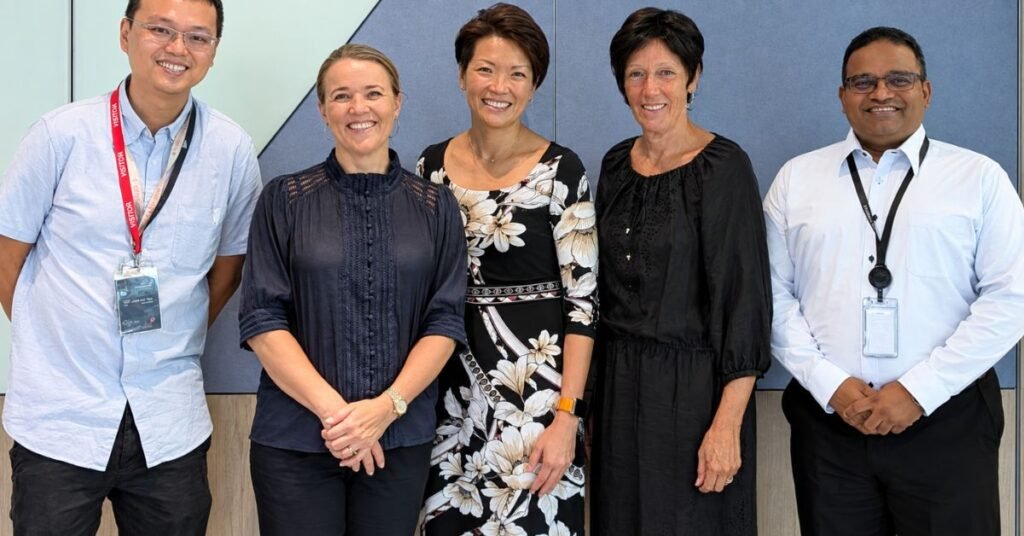
The Global Centre for Maritime Decarbonisation (GCMD) and Equinor have partnered to advance alternative marine fuel and carbon value chains, combining GCMD’s experience in conducting real-world maritime pilots with Equinor’s expertise as a vessel charterer, energy provider and developer of low-carbon solutions.
The organisations will use their complementary capabilities to address technical and operational gaps in scaling alternative marine fuels and support the development and uptake of maritime decarbonisation solutions.
Advancing the safe deployment and assurance of alternative marine fuels
GCMD’s work on alternative fuels, including biofuels, ammonia and methanol, focuses on operational safety and robust monitoring, reporting and verification (MRV). Its pilots and studies generate operational data to support the safe bunkering and handling of these fuels.
Its assurance work also aims to strengthen confidence in fuel quantity, quality and greenhouse gas (GHG) emissions abatement.
Equinor brings experience as a vessel charterer and marine fuel supplier, including chartering dual-fuel LNG, LPG and methanol tankers, testing and using biofuels, and supplying methanol to the maritime sector.
Equinor is also piloting the use and supply of ammonia as a marine fuel, contributing to the development of associated safety, regulatory and bunkering arrangements.
The partnership brings together these perspectives to address practical barriers to alternative fuel deployment while strengthening assurance across emerging marine fuel value chains.
Supporting the uptake of maritime decarbonisation solutions
Beyond alternative fuels, GCMD is working to accelerate the adoption of solutions that can reduce emissions from the existing fleet, including energy efficiency technologies (EETs) and onboard carbon capture and storage (OCCS).
GCMD’s work on EETs includes quantifying real-world fuel savings from technologies such as wind-assisted propulsion systems and developing financing mechanisms to support wider adoption.
In OCCS, Project CAPTURED demonstrated an end-to-end value chain for onboard captured and liquefied CO₂. The project generated evidence that contributed to the recognition of captured CO₂ under the EU ETS and in-principle support at the IMO for recognising carbon mineralisation as permanent storage.
Equinor brings decades of experience in offshore CO₂ storage, including its role in developing and operating Northern Lights, described as the world’s first cross-border CO₂ transport and storage facility. Under the project, liquefied CO₂ is transported by ship to an onshore receiving terminal before being transported by pipeline for permanent geological storage beneath the North Sea.
Recent Posts
Ammonia
Aegis Tristar acquisition to expand Indian group’s global energy logistics reach
Power & Propulsion
Everllence and MITSUI E&S Mark 100 Years of Two-Stroke Engine Partnership
Ammonia
NTPC Targets Japan, South Korea and Germany for Green Ammonia Exports from Andhra Pradesh Hub