

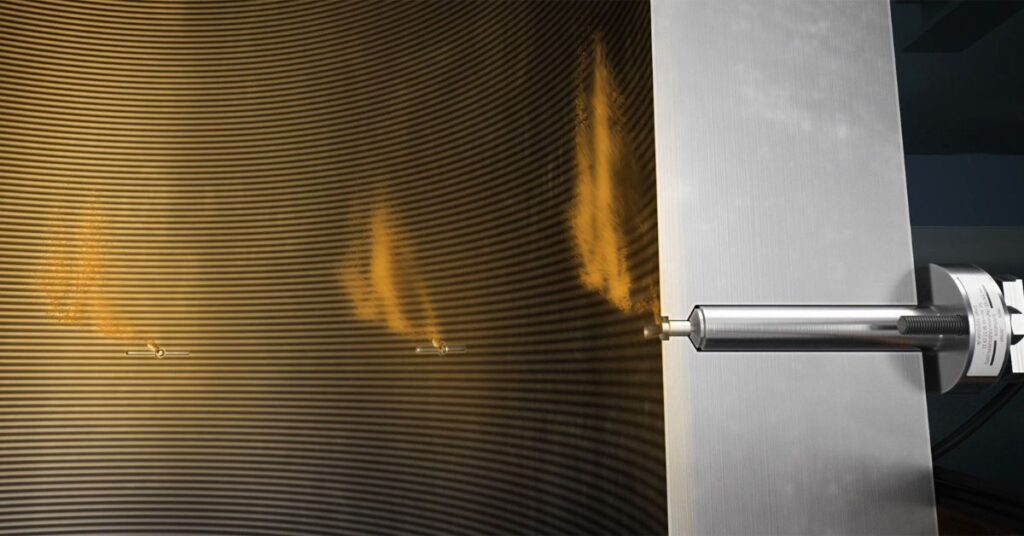
HJ Lubricators has launched SIP+, an upgraded version of its Swirl Injection Principle (SIP) valve, designed to reduce fuel-oil consumption and retrofit time for two-stroke marine engines while supporting compliance with stricter emission standards.
Next-Generation Cylinder Lubrication for Two-Stroke Engines
Cylinder lubrication systems specialist HJ Lubricators has introduced SIP+, a next-generation version of its patented Swirl Injection Principle (SIP) valve for two-stroke marine engines. The new system aims to help shipowners lower fuel-oil consumption, reduce installation time, and minimise operational downtime during retrofits.
The upgrade builds on the company’s long-established SIP technology, which optimises oil distribution within the cylinder liner to reduce wear and improve lubrication efficiency.
Simplified and Faster Retrofit Process
The newly designed SIP+ valve is compatible with both conventional and dual-fuel engines and has been engineered for faster and simpler retrofitting.
Unlike the previous model, SIP+ eliminates the need for internal liner machining and top-cover removal, significantly reducing the time and complexity of installation.
According to Mark Kristensen, Head of Sales at HJ Lubricators, the simplified design is aimed at making efficiency upgrades more accessible across fleets:
“SIP+ takes a proven technology and makes it easier and faster to install, while achieving the same optimal lubrication at low feed rates. Downtime is one of the biggest hidden costs in fleet operations, and SIP+ makes upgrades both more practical and cost-effective.”
HJ Lubricators reports that the redesign can cut installation time by more than one-third, enabling retrofits to be completed during regular port stays and avoiding the need for extended dry-dock periods.
Cleaner Operation and Lower Operating Costs
SIP+ retains the core functional benefits of the original SIP design — including uniform oil-film distribution, reduced liner wear, and lower cylinder oil feed rates.
Optimised for modern operational profiles, the system supports the use of thin oils and dual-fuel configurations, aligning with the industry’s transition toward alternative fuels and stricter emission standards.
Reduced lubrication oil consumption contributes directly to lower operational expenditure (OPEX) and reduced CO₂ and particulate emissions, assisting shipowners in meeting international and regional emissions requirements.
The company estimates a typical payback period of around three years, with an online calculator available for shipowners to assess potential savings based on vessel type and operational profile.
Proven Technology, Future-Ready Design
With over 3,500 lubrication systems installed globally, HJ Lubricators continues to evolve its product line to address the energy-efficiency challenges facing modern shipping.
Kristensen added:
“With more than 3,500 HJ Lubricators systems already in service, SIP+ is a small design change with a big impact. It gives shipowners a flexible, innovative way to future-proof their engines at a time when energy efficiency is paramount.” The SIP+ launch comes as the maritime industry focuses on decarbonisation and operational efficiency, with increasing emphasis on low-lubricant feed rates and optimized combustion processes in next-generation two-stroke engines.
Recent Posts
Ammonia
Reliance Industries Limited (RIL) has signed a binding long-term supply and purchase agreement (SPA) with Samsung C&T Corporation for the export of green ammonia over a 15-year period.
Bunkering
Ofiniti Raises $6.8 Million to Scale Digital Bunkering Platform for Global Shipping
Hydrogen
Hefring Marine and Ecomar Propulsion partner to deploy monitoring system on hydrogen-electric vessel