
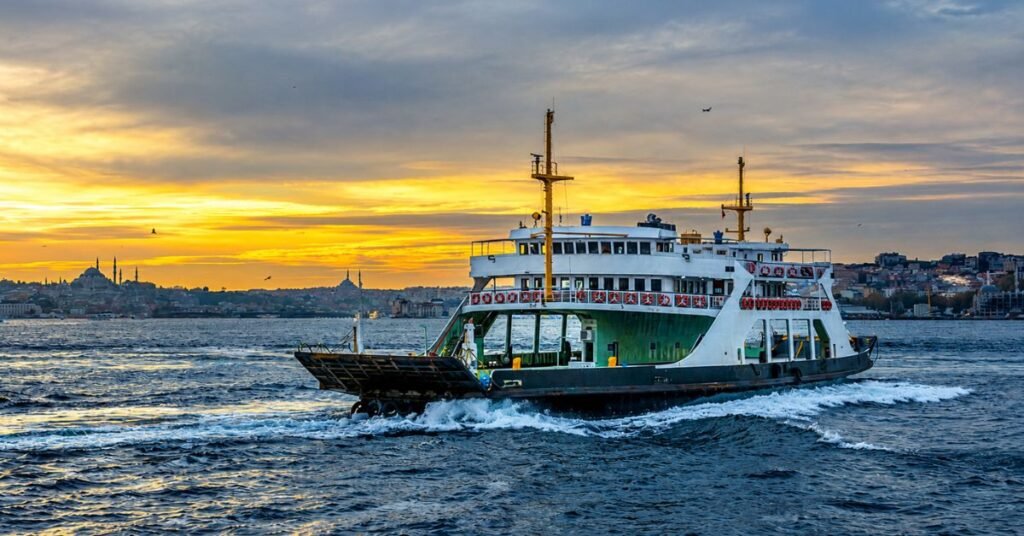
A new study commissioned by the International Maritime Organization’s (IMO) GreenVoyage2050 programme has found that a combination of hybrid and fully electric ferries could reduce greenhouse gas (GHG) emissions from Türkiye’s Sea of Marmara ferry network by around 63% by 2050.
The study, conducted in partnership with Türkiye’s Ministry of Transport and Infrastructure, assessed 67 Ro-Ro and Ro-Pax ferries operating across 26 ports. The network currently transports approximately 25 million passengers and seven million vehicles annually.
Hybrid-electric scenario identified as cost and emissions balance
The assessment found that battery-electric and hybrid propulsion are technically feasible across all the Ro-Pax and Ro-Ro ferry operations examined.
Among the scenarios studied, a combination of hybrid and fully electric vessels was identified as the optimum pathway when balancing emissions reductions and costs. Compared with continued diesel-fuelled operations, the scenario could reduce annual GHG emissions by approximately 63% by 2050.
The transition could also reduce local air pollution and avoid an estimated €492 million in cumulative health and environmental damage costs.
A full transition to battery-electric vessels across the fleet could deliver a larger reduction, with GHG emissions potentially falling by 84% by 2050. If Türkiye’s electricity grid decarbonises in line with its 2053 net-zero target, the reduction could reach as much as 95%.
Charging infrastructure remains a key challenge
The study found no major technical barriers to ferry electrification. However, it identified charging infrastructure, upfront capital requirements, coordinated energy planning and the domestic regulatory framework as key challenges to large-scale deployment.
The report recommends expanding shoreside charging infrastructure and high-voltage grid connections at ports. It also calls for long-term port concessions that incorporate charging facilities into infrastructure planning.
The study recommends securing low-carbon electricity supplies at ports, including measures that would allow ports to generate, use and sell locally produced low-carbon electricity.
Other proposed measures include targeted financial incentives, blended finance mechanisms and emissions-based port fees to encourage the adoption of cleaner vessels.
Electrification could support Turkish shipyards
The study also links ferry electrification with Türkiye’s existing shipbuilding capabilities. Vessel construction and retrofit activity associated with the transition could support domestic shipyards while reducing demand for imported marine fuels.
Under the hybrid-electric scenario, the required investment could support an average of approximately 1,100 jobs annually through 2050, with vessel construction and retrofit employment expected to be concentrated in Turkish shipyards.
Recommendations for Sea of Marmara ferry transition
The study calls for coordinated action among national and local governments, municipalities, ports, ferry operators and energy companies.
Its recommendations include integrating ferry electrification into wider transport and energy planning, incorporating environmental criteria into public ferry procurement, and supporting detailed feasibility studies and pilot projects before large-scale deployment.
GreenVoyage2050 and Türkiye’s Ministry of Transport and Infrastructure are also looking to advance an initial ferry electrification pilot in the Sea of Marmara. The proposed pilot is intended to demonstrate the technical, environmental and commercial aspects of the transition identified in the study.
SOURCE : IMO
Recent Posts
Biofuels
WinGD Ethanol-Fuelled Engine Completes First In-Service Voyage on Maersk Vessel
Power & Propulsion
Norsepower Rotor Sails Installed on Airbus Cargo Ship Spirit of Toulouse
EV
Estonia Electric Ferry to Combine Steerprop Propulsion with Battery Power