
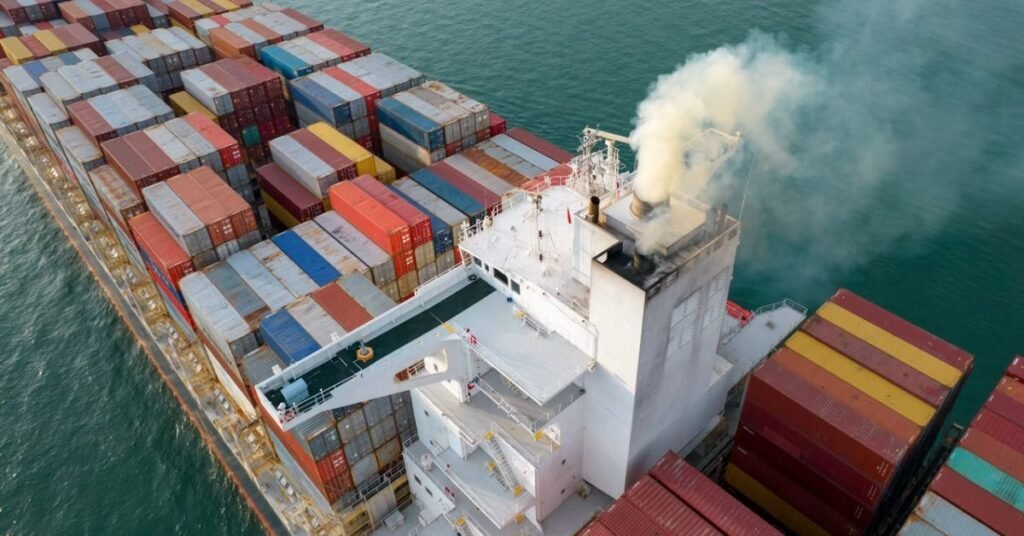
India is well positioned to become a leading supplier of low-carbon marine fuels, thanks to its ability to produce cost-competitive green hydrogen and green ammonia, according to a new study by the Global Maritime Forum (GMF).
The report identifies India’s abundant renewable energy resources, strategic location along major global shipping routes and supportive policy initiatives as key advantages in supporting the maritime sector’s transition to alternative fuels.
Low Production Costs Offer Competitive Edge
GMF found that India has some of the lowest production costs for green hydrogen and green ammonia globally, driven by strong renewable energy potential.
The report highlights that initiatives such as the National Green Hydrogen Mission and the proposed National Green Shipping Policy are helping establish the foundation for domestic green fuel production while positioning India as a future export hub.
India’s location on major international trade corridors is also attracting growing interest from global shipping companies seeking reliable supplies of low-carbon marine fuels.
Demand Uncertainty Remains a Challenge
Despite its production advantages, the report notes that uncertain future demand remains one of the biggest barriers to investment in green fuel production.
Current international demand for green hydrogen and green ammonia is concentrated in markets including Japan, Singapore, South Korea and Europe, where government policies and regulatory frameworks are supporting long-term fuel offtake agreements.
GMF said the IMO’s Net-Zero Framework could play a critical role in creating a stronger global demand signal by establishing a harmonised regulatory framework that encourages investment across the shipping value chain.
Meeting International Standards Critical for Exports
The report emphasises that aligning domestic production with international certification standards, including the European Union’s Renewable Fuel of Non-Biological Origin (RFNBO) requirements, will be essential for maintaining India’s competitiveness in export markets.
While India’s centralised electricity grid provides infrastructure advantages for large-scale green fuel production, its continued reliance on coal-generated electricity could make it more challenging for producers to satisfy renewable electricity requirements under international regulations.
Addressing these challenges will be important for accessing premium export markets.
Domestic Market Beginning to Develop
Although domestic demand for green hydrogen-based fuels remains relatively limited, GMF expects consumption to grow as government decarbonisation policies expand.
Demand is currently being driven primarily by the steel, fertiliser and maritime sectors.
The report also notes that the designation of three Indian ports as green hydrogen hubs is helping stimulate investment in green maritime fuel production and the development of future bunkering infrastructure.
Skilled Workforce Supports Transition
India’s large pool of trained technical professionals is identified as another competitive advantage for maritime decarbonisation.
However, GMF says the country’s shipbuilding industry remains comparatively underdeveloped and lacks the industrial scale and institutional experience of established shipbuilding nations such as China, South Korea and Japan. Even so, the report notes that new shipbuilding orders are gradually increasing, signalling early momentum for the sector.
Recent Posts
HYBRID
GRSE Signs ₹1,032-Crore ONGC Contract for Four Hybrid Offshore Supply Vessels
EV
Energy In Motion Opens ₹500-Crore Electric Truck Plant in Pune
Fuels
Aegis Logistics Commissions 35,000-Tonne LPG Bottling Plant at JNPA