
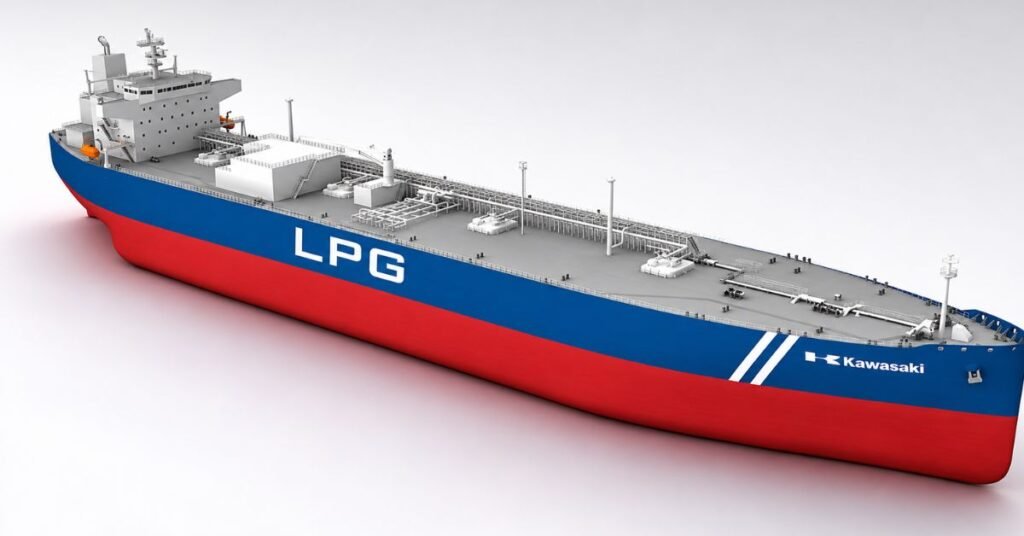
Japan’s Kawasaki Kisen Kaisha (K Line) announced on 24 November 2026 that it had contracted South Korea’s HD Hyundai Samho to build two liquefied petroleum gas (LPG) dual-fuel very large gas carriers (VLGCs). The ships will carry LPG or liquefied ammonia and are designed to use both sets of Panama Canal locks, giving K Line more transit options as US LPG exports grow. Delivery is planned for 2030.
How will the new gas carriers use the Panama Canal?
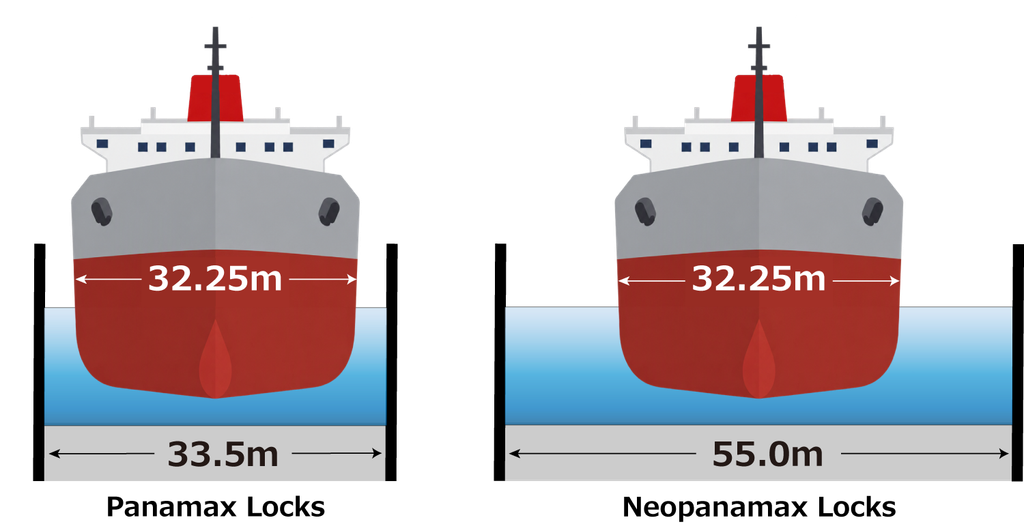
Each ship will be about 230 metres long, with a beam of approximately 32.25 metres and a cargo tank capacity of around 90,000 cubic metres. The vessels’ width allows them to use both the original and expanded locks. K Line said the design would give it flexibility to adjust its transit arrangements in response to congestion and traffic restrictions.
The expanded locks have served the US-to-Asia gas trade since they opened in 2016. The first commercial LPG transit through those locks was made by the Lycaste Peace, a Japanese-owned tanker sailing from Houston, Texas, to Hitachi, Japan. Water levels can affect how many ships the canal can accommodate each day, raising transit costs for cargoes that use the route.
US propane exports rise as shipments to South Asia grow
US propane exports averaged 2 million barrels a day in the first half of 2026, up 11 per cent from the same period in 2025, according to the US Energy Information Administration. Exports reached a record 2.1 million barrels a day in April. Higher US production and increased shipments to India and other South Asian markets contributed to the rise.
The agency also linked the April increase to competitive US propane prices, petrochemical demand and importers seeking alternatives to disrupted Middle Eastern shipments. Propane serves both residential and commercial users and is a feedstock for petrochemical production. K Line did not identify any customers, loading ports or destinations for the two new vessels.
LPG propulsion and liquefied ammonia cargo capability
The ships’ dual-fuel main engines will be able to run on LPG. K Line said that operating on LPG would lower onboard emissions of carbon dioxide and air pollutants. The company did not quantify the expected reductions or disclose the value of the shipbuilding contracts. The cargo system will also accommodate liquefied ammonia, giving K Line the option to serve that trade as demand for ammonia transport develops.
The order follows K Line’s earlier move into LPG-fuelled gas shipping. In 2021, the company announced a time charter agreement with Japanese LPG supplier GYXIS Corporation for an 86,700-cubic-metre carrier built by Kawasaki Heavy Industries. That ship was also designed to run on LPG and carry either LPG or ammonia.
FAQs
Who will build K Line’s two new gas carriers, and when are they due?
South Korea’s HD Hyundai Samho will build both ships. K Line is targeting delivery in 2030.
Can the new ships run on ammonia?
K Line specified LPG dual-fuel engines and listed liquefied ammonia as a cargo. The company did not announce ammonia propulsion.
Why does access to both sets of Panama Canal locks matter?
It gives K Line more options when booking transits and adjusting voyage schedules in response to congestion or restrictions.
Recent Posts
Methanol
OOCL Grace takes on 983 tonnes of green methanol at Shenzhen’s Yantian port
LNG
Engen-led consortium targets 2031 start for US$2.3 billion Durban LNG-to-power project
Policy
India and the Netherlands put shipbuilding and green hydrogen on bilateral agenda