
Summary
Lloyd’s Register has outlined how advanced nuclear technologies could support port decarbonisation, energy resilience and industrial development in a new report examining nuclear applications in port environments. The paper assesses technologies such as small modular reactors, microreactors and floating nuclear power plants, while identifying the safety, regulatory, infrastructure and workforce considerations ports must address before deployment.
Article
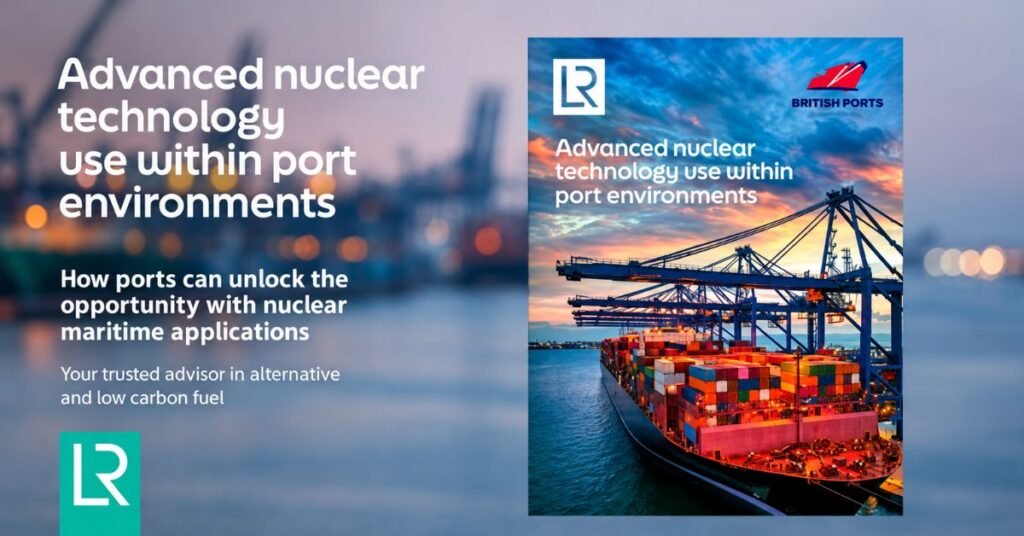
Lloyd’s Register (LR) has published a report examining how advanced nuclear technologies could reshape port infrastructure, energy systems and maritime decarbonisation. The paper calls on port authorities, terminal operators and policymakers to begin assessing the long-term implications of nuclear power for port operations, infrastructure planning and regulatory preparedness.
Titled Advanced Nuclear Technology Use Within Port Environments, the report explores the potential for nuclear energy to support reliable low-carbon electricity, shore power, industrial heat and the production of hydrogen and synthetic fuels. It also examines how nuclear-powered vessels and floating or transportable nuclear power units could influence future port development.
Advanced Nuclear Applications in Port Environments
The report identifies several potential applications beyond accommodating nuclear-powered ships. Ports could use nuclear-generated electricity to supply port facilities, support shore-side power requirements and provide energy for industrial operations. Nuclear power could also contribute to resilient microgrids and help support the production of alternative fuels for the maritime sector.
The technologies covered include small modular reactors (SMRs), microreactors and floating nuclear power plants. Their potential deployment could create opportunities for specialised maintenance services and new activities within maritime industrial supply chains.
However, integrating nuclear technology into port environments would require changes to infrastructure planning, operating procedures and risk-management frameworks. The report presents nuclear energy as a long-term infrastructure and operational consideration rather than simply another marine fuel option.
Safety, Security and Regulatory Preparedness
Safety and regulatory readiness are central to the report’s assessment of nuclear applications in ports. Areas requiring consideration include nuclear safety, physical security, safeguards, emergency preparedness, licensing, liability, insurance and public confidence.
The report emphasises the need to address these issues early and transparently, within established port governance and safety-management systems. Port authorities and operators would need to coordinate with relevant regulators and other stakeholders to understand the implications of nuclear installations and nuclear-powered vessels for existing operations.
Insurance arrangements, commercial confidence and public acceptance would also influence the feasibility of deployment. Developing an appropriately skilled workforce and establishing clear responsibilities among stakeholders would be important components of port readiness.
Preparing Ports for Nuclear Maritime Applications
Lloyd’s Register identifies stakeholder engagement, evidence-building and regulatory discussions as immediate steps ports can take before committing to nuclear projects. Port leaders are also encouraged to incorporate nuclear scenarios into existing safety-management systems and long-term infrastructure planning.
The report sets out a pathway from initial assessment to potential deployment, including a framework for evaluating readiness and identifying actions that can be taken without committing to a specific technology.
The publication is intended for port authorities, harbour authorities, terminal operators, reactor original equipment manufacturers, shipowners, insurers, investors and policymakers assessing the future role of nuclear technology in maritime operations.
As the maritime sector explores options for reducing emissions and improving energy resilience, the report positions advanced nuclear as a potential component of future port energy systems, subject to the necessary technical, regulatory, safety and commercial requirements.
The full report is available through Lloyd’s Register’s report download page.
FAQs
What is Lloyd’s Register’s report on advanced nuclear technology about?
The report examines how advanced nuclear technologies could be used in port environments to support low-carbon energy supply, maritime decarbonisation, industrial development and energy resilience.
Which advanced nuclear technologies are covered in the report?
The paper considers small modular reactors, microreactors and floating nuclear power plants, including their potential applications in and around ports.
How could nuclear power support port decarbonisation?
Nuclear power could provide low-carbon electricity for port facilities and shore power, supply industrial heat, support resilient microgrids and enable the production of hydrogen and synthetic fuels.
What challenges must ports address before adopting nuclear technology?
Ports would need to assess safety, security, nuclear safeguards, emergency preparedness, licensing, insurance, liability, workforce skills and public confidence, alongside infrastructure and operational requirements.
What steps can ports take to prepare for nuclear maritime applications?
Port authorities can begin with stakeholder engagement, evidence-building, regulatory discussions, long-term infrastructure planning and the integration of nuclear scenarios into existing port safety-management systems.
Where can the report be accessed?
The report can be accessed through the Lloyd’s Register report download page.
Recent Posts
Ammonia
Maersk Tankers Ammonia Retrofit Project Advances Towards EU Support
Policy
EU Maritime Innovation Projects Advance in €3.4-Billion Funding Selection
Policy
Shanghai–Melbourne Green Shipping Corridor Sets 2035 Vessel Deployment Goal