
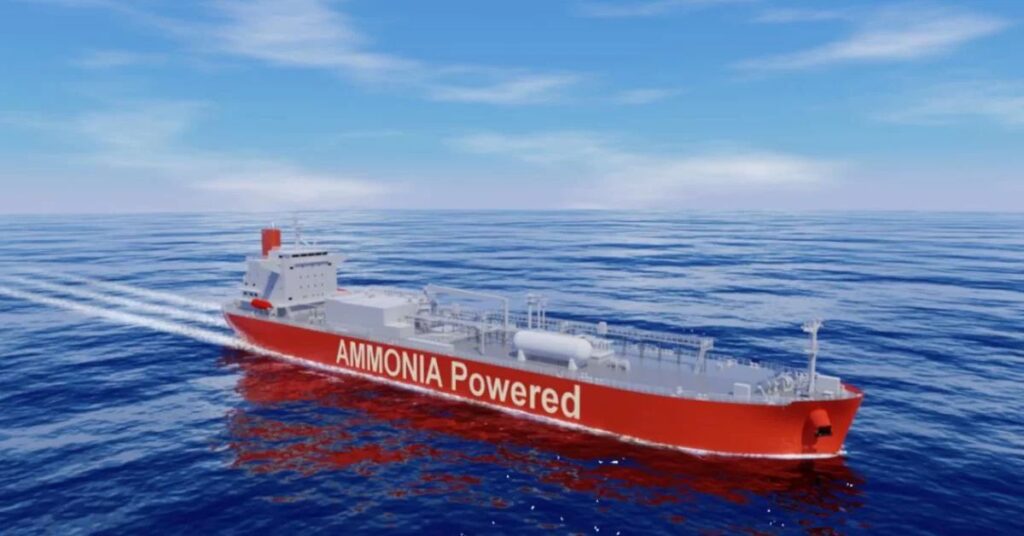
The Maritime Just Transition Task Force (MJTTF) has unveiled the industry’s first training frameworks to support the safe operation of ships powered by alternative fuels such as ammonia, methanol, and hydrogen.
Formed at COP26 by the International Chamber of Shipping (ICS), the International Transport Workers’ Federation (ITF), the United Nations Global Compact, the International Labour Organization (ILO), and the International Maritime Organization (IMO), the MJTTF aims to equip the global workforce for shipping’s decarbonisation journey.
The newly released frameworks cover both entry-level and senior seafarer roles, supported by detailed instructor handbooks. They will be complemented by guidelines for general familiarisation programmes, targeting seafarers and shore-based personnel not directly addressed under the International Convention on Standards of Training, Certification and Watchkeeping for Seafarers (STCW), 1978.
Publicly accessible, the frameworks are designed to help regulators and maritime administrations establish criteria for training programmes, certification schemes, and competency validation. They recommend a mix of classroom instruction, simulation-based assessments, and sea-time training.
For maritime academies, the playbooks provide a foundation for updating curricula and delivery models, while shipping companies gain structured support for onboarding crew and updating safety management systems to reflect the risks of new fuels.
Developed in parallel with the IMO’s ongoing review of the STCW Convention and Code, the project also contributes to defining the knowledge, skills, and competencies required for seafarers in the energy transition. Its outputs are being fed directly into discussions at the IMO Sub-Committee on Human Element, Training and Watchkeeping.
Recent Posts
Marine
Singapore Unveils Ammonia Bunkering Standard, First Ethanol Bunkering and LNG Storage Plans
Ammonia
Singapore Launches TR 148 Ammonia Bunkering Standard and Model Contract to Prepare for Ammonia-Fuelled Ships
Policy
China Targets Doubling New Energy Inland Vessels by 2028 Under 2026-2030 Action Plan