

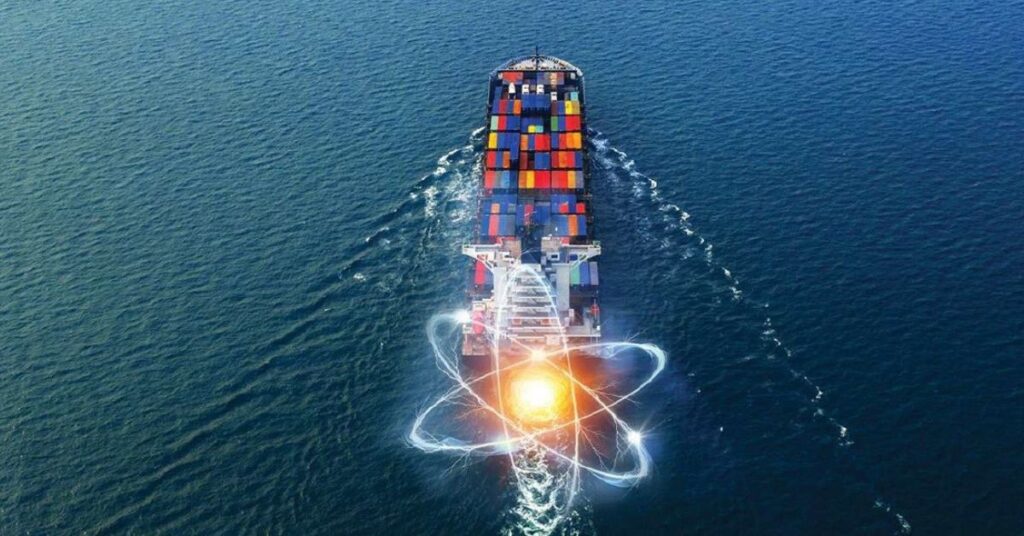
Oslo, 21 October 2025 — A new report by classification society DNV suggests that nuclear propulsion could re-emerge as a long-term solution for reducing emissions in the maritime sector. The paper indicates that growing environmental pressures are renewing interest in nuclear energy, despite the absence of civilian commercial nuclear-powered ships for more than 40 years.
The report, titled “Maritime nuclear propulsion: Technologies, commercial viability, and regulatory challenges for nuclear-powered vessels,” outlines how marine nuclear technologies differ from land-based reactors. It examines key factors influencing the feasibility of nuclear propulsion — including technological readiness, regulatory frameworks, and commercial viability.
According to DNV, the study assesses the entire maritime nuclear fuel cycle, covering fuel management, waste handling, vessel construction and operations, and oversight of nuclear supply chains. It also highlights reactor technologies most likely to be considered by shipowners in the coming decades.
The paper identifies advances in automation, digitalization, and modular design as central to improving safety, security, and non-proliferation measures — elements that could help build public trust in nuclear-powered vessels.
Knut Ørbeck-Nilssen, Maritime CEO at DNV, said:
“Nuclear energy has the potential to play a role in the maritime energy transition. However, much work still needs to be done to overcome technical, regulatory, and societal challenges, including public perception. This will require coordinated global action, technological innovation, and closely aligned regulatory frameworks.”
Regulatory and Economic Challenges
The report underscores the importance of establishing a predictable and harmonized regulatory framework across national and international levels. It calls for coordination between the International Maritime Organization (IMO), the International Atomic Energy Agency (IAEA), flag states, national authorities, and classification societies to ensure safety and compliance as nuclear propulsion technologies advance.
From a commercial standpoint, DNV emphasizes that the viability of nuclear-powered shipping will depend on developing robust and cost-effective business models. The report points to mass production, standardization, and modularization as key strategies to improve scalability and reduce costs.
A case study included in the paper examines the cost thresholds marine nuclear reactors must meet to become competitive with conventional propulsion technologies.
Ole Christen Reistad, Senior Principal Researcher at DNV and lead author of the paper, said:
“For nuclear propulsion to become commercially viable in shipping, the business case must account for the full lifecycle costs, including fuel supply, reactor maintenance, and waste management. Modular and standardized reactor designs can significantly reduce capital and operational expenditures, while robust regulatory frameworks and predictable supply chains are essential for investor confidence and long-term competitiveness.”
Renewed Focus on Next-Generation Maritime Energy
As the maritime industry pursues its decarbonization goals, nuclear energy is being reconsidered as a zero-emission alternative capable of providing high energy density for long-range operations. DNV’s findings suggest that while the potential is considerable, achieving practical implementation will require sustained international collaboration and policy alignment.
Recent Posts
Ammonia
Reliance Industries Limited (RIL) has signed a binding long-term supply and purchase agreement (SPA) with Samsung C&T Corporation for the export of green ammonia over a 15-year period.
Bunkering
Ofiniti Raises $6.8 Million to Scale Digital Bunkering Platform for Global Shipping
Hydrogen
Hefring Marine and Ecomar Propulsion partner to deploy monitoring system on hydrogen-electric vessel