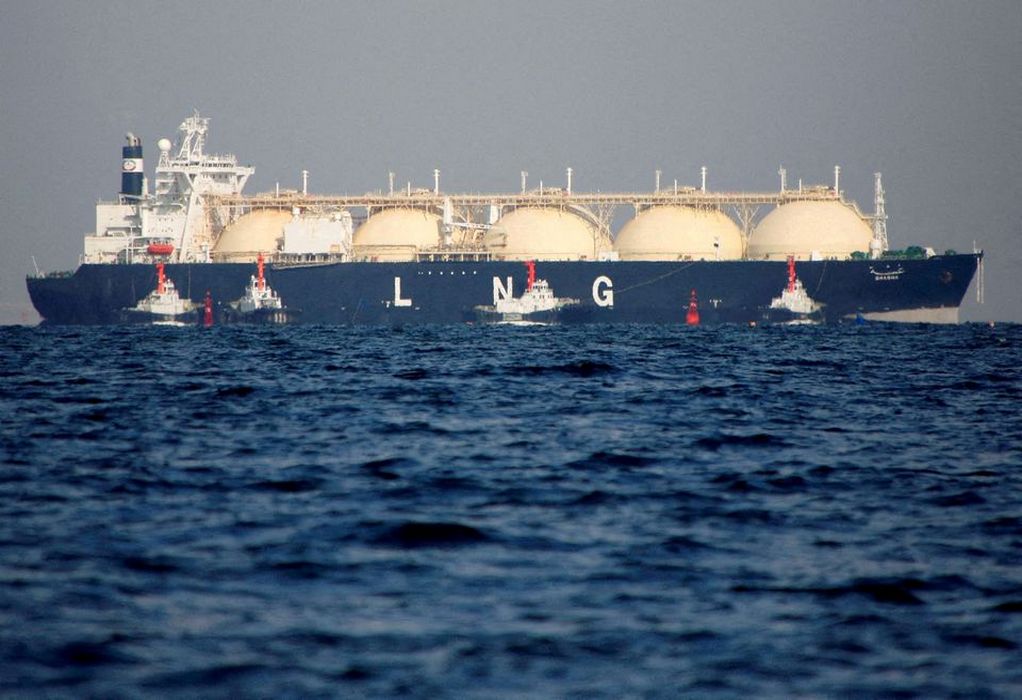
A new design for a liquified natural gas (LNG) carrier has been revealed by a new partnership promising a significant reduction in greenhouse gas emissions and operational cost.
In collaboration with Moss Maritime, Fearnley LNG and DNV, Siemens Energy has developed a vessel that will be powered by a hybrid combined-cycle power and propulsion plant called Ocean Green.
The system utilises a gas turbine as the main engine in combination with a steam turbine and energy storage for the electrical propulsion and distribution system.
The German energy tech company said that in comparison to existing best-in-class power and propulsion technology, the Ocean Green will notably slash greenhouse gas emissions and, due to its compact engine room layout, enabled by the SGT-400 gas turbine, allow for increased cargo capacity, thereby improving the unit freight cost.
The vessel is claimed to have very low nitrogen oxide (NOx) levels, lower noise and vibration levels and practically no methane slip, as well as reduced maintenance costs and potential for less manning onboard.
Studies undertaken by the class society DNV have found that the concept will result in an equivalent CO2 reduction of approximately 11% to 18% and reduce the unit freight cost by around 9% to 17% compared to today’s LNG carriers and their current market operational profiles.
According to Martin Cartwright, DNV Maritime’s business director for gas carriers and FSRUs, this is a crucial step in mapping out the next generation of gas carriers.
Recent Posts
Ammonia
Maersk Tankers Ammonia Retrofit Project Advances Towards EU Support
Policy
EU Maritime Innovation Projects Advance in €3.4-Billion Funding Selection
Policy
Shanghai–Melbourne Green Shipping Corridor Sets 2035 Vessel Deployment Goal