
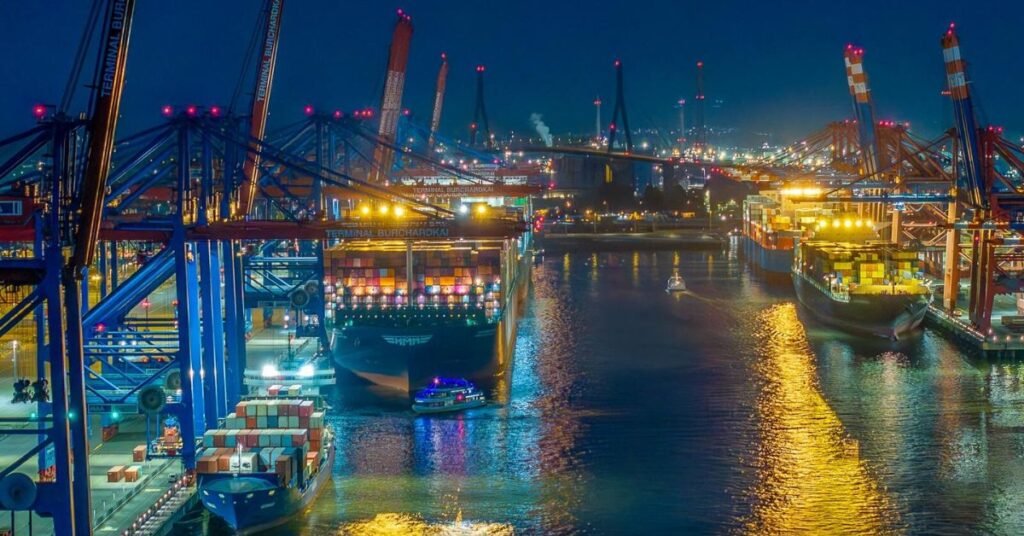
The Port of Hamburg has completed a comprehensive risk assessment and safety framework for ship-to-ship ammonia bunkering, marking a key milestone in preparing the German port to support ammonia-powered shipping.
Developed in collaboration with MB Energy, the initiative establishes the safety requirements for handling ammonia as a marine fuel and positions Hamburg as “ammonia-ready” for future bunkering operations.
Building the Foundations for Ammonia Bunkering
The project was carried out with input from terminal operators, shipping companies and local authorities to develop a dedicated safety concept for ship-to-ship ammonia transfer.
The completed framework is designed to ensure ammonia bunkering can be conducted safely and efficiently once commercial demand emerges.
According to MB Energy, the initiative lays the groundwork for the safe introduction of ammonia as a future marine fuel while supporting the maritime industry’s transition to low-carbon energy sources.
Supporting Multiple Vessel Types
The safety preparations are expected to facilitate ammonia bunkering for a wide range of vessels operating at the Port of Hamburg, including:
- Container ships
- Cruise vessels
- Roll-on/Roll-off (RoRo) vessels
- ConRo (Container/Roll-on Roll-off) vessels
By establishing clear operational and safety procedures in advance, the port aims to accelerate the deployment of ammonia-fuelled vessels as they enter commercial service.
Infrastructure Plans Underway
To support future fuel demand, MB Energy is planning to develop an ammonia import terminal in northern Germany, with operations expected to begin from 2029.
The company is also evaluating the development of an ammonia bunkering barge, which would provide flexible ship-to-ship refuelling services within the Port of Hamburg and potentially other ports.
The planned infrastructure is intended to secure long-term ammonia supply while expanding bunkering options for future ammonia-powered vessels.
Preparing for the Maritime Energy Transition
Ammonia is increasingly being considered as a low-carbon marine fuel because it contains no carbon at the point of use and can support the shipping industry’s decarbonisation ambitions when produced from renewable or low-carbon sources.
The Port of Hamburg’s preparations form part of broader industry efforts involving ports, fuel suppliers and shipowners to establish the infrastructure required for alternative marine fuels.
MB Energy said that, together with the Hamburg Port Authority (HPA), it has completed a comprehensive risk analysis and developed a dedicated safety concept for ship-to-ship ammonia bunkering, creating the foundation for the safe introduction of ammonia as a future marine fuel.
Recent Posts
HYBRID
GRSE Signs ₹1,032-Crore ONGC Contract for Four Hybrid Offshore Supply Vessels
EV
Energy In Motion Opens ₹500-Crore Electric Truck Plant in Pune
Fuels
Aegis Logistics Commissions 35,000-Tonne LPG Bottling Plant at JNPA