
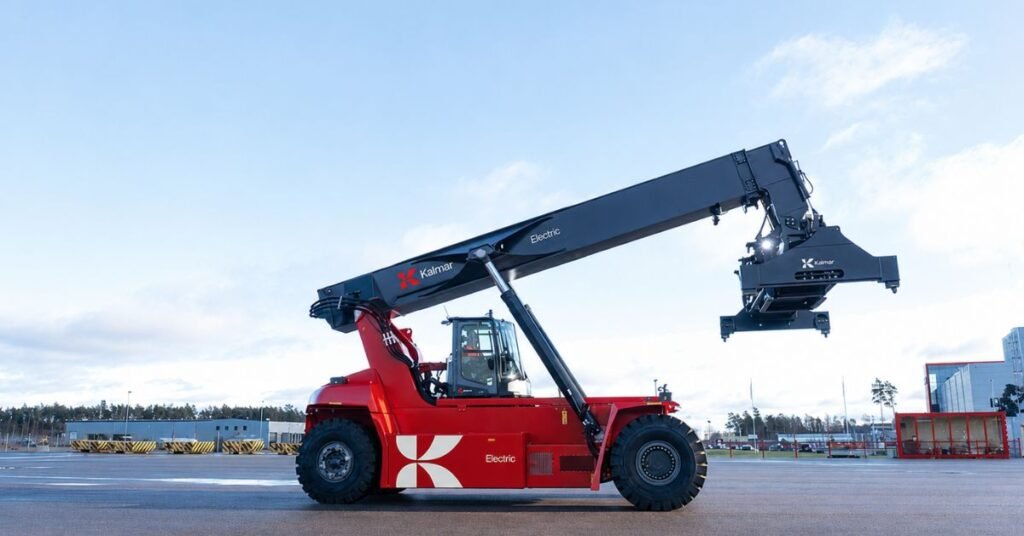
The Port of Helsingborg has signed a six-year framework agreement with Kalmar for the potential procurement of up to nine electric reachstackers, supporting the Swedish port’s ongoing transition toward lower-emission cargo handling operations.
The agreement enables the Port of Helsingborg to expand its fleet of electric cargo-handling equipment as part of its long-term strategy to reduce emissions and improve energy efficiency across terminal operations.
Located on Sweden’s Øresund coast, the Port of Helsingborg is the country’s second-largest container port and serves as a key multimodal logistics hub, connecting maritime, road and rail transport. The port has been investing in initiatives aimed at reducing the environmental impact of port operations, with electrification identified as a central component of its decarbonisation strategy.
The port already operates a Kalmar electric reachstacker that entered service in early 2024. Under the new framework agreement, additional machines can be acquired over the next six years in line with the port’s investment plans.
Christina Argelius, Chief Technical Officer at the Port of Helsingborg, said: “This framework agreement represents an important step in our transition towards lower-emission terminal operations. Through this agreement, we can continue to replace diesel-powered machines in a structured and long-term way, aligned with our overall investment plan and energy strategy. Electrification also brings new requirements in infrastructure, charging and daily operations, and having a partner with strong technical expertise is essential as we scale up.”
The move reflects a broader trend across global ports, where operators are replacing conventional diesel-powered cargo-handling equipment with electric alternatives to reduce greenhouse gas emissions, improve energy efficiency and comply with increasingly stringent environmental regulations.
Kalmar said demand for electric terminal equipment continues to grow as ports seek to lower operating costs while advancing decarbonisation objectives. Eric Wass, Sales Representative at Kalmar Sweden, said: “As fuel costs rise and the pressure to increase efficiency and reduce emissions increases, electrification offers a stable and secure path forward for terminals. We are delighted to announce the signing of this frame agreement with the Port of Helsingborg, which will help them take further steps forward on their journey towards a zero-emission future.”
Recent Posts
HYBRID
GRSE Signs ₹1,032-Crore ONGC Contract for Four Hybrid Offshore Supply Vessels
EV
Energy In Motion Opens ₹500-Crore Electric Truck Plant in Pune
Fuels
Aegis Logistics Commissions 35,000-Tonne LPG Bottling Plant at JNPA